Miniature Chihuahua
Miniature Chihuahua Puppies: Is Your Family Ready for One?
By Yulia Sky · November 1, 2026
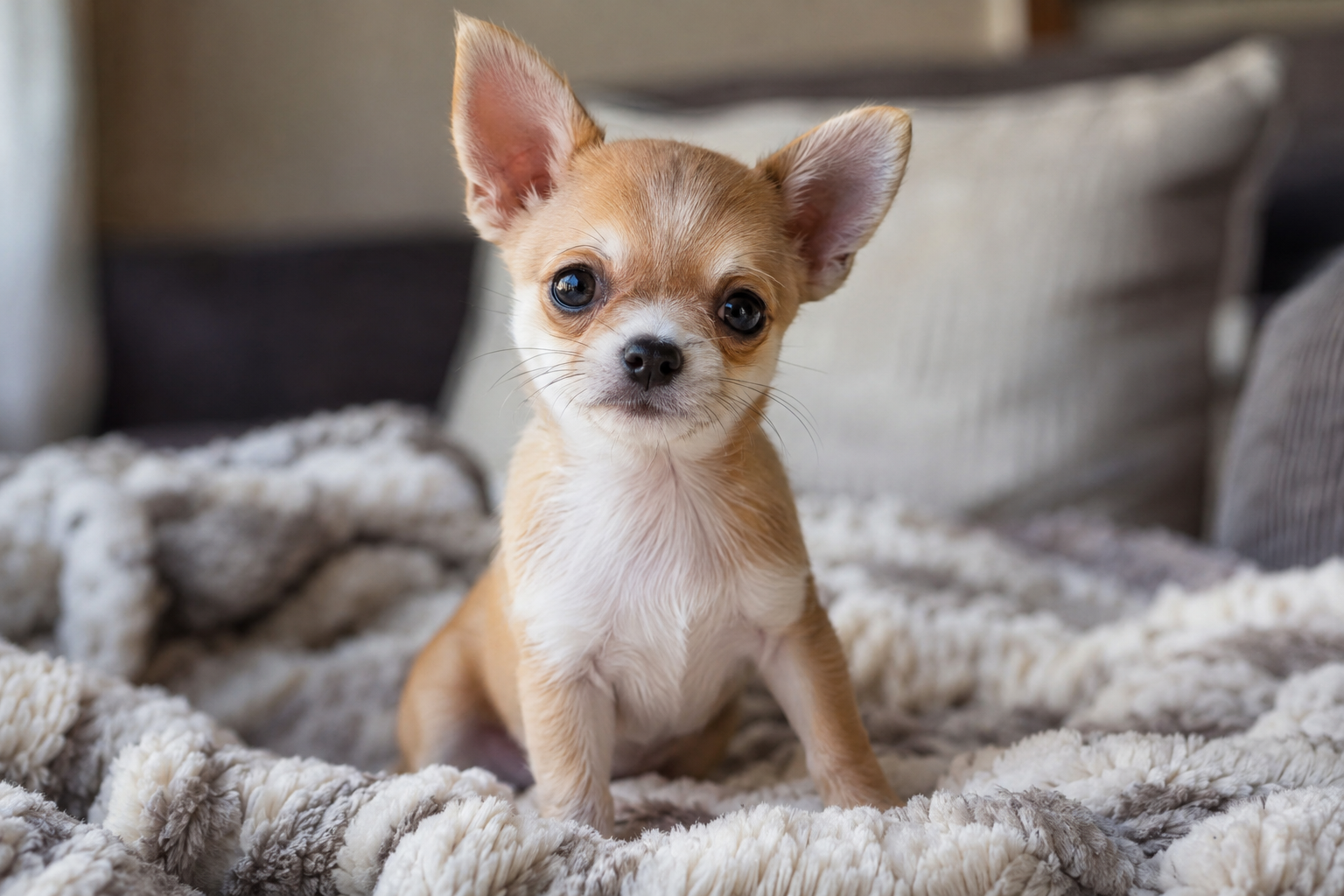
Miniature Chihuahua Puppies: Is Your Family Ready for One?
A Miniature Chihuahua can fit family life when adults—not children—take responsibility for handling, supervision, and daily care. The deciding factor is not how much a child wants a puppy. It is whether your household can protect a small Chihuahua during ordinary moments: school mornings, visitors arriving, playtime, and the rush before bedtime.
Miniature, teacup, mini, micro, and tiny are informal marketing and search terms, not official AKC varieties. The AKC Chihuahua breed standard recognizes one Chihuahua breed, with adult weight not exceeding 6 pounds, in smooth and long coats. Those labels do not guarantee adult size, temperament, or suitability for children.
I’m Yulia Sky, founder of World Class Puppies, established in 2019. My perspective as an in-home Chihuahua breeder is simple: choose for the life you can provide, not the smallest puppy photograph. As you look through our available Chihuahua puppies, use the family-readiness checks below to decide what questions to ask before becoming attached to a particular puppy.
Are Miniature Chihuahua puppies suitable for families with children?
They can be, but suitability depends on the individual Chihuahua and the household’s ability to supervise. A child who follows boundaries consistently may be better prepared than an older child who grabs, chases, or ignores a puppy’s attempts to leave. No age label replaces observing actual behavior.
When considering a miniature Chihuahua for families, I would begin with the adults’ expectations. Is this an adult-owned companion whom children will enjoy, or is everyone expecting the puppy to become a child’s independent project? Only the first arrangement provides a dependable foundation.
A Chihuahua needs permission to opt out of interaction. That means a child must accept that a resting puppy is unavailable, that affection cannot be demanded, and that a puppy walking away has not done anything wrong.
Before choosing, practice three household rules:
- We invite the puppy closer rather than following it around.
- We leave the puppy alone while it eats, rests, or retreats.
- We call an adult instead of picking the puppy up ourselves.
If those rules feel unrealistic today, waiting is a thoughtful decision—not a failure.
How can I tell whether my child is ready for a Chihuahua puppy?
Look for consistent self-control around boundaries, not promises made during an exciting puppy conversation. A ready child can sit quietly, wait for permission, and stop an activity when an adult asks. Adults still need to supervise even when a child demonstrates those skills.
Try a rehearsal without a puppy. Put a folded blanket on the floor as the puppy’s imaginary resting place. Ask your child to move around it without jumping over it, leave it undisturbed during a game, and explain what to do if the puppy goes there.
Next, rehearse a busy doorway. Can the child pause while an adult checks where the puppy is? Can they avoid dropping a backpack into the puppy’s space? These ordinary habits matter more than knowing how to pose gently for a photo.
Do not use another Chihuahua as a test subject for behavior you already expect to be rough. Start with conversation and practice; any real interaction should be arranged with the person responsible for that Chihuahua and closely supervised.
For children who become loud or impulsive when excited, plan shorter interactions and more adult structure. The goal is not perfect stillness. It is a household that can interrupt excitement before the puppy becomes overwhelmed.
Who should be responsible for daily Chihuahua puppy care?
An adult should own every essential care task, even when children help. Feeding records, monitoring appetite, managing safe spaces, arranging veterinary care, and recognizing changes cannot depend on a child remembering. A second adult or reliable caregiver should understand the plan when the primary caregiver is unavailable.
Write down responsibilities before homecoming:
| Task | Adult responsibility | Optional child participation |
|---|---|---|
| Meals | Follow the puppy’s individualized plan and confirm what was eaten | Bring the clean bowl to the adult |
| Rest | Keep the resting area quiet and protected | Choose a quiet activity elsewhere |
| Toileting | Supervise access and keep records when useful | Tell an adult when the puppy wakes |
| Handling | Decide when interaction is appropriate | Sit on the floor and invite contact |
| Health observations | Notice changes and contact the veterinarian | Report anything that seems different |
A useful miniature Chihuahua care plan names the person responsible, not merely the task. “Someone will feed the puppy” is much weaker than a clear handoff between adults.
School holidays can make the household appear more available than it will be later. Assess your regular week, including work, activities, and transportation—not just the days when everyone is home.
What temperament should families look for in a Chihuahua puppy?
Look for an individual Chihuahua whose observed behavior and support needs fit your household. Curiosity, willingness to approach, and recovery after an ordinary distraction can be useful observations, but a single meeting cannot predict lifelong temperament. Ask for context across normal daily routines.
Miniature Chihuahua temperament is not determined by a size label. Likewise, Apple Head Chihuahua puppies are not automatically calmer, and teacup Chihuahua puppies are not automatically easier to manage because they are small.
Useful Chihuahua breeder questions include:
- How does this puppy respond when an unfamiliar person enters quietly?
- Does the puppy approach voluntarily or need more distance?
- What happens when normal household activity becomes busier?
- What handling has the puppy experienced, and what still needs gentle practice?
- What kind of household would you avoid recommending for this individual?
I would rather see a family take a pause than interpret freezing as friendliness. A motionless puppy may be uncertain, tired, or uncomfortable; stillness alone does not prove enjoyment.
Our article on helping a shy Miniature Chihuahua build confidence explains why patient invitations are more useful than forced interaction. A family willing to slow down may be a better match than one determined to make the puppy sociable immediately.
How should children interact safely with a Chihuahua puppy?
Begin at floor level with an adult close enough to intervene. Let the Chihuahua approach and leave freely, and end the interaction when the puppy needs distance or rest. Children should not carry the puppy around the home or lift it onto furniture.
The first goal is calm companionship, not constant touching. A child can sit nearby reading while the Chihuahua explores a protected area. That experience can be more useful than repeated cuddling.
Watch for turning away, retreating, stiffening, or repeated attempts to escape. These are reasons to create space, not invitations to hold the puppy more firmly. If the Chihuahua growls, calmly separate the interaction and reassess; do not punish a warning or ask the child to push through it.
Keep active games away from the puppy’s area. Running feet, rolling chairs, swinging doors, and dropped toys deserve attention even when nobody intends harm. Supervision means watching the interaction, not being somewhere in the same room while occupied with another task.
For outings, decide which adult manages the puppy before leaving home. Our guide to safe car travel with a Chihuahua puppy can help you think beyond the meeting itself and prepare for the journey home.
Look beyond the promise of a permanently tiny companion
Families sometimes imagine that choosing the smallest Chihuahua will make everything simpler: easier carrying, less space, and a puppy a child can manage. That reasoning overlooks how much protection a very small puppy may need.
Ask what information supports an adult-size estimate, and accept its uncertainty. Do not choose on the condition that a Chihuahua must stay below a particular weight. Our explanation of why some Teacup Chihuahuas grow larger than expected is useful before anyone treats a marketing label as a promise.
Consider whether your family would still welcome the same Chihuahua if its adult size, coat appearance, or confidence developed differently than expected. A lasting commitment needs room for normal development.
Review the purchase information without rushing
Family enthusiasm should not replace verification. Use the Chihuahua puppy scam checklist when assessing breeder identity, suspicious claims, or pressure to commit before you understand the arrangement. A family deadline is not a reason to skip checks.
For California transactions, as of January 1, 2026, the state requires written disclosure of a dog’s origin, health status, and inoculations, and restricts reselling dogs the seller did not breed. Consult the California puppy buyer law guide for context; this is not legal advice.
Read the actual health guarantee rather than assuming it covers every future concern. Our written 12-month congenital and hereditary defect guarantee has stated exclusions and is signed in person. It is not a promise of adult size, temperament, or an absence of future veterinary needs.
If miniature Chihuahua puppy cost is part of your readiness discussion, use the Chihuahua puppy price guide. Each available puppy is individually priced, and listings—not an invented fixed range—are the place to review current information. Include ongoing care and unexpected veterinary needs in your family planning.
For public-facing background, you can see our past clients and their puppies. References and photographs can support your research, but they should complement your own questions rather than replace them.
Know where breeder guidance ends
Your own veterinarian should help assess the Chihuahua’s individual health needs and whether your proposed routine is appropriate. Share the records you receive, explain your household, and ask what changes should prompt a call. Do not treat this family-readiness article as a miniature Chihuahua health guide or an individualized medical plan.
A puppy that seems unusually weak, poorly responsive, or suddenly unwell needs prompt veterinary attention. Children should immediately tell an adult rather than trying food, remedies, or medication themselves.
Before homecoming, identify who can reach veterinary care while another adult supervises the children. This is practical preparation, not a prediction that something will go wrong.
Family-readiness FAQs
Should children come to the first puppy meeting?
Ask whether a quiet, supervised family meeting is appropriate. Prepare children to sit and wait rather than expecting an immediate cuddle.
What if siblings disagree about the puppy’s rules?
Adults should establish one handling policy and apply it consistently. Access to the Chihuahua should never become a contest or a reward for ignoring the puppy’s boundaries.
Can a child choose the puppy’s sleeping spot?
Children can help with bedding choices, but an adult should select the location. Quiet rest, safe containment, and adult monitoring come first.
Does a long coat make a Chihuahua easier for children to handle?
No; coat length does not change the need for careful handling. Grooming also requires gentle technique and adult oversight.
Choose a companion your household can support
The strongest family match begins with realistic adult responsibility, consistent boundaries, and interest in the individual Chihuahua—not a promise of permanent smallness. If you are ready to explore, review our available Chihuahua puppies; availability changes weekly. Families using our regional hub can also explore Los Angeles Chihuahua puppies.
Please contact us with your household routine, children’s handling experience, and questions about suitability. I welcome a thoughtful conversation before a decision.
Educational disclaimer: This article is for general educational purposes only and is not veterinary advice, diagnosis, or treatment. Consult your own veterinarian about your Chihuahua’s individual health, feeding, and care needs. Seek prompt veterinary care for urgent symptoms.
Frequently asked questions
Should children come to the first puppy meeting?
Ask the breeder whether a quiet, supervised family meeting is appropriate. Children should arrive prepared to sit, wait, and let the Chihuahua approach rather than expecting to hold the puppy immediately.
What if siblings disagree about the puppy’s rules?
Set one household handling policy before bringing a Chihuahua home. Adults should supervise access and enforce the same rules about resting, carrying, and giving the puppy space, regardless of whose turn it is.
Can a child choose the puppy’s sleeping spot?
A child can help choose bedding, but an adult should decide where the Chihuahua sleeps. The location needs to support safe containment, quiet rest, and adult monitoring rather than simply being closest to a child’s bed.
Does a long coat make a Chihuahua easier for children to handle?
No. Coat length does not make a Chihuahua less vulnerable to rough handling or falls. A long coat also needs gentle grooming, which should remain an adult responsibility until a child can participate safely under supervision.
Ready to meet your new puppy?
See currently available teacup puppies or reach out to join our waitlist.