Miniature Chihuahua
Miniature Chihuahua: Choosing an Older Puppy With Confidence
By Yulia Sky · November 1, 2026
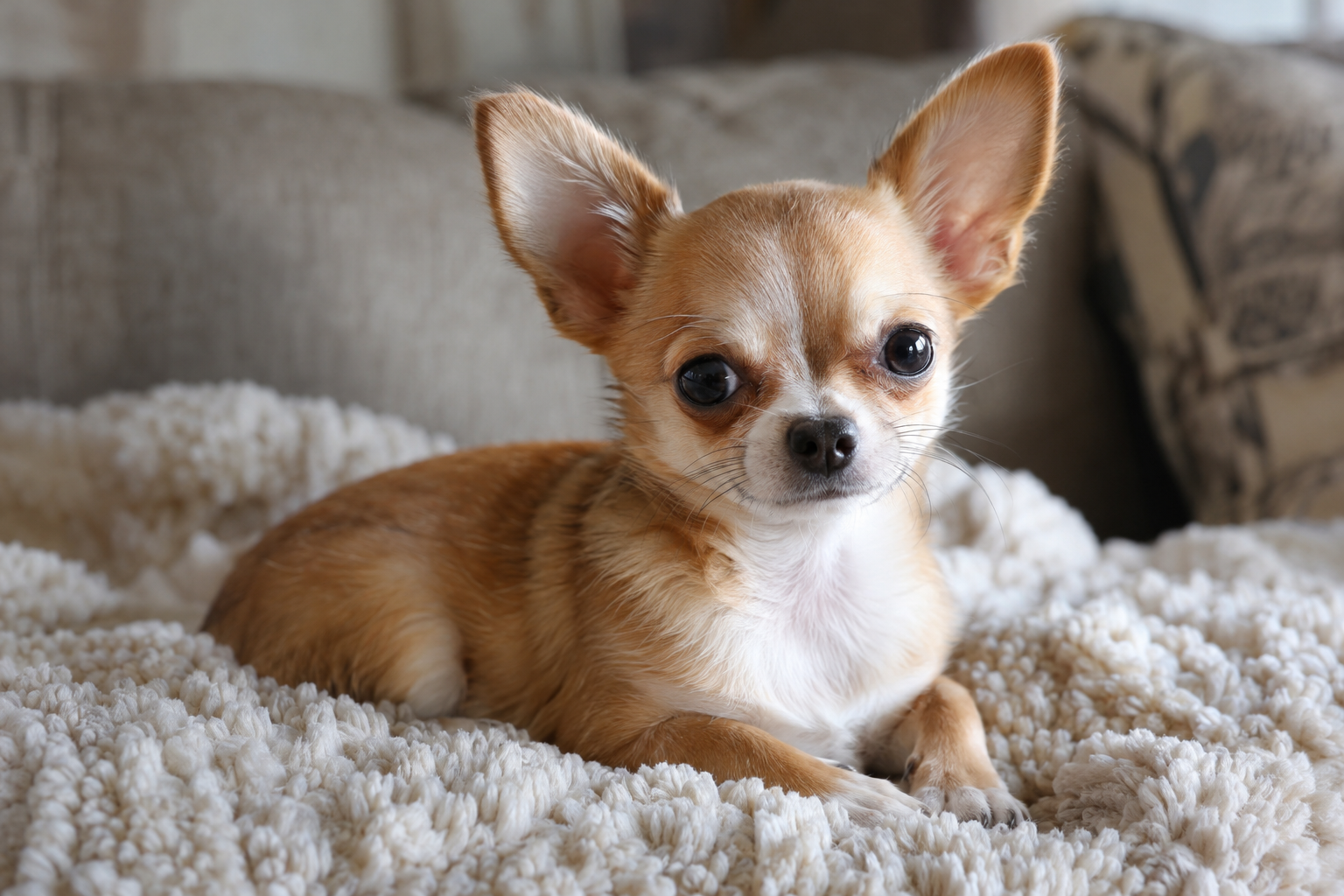
An older Miniature Chihuahua puppy can be a thoughtful choice if you want more information about current habits before bringing a puppy home. The useful advantage is not a promise of easier care: it is the opportunity to ask about an established routine, observe behavior, and decide whether your household can support the next stage.
First, a naming clarification: miniature, mini, micro, tiny, and teacup are informal marketing and search terms, not official AKC varieties. The AKC Chihuahua breed standard describes one Chihuahua breed, with an adult weight not exceeding 6 lb, in smooth and long coats. An individual puppy's future weight is not guaranteed by a label.
I'm Yulia Sky, founder of World Class Puppies, established in 2019. My approach to this decision is to put the puppy's present needs ahead of the appeal of being particularly young or particularly small. When browsing available Chihuahua puppies, look beyond the portrait and ask what daily life with that individual would involve. Availability changes weekly; an older puppy is a situation to evaluate, not an inventory promise.
What counts as an older Chihuahua puppy?
For this guide, an older puppy means a Chihuahua who is further along in puppyhood rather than at the earliest homecoming stage. There is no special breed category or universal cutoff for that description. Ask for the recorded birth date instead of relying on words such as older, started, or nearly grown.
Those labels can conceal very different expectations. One seller may mean a puppy with an established home routine; another may simply mean a puppy who has remained available longer. Neither description tells you whether the puppy is comfortable with handling, familiar with a carrier, or ready for your particular household.
Build your comparison around three facts: the documented age, the current routine, and the experiences the puppy has actually had. Keep adult-size predictions separate. Our explanation of why some Teacup Chihuahuas grow larger than expected helps put size language in perspective without treating a prediction as a promise.
Is an older Miniature Chihuahua easier for a first-time owner?
An older Miniature Chihuahua may have familiar routines that make some parts of homecoming easier to understand. However, age alone does not establish toilet reliability, comfort alone, or confidence in a new environment. A first-time owner should choose according to demonstrated needs and available support, not an assumption that older means finished training.
For me, a useful starting question is: which parts of puppy care can you reliably provide on an ordinary weekday? Consider supervision, toilet opportunities, feeding consistency, safe handling, and someone who can step in when plans change.
An older puppy can still need a carefully managed day. If your schedule includes long stretches away, read our realistic Chihuahua guide for working professionals before assuming age solves the supervision problem.
When considering a Miniature Chihuahua for families, evaluate household behavior as seriously as puppy behavior. Can everyone keep doors controlled, leave a resting puppy alone, and avoid lifting without permission? A puppy who is older is not automatically sturdy enough for rough play.
What should I ask about an older Chihuahua puppy's routine?
Ask the seller to describe an ordinary day, including meals, rest, toilet opportunities, handling, and supervised activity. Request concrete descriptions rather than broad claims such as easy, independent, or completely trained. You need enough detail to continue familiar routines while the puppy learns your home.
These are the Chihuahua breeder questions I would prioritize:
- Meals: What exact food and texture is the puppy eating, and how is the current portion measured?
- Toileting: What surface, location, and cues are familiar? How much adult prompting is involved?
- Rest: Where does the puppy settle, and is someone usually nearby?
- Handling: What happens during gentle brushing, paw handling, and putting on a harness?
- Separation: What supervised practice has occurred, and what behavior was observed?
- Travel: Has the puppy experienced a secured carrier, or only being held?
Ask for the routine in writing. A short factual handover note is more useful than trying to remember a long conversation while excited. It also helps you distinguish an observed skill from a goal someone is still working toward.
Miniature Chihuahua care should begin with continuity, not a collection of immediate changes. Bring the current feeding information to your own veterinarian, especially if you are considering changing food. Do not infer dietary needs from the word miniature or from how large a bowl looks beside the puppy.
How can I assess an older Chihuahua puppy's temperament?
Observe the puppy in a familiar setting with a familiar caregiver, then ask what is typical and what is unusual that day. Notice curiosity, voluntary interaction, recovery after an ordinary interruption, and the ability to settle. One visit or video is a snapshot, not a complete temperament assessment.
I would rather watch a puppy choose to approach than see repeated picking up to demonstrate friendliness. Ask for space on a secure floor, with a comfortable retreat available. Do not deliberately frighten a puppy, restrain them unnecessarily, or provoke a reaction to test confidence.
Miniature Chihuahua temperament is individual. A quiet puppy may be relaxed, tired, uncertain, or simply uninterested in the moment. A lively puppy may settle beautifully after normal activity. Ask about patterns across daily situations instead of assigning a permanent personality from one clip.
If a puppy hangs back, our guide to supporting a shy Miniature Chihuahua explains why patient observation matters. Persistent fear, distress, or concerning changes deserve discussion with your own veterinarian rather than reassurance based only on a sales description.
This same approach applies when listings describe Teacup Chihuahua puppies or Apple Head Chihuahua puppies. Neither size terminology nor head shape tells you how an individual will cope with your routine.
Why might an older Chihuahua puppy still be available?
There can be different reasons an older puppy remains available, and age alone does not establish a problem. Ask the seller for the actual history, including whether the puppy has always lived with them or has returned from another home. Evaluate the explanation alongside records and observations rather than supplying a reassuring story yourself.
Useful follow-up questions include whether the puppy's living arrangement has changed and whether any care needs have changed. If there was a previous placement, ask what information can be shared about the puppy's routine and adjustment without requesting another person's private details.
A clear answer does not require a dramatic narrative. It does require consistency. If the explanation changes, the puppy's identity is unclear, or you feel pressured to skip questions, pause and use the Chihuahua puppy scam checklist.
For public references about World Class Puppies, you can see our past clients and their puppies. Treat references as one source of context, not proof of any individual puppy's present health or future behavior.
Match the records to this puppy—not just the listing
An older puppy may have a longer recorded care history, but a thicker folder is not automatically a better one. Check that the birth date, identifying description, and dated entries refer consistently to the puppy you are considering. Ask which information is documented and which is an estimate or recollection.
Have your own veterinarian review the available health and inoculation records and identify anything that needs clarification. Do not assume that older means every veterinary milestone is complete. A photograph or live video cannot replace an examination or resolve a medical question.
For California transactions, as of January 1, 2026, California requires written disclosure of a dog's origin, health status, and inoculations, and restricts reselling dogs the seller did not breed. Read the California puppy buyer law guide for context and seek qualified legal guidance for your own circumstances; this article is not legal advice.
Read the health guarantee itself rather than relying on a conversational summary. World Class Puppies provides a written 12-month congenital and hereditary defect guarantee with stated exclusions, signed in person. That document is not a promise that a puppy will never become ill or need veterinary care.
Compare support needs before comparing price
Miniature Chihuahua puppy cost should not be evaluated as an age-based bargain. Each available puppy is individually priced; use the Chihuahua puppy price guide for context and the live listings for individual information. Do not assume an older puppy is cheaper or that a higher price proves better preparation.
Instead, ask what the handover includes and what follow-up communication is available. Clarify whether you will receive the current routine, copies of records, and answers to practical questions before committing. Never infer services or terms from photographs or affectionate wording.
Your own planning should account for routine veterinary care, safe equipment, food, and help with supervision. Those needs remain even when a puppy has already learned some household habits.
Plan a gentle transfer of familiar skills
Good Chihuahua puppy care respects the difference between knowing a routine and understanding it somewhere new. A puppy familiar with one sleeping space may need help settling in another. A puppy who follows one caregiver to a toilet area may not yet recognize your doorway or cue.
Before homecoming, write down three practical arrangements:
- A manageable first space: Choose a secure, easy-to-supervise area with comfortable footing and a quiet resting place.
- A continuity plan: Keep the recorded routine accessible so everyone uses consistent cues and knows what the puppy is accustomed to.
- A backup caregiver: Identify someone who understands safe handling and can follow the same instructions if you are unavailable.
Avoid turning arrival into a test of every claimed skill. Introduce changes gradually, observe actual behavior, and share concerns with your veterinarian. Marked lethargy, collapse, breathing difficulty, or other acute changes require prompt veterinary attention, not a wait-and-see training approach.
Frequently asked questions
Can I change an older Chihuahua puppy's name?
Yes. Pair the new name with pleasant everyday interaction and allow time for recognition. Avoid making it a signal that something unpleasant is about to happen.
Should I request a familiar blanket at handover?
You can ask whether a familiar, washable item is available, but do not assume it is included. Check it for loose threads and damaged pieces before use.
Will an older Chihuahua puppy bond with a new owner?
An older puppy can build a meaningful relationship with a new owner. Consistent, respectful care supports trust, but a specific bonding timeline cannot be promised.
Is a puppy who has learned a toilet cue guaranteed to use it at home?
No. Familiar cues may need to be learned again in a different setting. Ask how the cue was used and rebuild that routine patiently.
Choose the individual, not the age label
An older Miniature Chihuahua deserves the same careful consideration as any younger puppy: accurate information, realistic expectations, and a home prepared for their actual needs. I would choose a clear routine and a thoughtful match over an appealing label every time.
Explore our available Chihuahua puppies, then contact us to discuss your household and questions. If that location is relevant to your search, our Los Angeles Chihuahua puppies page provides a separate local starting point.
Educational disclaimer: This article provides general educational information and is not veterinary advice, diagnosis, or treatment. Consult your own veterinarian about your Chihuahua's individual health, nutrition, preventive care, and any symptoms or concerns.
Frequently asked questions
Can I change an older Chihuahua puppy's name?
Yes. Use the new name gently during pleasant everyday interactions and give the puppy time to learn it. Avoid using the name mainly when interrupting unwanted behavior.
Should I request a familiar blanket at handover?
You can ask whether a familiar, washable item can accompany the puppy, but do not assume it is included. Inspect anything you bring home for loose threads or pieces the puppy could swallow.
Will an older Chihuahua puppy bond with a new owner?
An older puppy can form a meaningful relationship with a new owner. Predictable care, respectful handling, and unhurried interaction support that relationship, but no one should promise a particular bonding timeline.
Is a puppy who has learned a toilet cue guaranteed to use it at home?
No. A cue learned with one person or in one setting may not transfer immediately. Ask exactly what the cue means and rebuild the association patiently in your own home.
Ready to meet your new puppy?
See currently available teacup puppies or reach out to join our waitlist.