Apple Head Chihuahua
Crate Training a Chihuahua Puppy: Gentle First Steps
By Yulia Sky · October 11, 2026
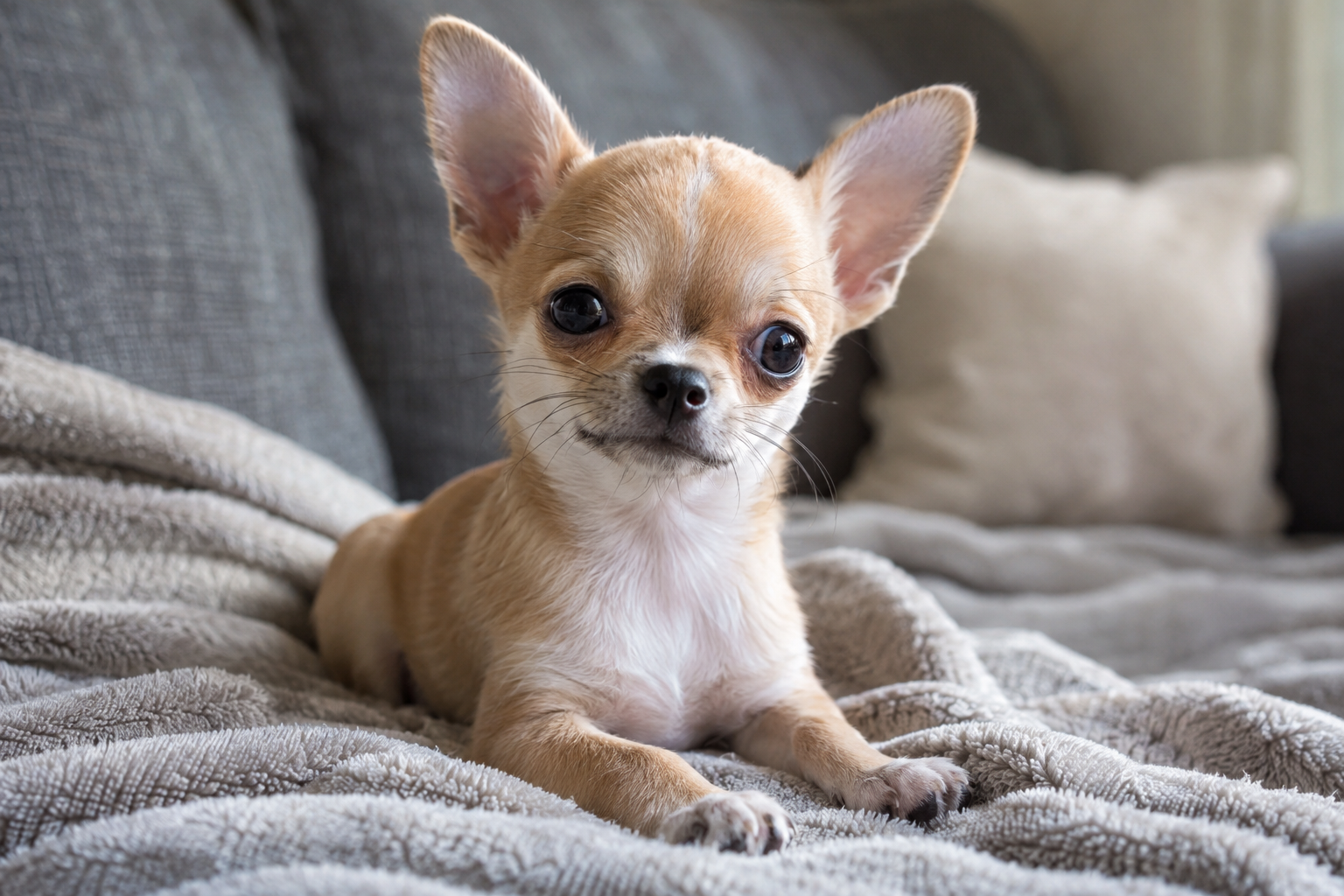
Crate Training a Chihuahua Puppy: Gentle First Steps
Crate training a Chihuahua puppy works best when you teach comfort before confinement. Start with an open door, reward voluntary exploration, and introduce brief door closures only when your puppy is relaxed. The goal is a familiar resting place—not a puppy who has stopped protesting because nobody responds.
I’m Yulia Sky, founder of World Class Puppies, established in 2019. My approach to Chihuahua puppy care puts the individual puppy ahead of a rigid timetable. For Apple Head Chihuahua puppies, I want owners to think about safe access, predictable toilet opportunities, and trust before asking for longer periods behind a closed door.
If you are preparing before homecoming, browsing our available Chihuahua puppies can help you start a conversation about an individual puppy’s current routine. Availability changes weekly; a listing does not tell you how that puppy will respond to your home or crate.
What is the first step in crate training a Chihuahua puppy?
The first step is making an open crate comfortable to approach and easy to leave. Place it near where you spend quiet time, secure the door so it cannot swing shut, and let your puppy investigate without being pushed inside. Reward curiosity, even if that initially means only looking at the entrance.
Choose a calm moment after a toilet opportunity, when your puppy is neither frantic with energy nor overdue for food. Sit nearby without blocking the opening. You can place a small piece of the puppy’s usual food near the entrance, then slightly farther inside as confidence grows.
Do not close the door just because all four paws finally cross the threshold. That first successful entry should not become a surprise trap. Let your Chihuahua walk out again and discover that entering does not automatically mean losing access to you.
What progress actually looks like
Useful signs include approaching voluntarily, sniffing with a loose body, taking food normally, and choosing to linger. A puppy who freezes inside is not necessarily comfortable. Watch the whole puppy rather than counting seconds of silence.
How should a crate fit an Apple Head Chihuahua puppy?
A crate should allow your Chihuahua to stand naturally, turn around, and lie comfortably stretched out. Check the actual puppy against the usable interior, not just the size label on the packaging. A divider can make a larger crate more appropriate, provided it is secure and has no trapping points.
Apple Head Chihuahua care does not require a special crate style solely because of head shape. What matters is safe construction, ventilation, an accessible entrance, and enough room for comfortable movement. Inspect gaps, latches, edges, and divider attachments before use.
Prepare the space carefully:
- Place the crate on a stable surface at floor level.
- Keep it away from direct sun, drafts, cords, and heaters.
- Use simple washable bedding if your puppy does not chew or swallow it.
- Remove collars, harnesses, and dangling identification before crating to reduce snagging risk.
- Check any toy for size, damage, and suitability before leaving it with the puppy.
Avoid draping a cover where fabric can be pulled inside. A cover is optional, not a requirement, and it must not reduce ventilation or make the space too warm.
When budgeting for a crate and homecoming supplies, separate those costs from the puppy’s purchase price. Our Chihuahua puppy price guide explains the pricing context; each available puppy is individually priced on its listing.
When can I close the crate door?
Begin closing the door only after your Chihuahua enters willingly and seems comfortable staying inside with you nearby. Start with a brief movement of the door, then an equally brief closure, reopening before your puppy becomes worried. Increase difficulty only when the current step looks easy.
I prefer to think of this as a series of separate skills:
- Entering: the puppy chooses to walk inside.
- Remaining: the puppy stays while the door remains open.
- Door movement: the puppy stays relaxed as the door moves.
- Brief closure: the door closes while you remain beside the crate.
- Small distance: you shift your position or stand up.
- Brief absence: you step out of sight and return calmly.
Do not increase duration, distance, and household noise at the same time. If standing up unsettles your puppy, remain seated for the next practice. Returning to an easier step is good teaching, not failure.
Keep rewards compatible with the puppy’s normal feeding plan. Food can encourage exploration, but it should not be used to lure a worried Chihuahua into a situation that immediately becomes overwhelming.
What should I do if my Chihuahua cries in the crate?
Check for an unmet need or distress rather than automatically ignoring the crying. Your puppy may need a toilet opportunity, feel isolated, be uncomfortable, or find the exercise too difficult. Respond calmly and make the next attempt easier.
If a toilet break may be needed, take your puppy to the established toilet area with minimal excitement. Then reassess whether the puppy is ready to rest or needs a different arrangement. Do not assume every sound is an attempt to manipulate you.
Brief uncertainty is different from escalating distress. Frantic escape attempts, biting at the enclosure, heavy drooling, or an inability to settle call for stopping the exercise and reconsidering the setup. Do not wait for a distressed puppy to become silent before helping.
Avoid banging on the crate, shouting, spraying water, or using it as punishment. If fear persists despite gradual practice, seek qualified behavior support. A sudden change in settling, especially alongside physical symptoms, also deserves a conversation with your own veterinarian.
How long can a Chihuahua puppy stay in a crate?
There is no single safe duration that fits every Chihuahua puppy. Age, waking activity, feeding, toilet patterns, health, and previous experience all affect what is reasonable. Use your puppy’s observed needs and your veterinarian’s guidance rather than treating a formula as permission to leave the puppy confined.
Separate training practice from necessary household management. A puppy may manage a very brief door closure during practice but not yet be ready to nap behind that door. Sleeping quietly once also does not establish readiness for a much longer absence.
If your schedule regularly exceeds your puppy’s comfortable resting and toilet interval, arrange help or an appropriate puppy-safe pen setup. A crate should not force a Chihuahua to choose between distress and soiling the sleeping space. Never restrict water simply to extend confinement.
A simple log can help: note waking, meals, drinking, toilet opportunities, and successful rest. Patterns are more useful than an ambitious target.
How do I handle the first nights?
Keep the sleeping space close enough that you can hear your puppy and respond to needs. Offer a calm toilet opportunity before settling, reduce household stimulation, and use the same quiet sequence each evening. Expect adjustment rather than assuming the first night should be uninterrupted.
If the closed crate is still unfamiliar, do not turn bedtime into a prolonged test. A secure pen with an open crate may be a more manageable temporary arrangement while you teach door closure separately during the day. The enclosure still needs careful puppy-proofing and a plan for toilet access.
At night, keep necessary outings quiet and purposeful. Avoid lively play, but do not withhold reassurance from a frightened puppy. The practical objective is helping your Chihuahua return to rest after needs have been met.
Does Apple Head Chihuahua temperament change the plan?
Apple Head Chihuahua temperament varies between individuals; head shape does not tell you how quickly a puppy will accept a crate. Some puppies investigate readily, while others need more distance and repetition. Match the pace to the puppy in front of you.
If you are considering an Apple Head Chihuahua for families, agree on handling rules before training begins. Children should not open the crate without an adult, reach inside to retrieve a resting puppy, or gather around the door. The resting area should remain a place where the puppy is left undisturbed.
Size labels do not supply a training timetable either. “Teacup,” “mini,” “micro,” and “tiny” are informal marketing and search terms, not official AKC varieties. The AKC recognizes one Chihuahua breed, with an adult weight not exceeding 6 lb under its breed standard, in smooth and long coats; that standard is not a prediction of an individual puppy’s eventual size.
If you have been searching for teacup Chihuahua puppies, our explanation of whether Teacup Chihuahuas are real provides useful context. The guide to Teacup versus Apple Head terminology also explains why those descriptions should not replace individual care planning.
Which homecoming details make crate training easier?
Ask what the puppy already knows rather than accepting “crate trained” as a complete description. Useful Chihuahua breeder questions include whether the puppy has rested alone, whether the door was closed, what bedding was used, and what happened when the puppy woke.
These details help you begin at an appropriate level without assuming the same behavior will transfer immediately to a new home. For broader breeder vetting, use our Chihuahua puppy scam checklist; pressure to pay is not a substitute for clear answers. You can also see our past clients and their puppies for published family experiences, without treating another puppy’s transition as a promise about your own.
If you are still deciding between individuals, our guide to choosing between two Chihuahua puppies encourages looking beyond appearance.
When is the problem more than training?
Do not treat unusual sleepiness, repeated vomiting, diarrhea, weakness, breathing difficulty, or obvious pain as resistance to the crate. Contact your veterinarian promptly about concerning symptoms; collapse or difficulty breathing requires urgent veterinary attention. Training should pause when a puppy may be unwell.
This guide cannot determine your puppy’s feeding needs, toilet capacity, or medical fitness for a particular routine. Those decisions belong with your own veterinarian. The written health guarantee explains its terms and exclusions; it does not replace veterinary care or promise a particular training outcome.
Build comfort before asking for independence
A successful crate routine is measured by willing entry, comfortable rest, and needs being met—not by how long you can keep the door closed. Keep the next step small, make household expectations consistent, and allow your Chihuahua to progress without a deadline.
When you are ready to discuss homecoming, explore our available Chihuahua puppies and contact us with questions about an individual puppy’s routine. Readers seeking a local starting point can also visit our page for Chihuahua puppies for sale in Los Angeles.
Educational disclaimer: This article is for general educational purposes only and is not veterinary advice, diagnosis, or treatment. Consult your own veterinarian about your Chihuahua’s individual health, nutrition, and care needs. Seek prompt veterinary attention for concerning symptoms.
Frequently asked questions
Should everyone in the household use the same crate cue?
Yes, a consistent, softly spoken cue makes the routine easier to understand. Say it as your Chihuahua willingly enters rather than repeating it while pushing or carrying the puppy inside.
Can I move the crate between rooms?
You can, but keep the bedding, entry routine, and surrounding activity familiar. If your Chihuahua seems unsettled in the new location, return to easy open-door practice before expecting a longer rest.
Does my Chihuahua need to use a crate forever?
No. A crate is one management option, and some households eventually use a puppy-safe room or pen for everyday rest. Keeping the crate familiar can still be useful when temporary confinement is necessary.
How should I restart after a frightening crate experience?
Begin with the door open and let your Chihuahua choose whether to approach. Remove the immediate trigger where possible and rebuild from a step the puppy finds comfortable. Persistent fear or attempts to escape warrant individualized professional help rather than more demanding practice.
Ready to meet your new puppy?
See currently available teacup puppies or reach out to join our waitlist.