Apple Head Chihuahua
Are Teacup Chihuahuas Real? A Breeder Sets the Record Straight
By Yulia Sky · October 10, 2026
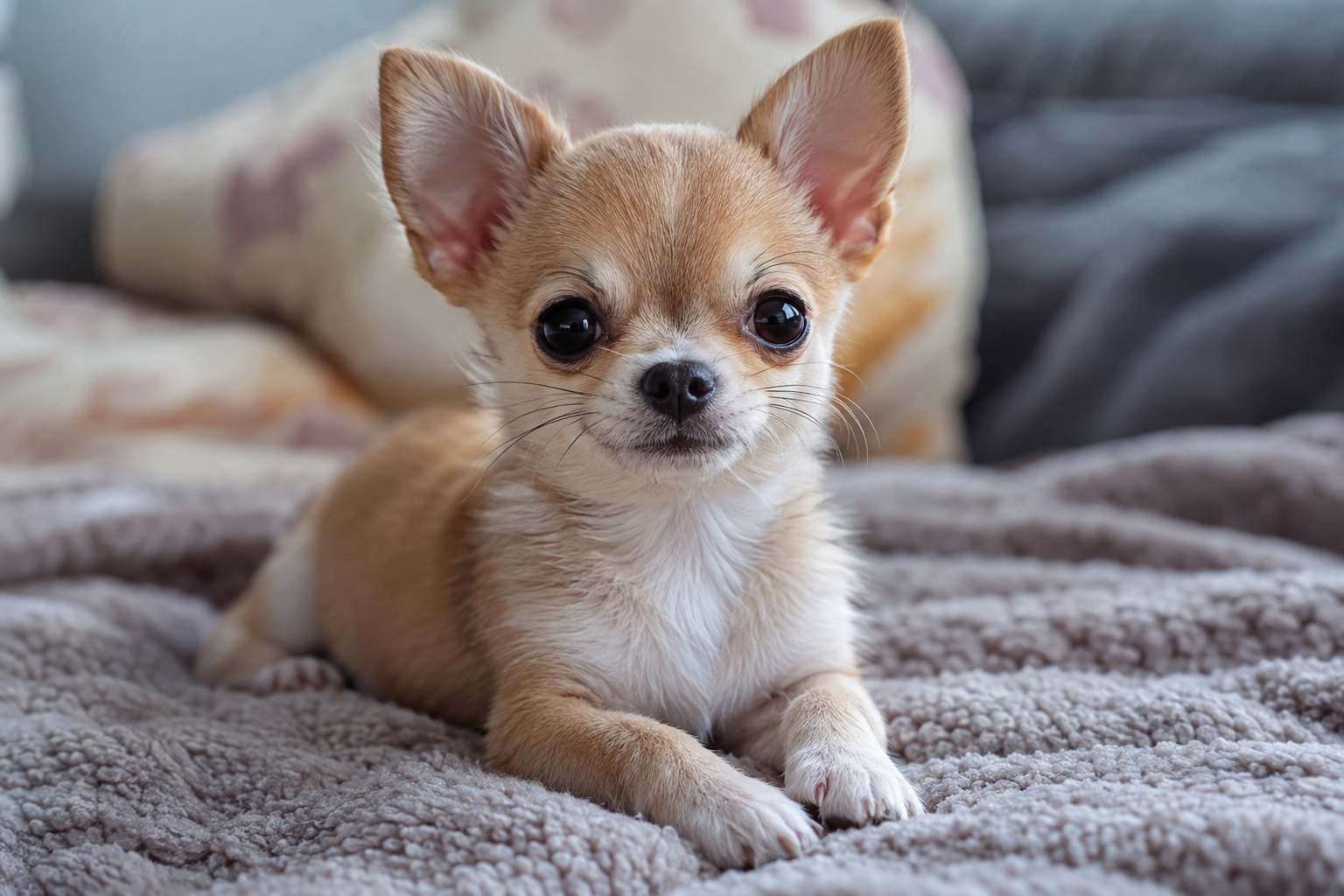
Are Teacup Chihuahuas Real? A Breeder Sets the Record Straight
Yes, the very small Chihuahuas described as teacup are real. But Teacup Chihuahua is not a separate breed or an official size variety. Teacup, mini, micro, and tiny are informal marketing and search terms. The American Kennel Club recognizes one Chihuahua breed, with smooth and long coats and an adult breed-standard weight not exceeding 6 pounds—not a separate teacup classification.
I'm Yulia Sky, founder of World Class Puppies, established in 2019. My approach to this question is straightforward: look past the label and learn about the individual Chihuahua. A descriptive word cannot establish health, temperament, maturity, or a guaranteed adult weight.
This matters especially when you are looking at Apple Head Chihuahua puppies. Apple Head describes head shape; teacup suggests small size. Those descriptions address different features, and neither tells you everything you need to know. When browsing available Chihuahua puppies, make the puppy's individual information your starting point—not the smallest-sounding name.
What does teacup Chihuahua actually mean?
Teacup Chihuahua generally means a Chihuahua being described as especially small. The term has no universally defined weight cutoff, and different sellers may use it differently. Without an explanation, it tells you much less than the puppy's age and a dated weight measurement.
The AKC Chihuahua breed standard provides a public reference for the breed. Its weight limit is a conformation standard, not a promise about how every Chihuahua will grow or a target owners should achieve through feeding. A Chihuahua outside that standard still deserves care based on its actual body condition and needs.
I would rather see a description such as “current weight measured on this date, with adult size estimated rather than guaranteed” than a string of dramatic size labels. One provides information you can discuss; the other mainly creates an impression.
Our Teacup Chihuahua guide offers additional context for that search term. The important distinction remains the same: the Chihuahua is real, while the supposed separate classification is not.
Is an Apple Head Chihuahua the same as a teacup Chihuahua?
No. Apple Head refers to a rounded, apple-dome skull shape associated with the Chihuahua breed standard, while teacup is an informal size description. An Apple Head Chihuahua can have either coat type and is not automatically unusually small.
Think of the descriptions as separate questions:
| Description | What it describes | What it does not establish |
|---|---|---|
| Apple Head | Head shape | Adult weight, health, or personality |
| Teacup | An informal suggestion of very small size | An official variety or reliable weight cutoff |
| Long Hair | Coat type | A distinct size category |
| Smooth coat | Coat type | Lower care needs in every respect |
A rounded head is not a medical assessment, and an attractive photograph cannot establish comfortable breathing, sound movement, or future development. Avoid assuming that a more exaggerated feature is automatically more desirable.
For a closer explanation of how these labels overlap, read Teacup Chihuahua vs Apple Head Chihuahua: What's the Difference?. The practical takeaway is simple: identify which trait a word describes before using it to compare puppies.
Can a breeder guarantee a teacup Chihuahua's adult size?
An adult-size estimate is not a guarantee. Parent size, the puppy's age, and recorded growth can inform expectations, but they cannot establish a precise final weight in advance. Treat certainty about an unusually low adult weight as a reason to ask more questions.
A puppy's current weight is only one snapshot. Without age, measurement date, and growth context, a number can be misleading. Photographs beside mugs or in someone's hand are even less useful because perspective and object size change the impression.
These are useful Chihuahua breeder questions:
- When was the puppy last weighed, and how old was the puppy then?
- Is the stated adult weight an estimate or a contractual claim?
- What information supports that estimate?
- What care information will accompany this particular puppy?
- Would this Chihuahua still suit my household if the adult estimate is wrong?
That last question deserves an honest answer before you make a commitment. If a slightly larger adult Chihuahua would feel like a disappointment, pause and reconsider whether size has become more important than companionship.
Never reduce food to preserve a teacup appearance. Chihuahua puppy care should support healthy development, with feeding and body-condition questions directed to your own veterinarian.
Are teacup Chihuahua puppies automatically unhealthy?
No, a marketing label alone cannot tell you whether a Chihuahua is healthy or unwell. However, unusually small size can make everyday care less forgiving, so it deserves an individual veterinary discussion. No breeder description can replace an examination or predict a lifetime of health.
Very small Chihuahua puppies may have limited reserves when they are not eating or become ill. Missed meals, vomiting, diarrhea, unusual weakness, or a sudden behavior change should not be brushed off as normal simply because a puppy is little. Ask your veterinarian in advance how to recognize problems and where to seek urgent help.
Severe weakness, collapse, seizures, or difficulty breathing call for urgent veterinary attention. An article cannot determine the cause, and I do not recommend relying on internet remedies instead of professional assessment.
For anyone seeking an Apple Head Chihuahua health guide, my central advice is to separate visible appearance from actual health information. Discuss the puppy's growth, mouth and teeth, movement, eyes, and any recorded findings with your veterinarian. Head shape alone does not answer those questions.
Review the written health guarantee rather than interpreting a phrase such as “healthy teacup” as coverage. A written guarantee has defined terms and exclusions; it is not a promise that a Chihuahua will never need veterinary care.
Does small size predict Apple Head Chihuahua temperament?
No. Apple Head Chihuahua temperament cannot be reliably predicted from a size label or head shape. Individual disposition, early experiences, handling, and the home environment all matter more than whether a listing says teacup.
I encourage buyers to ask about observable behavior rather than broad promises like “perfect lap puppy.” Does the Chihuahua approach willingly, settle after activity, explore a safe space, or need extra time around something unfamiliar? Those observations are more useful when they include context.
A sleepy moment does not prove a permanently calm personality. A hesitant moment does not establish lifelong fearfulness. Ask how the puppy behaves across ordinary situations instead of drawing a conclusion from one short video.
Our guide to choosing between two Chihuahua puppies explains how to compare individuals without letting appearance dominate the decision. Even when two puppies look similar, their fit with your daily routine may differ.
What does responsible care look like beyond the label?
Apple Head Chihuahua care begins with a safe environment, predictable routines, and attention to the individual puppy. The smallest Chihuahua is not a decorative object and should not spend life being passed from person to person. Safe movement, uninterrupted rest, and gentle learning opportunities are essential parts of everyday care.
Before homecoming, consider these practical details:
- Create a secure floor-level area. Check gaps behind furniture and openings a small Chihuahua could squeeze through.
- Prevent accidental falls. Do not leave a puppy unattended on a bed, sofa, or raised grooming surface.
- Agree on handling rules. Support the body, avoid sudden grabbing, and let the Chihuahua retreat when overwhelmed.
- Keep care information together. Have the existing feeding details and available health records ready for your veterinarian.
- Choose equipment by fit. Check that a harness cannot slip off and that bowls are easy for the puppy to use.
- Plan for ordinary absences. Make sure someone can provide the care the puppy actually needs rather than assuming small means low-maintenance.
For Long Hair Chihuahuas, include gentle coat checks and brushing in the routine. Smooth-coated Chihuahuas also need grooming and handling practice. Coat length changes some tasks, but it does not create a different size class or remove the need for regular care.
Is a very small Apple Head Chihuahua a good choice for families?
An Apple Head Chihuahua can suit a family when the adults can provide supervision, safe handling, and a calm place to rest. The best match depends on the particular Chihuahua and the household—not a teacup designation. Smaller is not automatically easier for children to handle safely.
When considering an Apple Head Chihuahua for families, I would put household habits ahead of a preferred weight. Can children sit on the floor for interaction? Will adults prevent chasing, grabbing, and carrying the puppy around unsupervised? Is there a quiet retreat that everyone respects?
A busier household may need a different individual match than a quiet adult home. There is no benefit in choosing the smallest puppy if meeting that puppy's needs will make ordinary family life stressful. A thoughtful match is kinder to everyone involved.
How should buyers evaluate a teacup description?
Start with identity, age, dated measurements, care information, and written records. Then consider whether the seller explains uncertainty clearly and answers questions without pressure. A reassuring adjective is not evidence.
Use the Chihuahua puppy scam checklist when evaluating red flags or breeder claims. Be cautious about absolute adult-size promises, unexplained inconsistencies, or requests to commit before you can review relevant information.
For a practical records reference, see what documents should come with your new Chihuahua puppy. Keep the puppy's factual details separate from promotional wording so your own veterinarian can review useful information.
Price also does not validate a size label. Each available puppy is individually priced; consult the Chihuahua puppy price guide for context and current listings for individual information. Paying more cannot make an adult-weight prediction certain.
If you want to look beyond marketing when assessing trust, you can see our past clients and their puppies. Treat that as one part of your research, not a substitute for reviewing the individual puppy's records and asking your own questions.
Frequently asked questions
Does a teacup label belong on a Chihuahua's veterinary record?
Tell your veterinarian that your puppy is a Chihuahua and provide the puppy's age, measured weight, and available records. Mention the label if it helps explain your concerns, but it does not establish a separate medical category.
Can Chihuahua littermates mature at different sizes?
Yes, puppies from the same litter can reach different adult sizes. Shared parents do not make their growth identical, so assess each Chihuahua individually.
Should a Chihuahua described as teacup always be carried?
No. Safe ground-level exploration and appropriate activity still matter. Carrying may be useful in particular situations, but constant carrying is not a substitute for learning and movement.
Choose the Chihuahua, not the size promise
The answer to “Are Teacup Chihuahuas real?” is yes to the individual Chihuahuas and no to a separate official classification. Apple Head describes a different feature, and neither label guarantees health, personality, or final weight.
My priority is helping you ask better questions before you become attached to a description. Explore our available Chihuahua puppies, remembering that availability changes weekly, and contact us to discuss individual information and your household's needs.
Educational disclaimer: This article is for general educational purposes only and is not veterinary advice, diagnosis, or treatment. Consult your own veterinarian about your Chihuahua's health, nutrition, growth, and individual care needs. Seek urgent veterinary care for severe or rapidly worsening symptoms.
Frequently asked questions
Does a teacup label belong on a Chihuahua's veterinary record?
Tell your veterinarian that your puppy is a Chihuahua and share the puppy's age, measured weight, and available records. You can mention the seller's label, but it does not replace those details or establish a medical category.
Can two Chihuahua puppies from the same litter grow to different sizes?
Yes, Chihuahua littermates can mature at different sizes. Shared parentage does not guarantee identical growth or matching adult weights, so each puppy needs individual assessment.
Should a teacup Chihuahua always be carried?
No. A Chihuahua still needs safe opportunities to explore, move, and learn at ground level. Carrying can help in specific situations, but it should not replace appropriate activity and confidence-building.
What if the description changes from teacup to miniature?
Neither word establishes a separate official Chihuahua variety. Ask whether any factual information has changed, such as the puppy's measured weight, records, or estimated adult size, rather than assuming the new label means a different kind of Chihuahua.
Ready to meet your new puppy?
See currently available teacup puppies or reach out to join our waitlist.