Apple Head Chihuahua
Coat Colors of the Chihuahua: A Breeder's Visual Guide
By Yulia Sky · October 10, 2026
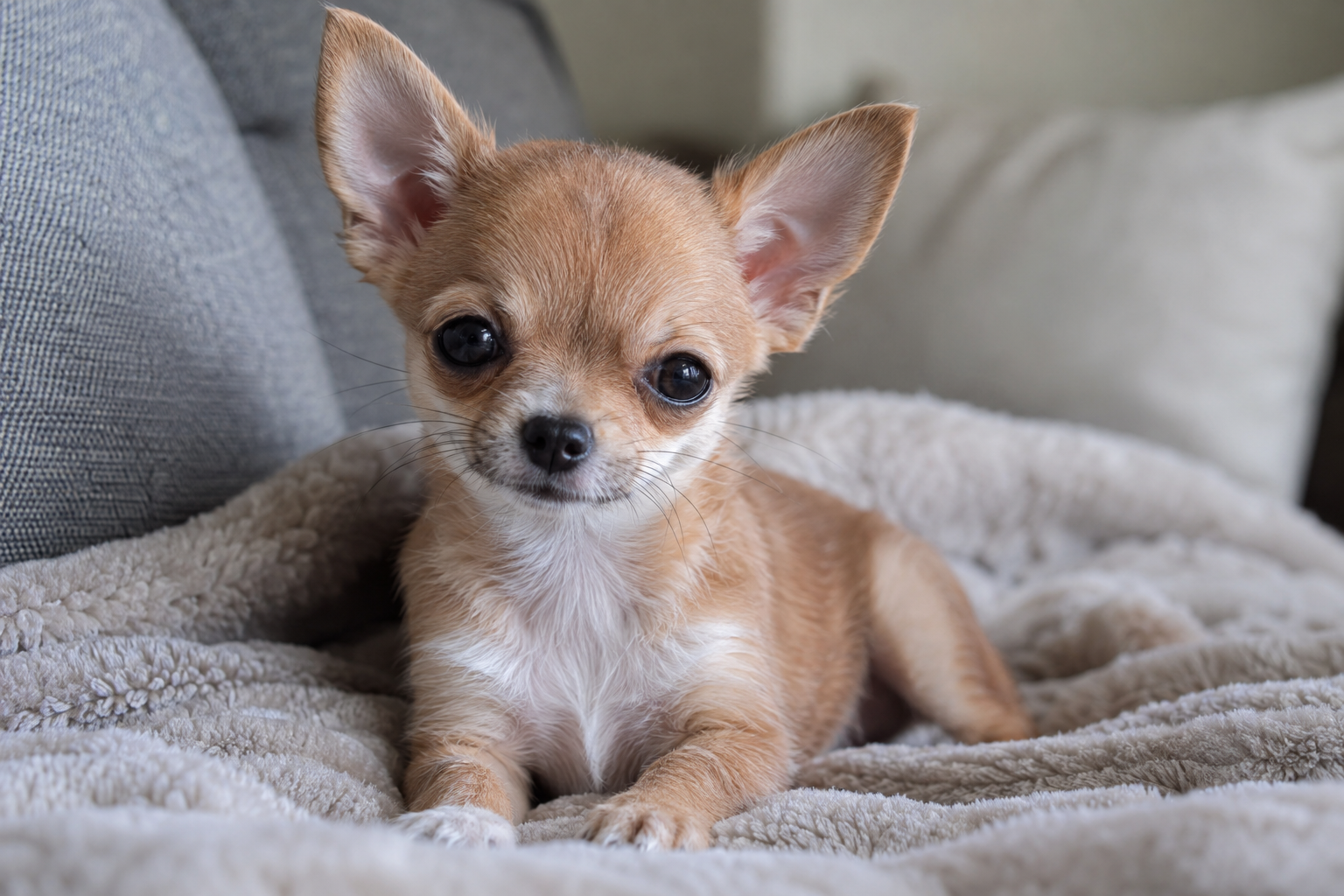
Coat Colors of the Chihuahua: A Breeder's Visual Guide
Chihuahuas can have fawn, cream, black, chocolate, white, and diluted shades, with markings such as tan points, white patches, sable tipping, or brindle stripes. Apple Head Chihuahua puppies share this broad range: the rounded head description does not determine coat color. Color is a visual trait, not a dependable guide to personality, adult size, or health.
I'm Yulia Sky of World Class Puppies, established in 2019. My approach to describing Chihuahua puppies is simple: separate the background color, the pattern, and the coat length before reaching for a fancy name. That makes photographs easier to understand and keeps appearance from overshadowing the puppy's needs.
You can use this guide while browsing available Chihuahua puppies, but treat photographs as a starting point rather than a promise of an exact adult shade. The most useful description is one you can understand in ordinary daylight.
What colors can an Apple Head Chihuahua be?
An Apple Head Chihuahua can display the same broad range of colors and markings seen throughout the Chihuahua breed. Fawn, cream, black, chocolate, and white are useful starting descriptions, while blue and lilac describe diluted pigment. Apple head refers to head shape, not a separate color category.
I find it helpful to read a coat in three layers:
- Color: Is the main visible shade warm tan, pale cream, black, brown, or gray?
- Pattern: Are there stripes, dark-tipped hairs, lighter points, or white patches?
- Texture and length: Is the coat smooth or long, and how does the hair catch the light?
A long-coated fawn Chihuahua with white markings and a smooth-coated fawn Chihuahua with white markings may look surprisingly different in photographs. Their basic color description can still be the same.
A quick visual reference
| Description | What to look for | A useful distinction |
|---|---|---|
| Fawn | Warm tan, beige, or golden body color | May have a dark mask or dark-tipped hairs |
| Cream | Pale ivory or light buttery color | Not necessarily the same as white |
| Red | Deeper warm reddish or copper-toned color | Shade boundaries overlap with darker fawn |
| Black | Black hair over much of the body | Can occur with tan points or white markings |
| Chocolate | Brown pigment rather than black | Nose and other pigment can help clarify the description |
| Blue | Slate-gray appearance from diluted black pigment | Not a literal bright blue |
| Lilac | Soft diluted brown, sometimes appearing grayish-taupe | Photographs alone may be misleading |
| White | White hair in small markings or large areas | Extent of white is separate from the colored areas |
This table is a visual aid, not a genetic test. A color name cannot reveal every inherited trait a Chihuahua carries.
How do fawn, cream, and white Chihuahuas differ?
Fawn usually looks warm tan or golden, cream looks pale ivory or buttery, and white lacks that obvious warm shading in the hair. These distinctions can become difficult under yellow indoor lighting or heavy photo editing. Look at the body, ears, and chest together rather than judging a single bright patch.
Fawn and red: a warm spectrum
Fawn is a broad everyday description. Some Chihuahuas look sandy; others appear golden or deeper tan. Red describes a richer reddish cast, but the boundary between dark fawn and red is not something every photograph resolves neatly.
A dark muzzle can add contrast without changing the basic fawn description. Look closely at whether the darkness is concentrated on the face or spread through individual hairs across the back. Those are different visual features.
Cream and white: look for gentle shading
A cream puppy may have slightly warmer ears or a pale golden cast along the back. A white patch beside cream hair can make the distinction easier to see. However, a very bright exposure can wash both shades into the same apparent white.
I would rather use a clear description such as “pale cream with a white chest” than imply that an unusual-sounding label makes a puppy more desirable.
How can I recognize Chihuahua coat patterns?
Chihuahua coat patterns describe how colors are distributed, not just which shade dominates. Sable involves dark-tipped hairs, brindle produces striping, and tan points appear in recognizable areas such as above the eyes and on the legs. White markings may occur alongside these features.
Sable: inspect the individual hairs
A sable Chihuahua often has a warm background with darker tips through the coat. From a distance, that overlay may look like a dark blanket along the back. A close photograph can show that the darkness comes from tipped hairs rather than one solid patch.
Sable can look especially textured on a Long Hair Chihuahua because the longer hairs separate and move. The visible amount of dark overlay may also change as the puppy matures.
Brindle: stripes rather than an even overlay
Brindle creates darker stripes over a lighter background. On a smooth coat, the stripes may be relatively easy to trace. Longer hair can soften the edges and make the pattern appear less crisp.
Brindle and sable are not interchangeable descriptions. If you cannot tell which you are seeing, request close photographs of the shoulder, sides, and back.
Tan points and tricolor
Tan points are lighter markings commonly visible over the eyes, along the muzzle, on the chest or legs, and beneath the tail. Black-and-tan and chocolate-and-tan descriptions identify both the darker background and those lighter areas.
Tricolor commonly describes a combination such as black, tan, and white. It tells you that three visible colors are present, not where every patch will fall.
White patches, blazes, and socks
White can appear as a small chest mark, a facial stripe, pale feet, or extensive areas surrounding colored patches. Terms such as parti-color or piebald may be used for substantial white with colored areas, but sellers do not always apply those words identically.
Ask for a plain-language description of placement. “White body with chocolate patches over both ears” tells you more than a decorative color name alone.
Do Chihuahua puppies change color as they grow?
Yes, a Chihuahua puppy's visible shade and shading can change as the puppy coat gives way to a more mature coat. Dark tipping may become less prominent, and growing long hair can alter the appearance of contrast and pattern edges. No photograph can guarantee an exact adult shade.
This does not mean every puppy changes dramatically. Some remain visually similar, while others develop a noticeably different balance of pale and dark hair. The amount of change depends on the individual coat rather than a universal timetable.
For a useful comparison, keep photographs taken in similar daylight, from similar angles, without filters. Label them with the puppy's age. A warm kitchen photo and a cool outdoor photo can create the illusion of a color change that is mostly lighting.
Normal coat maturation should not be used to explain away hair loss, irritated skin, or a sudden unhealthy-looking coat. Those changes belong in a conversation with your own veterinarian.
Are blue, lilac, and merle the same kind of color?
No. Blue and lilac describe diluted pigment, whereas merle is a pattern associated with uneven pigment dilution. Merle has additional breeding and health considerations, and appearance alone cannot establish a puppy's genetic status or overall health.
Blue often looks slate gray, while lilac can look like a softer grayish brown. Neither requires a dramatic or saturated color in real life. White balance, shadows, and image processing can easily distort both.
Merle can produce mottled areas of lighter and darker pigment. Inheritance associated with two copies of certain merle variants can increase the risk of hearing and eye abnormalities; visible pattern alone is not enough to assess that risk. Questions about testing, parentage, or individual health findings should be reviewed with your veterinarian.
I would not use “rare” as a substitute for an explanation. For color-related breeder vetting, the Chihuahua puppy scam checklist helps keep the focus on verifiable information rather than dramatic advertising.
Does coat color affect Apple Head Chihuahua temperament?
Coat color is not a reliable way to predict Apple Head Chihuahua temperament. A cream puppy is not automatically calmer, and a black puppy is not inherently more confident. Evaluate the individual puppy's behavior, experiences, and comfort with everyday handling instead.
When considering an Apple Head Chihuahua for families, I would prioritize gentle interaction, appropriate supervision, and a safe resting area over matching a preferred shade. A child should learn to sit for an interaction rather than carry a puppy around simply because the puppy looks cuddly.
Watch for curiosity, the ability to settle, and responses to normal activity without staging frightening tests. One sleepy video or an unfamiliar setting does not tell the whole story. Color is easy to notice immediately; a suitable relationship takes more thoughtful observation.
Coat length, head shape, and size labels are separate
An Apple Head Chihuahua can have a smooth or long coat. Neither coat length determines the underlying color, and a rounded head does not establish an adult weight.
“Teacup,” “mini,” “micro,” and “tiny” are informal marketing and search terms, not official AKC varieties. The AKC Chihuahua breed description recognizes one Chihuahua breed, with adult weight not exceeding 6 pounds under its standard, in smooth and long coats. That standard is not a guarantee of an individual puppy's mature weight.
If you are comparing teacup Chihuahua puppies with apple head descriptions, my guide to Teacup Chihuahua vs Apple Head Chihuahua explains why those labels describe different ideas. The companion article on whether Teacup Chihuahuas are real provides more context for size terminology.
Practical care and questions beyond the color label
Apple head Chihuahua care should follow the puppy's coat condition, developmental needs, and individual veterinary guidance—not the marketing name of the shade. Smooth coats still need gentle grooming, while longer hair deserves attention where tangles develop, including behind the ears. My Apple Head Chihuahua grooming guide covers that subject in more detail.
For everyday Chihuahua puppy care, separate cosmetic observations from health concerns. Mud or ordinary shedding is different from persistent itching, thinning hair, or sore skin. A color chart cannot function as an Apple Head Chihuahua health guide or replace an examination.
Useful Chihuahua breeder questions include:
- Can I see an unfiltered daylight video of the puppy?
- Which words describe the main color, and which describe the markings?
- Has the visible shading changed in earlier photographs?
- Is the adult appearance being estimated rather than promised?
- What written information is available about the individual puppy?
Keep appearance and purchase terms separate. Each available puppy is individually priced; consult the Chihuahua puppy price guide for context and live listings for individual details. An unusual shade is not proof of better health or suitability.
For documented experiences rather than assumed results, you can see our past clients and their puppies. Photos of other Chihuahuas can illustrate variety, but they cannot promise what a different puppy will look like as an adult.
Choose the Chihuahua, not just the photograph
My favorite way to use a coat-color guide is as a vocabulary tool. Once you can distinguish cream from white, sable from brindle, and color from coat length, you can ask clearer questions without treating appearance as a quality ranking.
Explore our available Chihuahua puppies with that perspective; availability changes weekly. If you would like help understanding a color description or comparing visible markings, please contact us. I encourage choosing an individual companion whose needs fit your home, with color as one lovely detail rather than the deciding promise.
Educational disclaimer: This article provides general educational information and is not veterinary advice, diagnosis, or treatment. Consult your own veterinarian about your Chihuahua's health, genetic concerns, skin or coat changes, and individual care needs.
Frequently asked questions
What if my Chihuahua's records use a different color name than I expected?
Ask the breeder to explain the description and identify which markings it includes. Lighting, puppy coat changes, and different naming conventions can make a written label seem different from a photograph; a color label alone does not establish identity or ancestry.
Is a white blaze the same thing as a white collar?
No. A blaze is a stripe of white on the face, while a collar describes white around part or all of the neck. Both describe the location of markings rather than a separate Chihuahua variety.
Does a black nose mean a cream Chihuahua has black fur?
No. Nose pigment and visible coat color are related features, but they are not interchangeable descriptions. A cream Chihuahua can have a dark nose without visible black patches in its coat.
Can two Chihuahua puppies with the same parents have different colors?
Yes, siblings can inherit different combinations of color and pattern genes. Sharing parents does not mean puppies will have identical shades, white markings, or coat lengths.
Should color shampoo be used to keep a Chihuahua's white coat bright?
A white coat does not need cosmetic color correction to be healthy. Choose puppy-appropriate grooming products with professional guidance, and ask your veterinarian about persistent staining or skin changes rather than trying to bleach or disguise them.
Ready to meet your new puppy?
See currently available teacup puppies or reach out to join our waitlist.