October 30 Chihuahua Wellness Briefing: Changes Worth Checking
Saturday, October 31, 2026 · World Class Puppies Newsroom
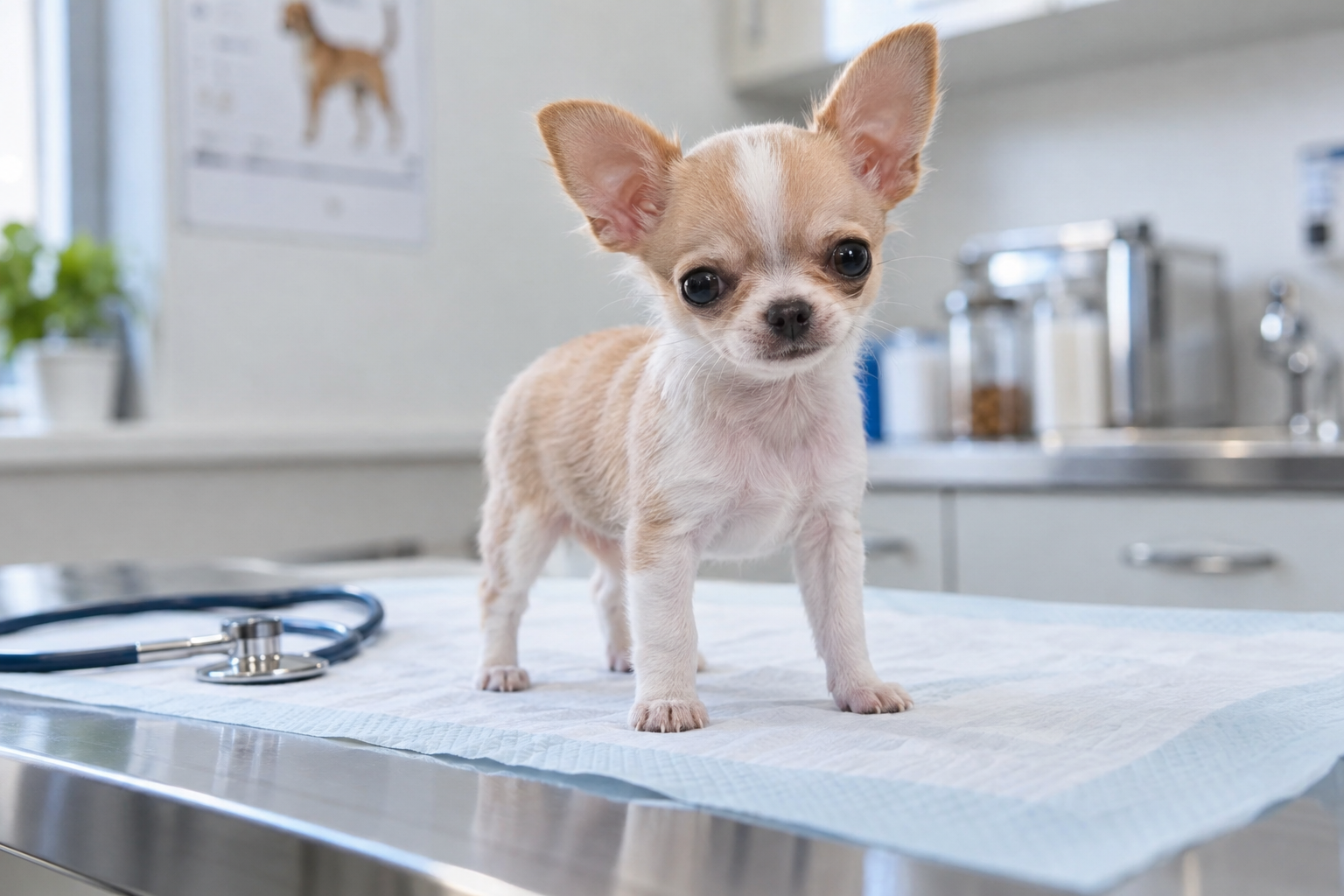
Friday, October 30, 2026 — Today's Chihuahua wellness briefing focuses on mouth, movement, and medical-record changes that deserve a veterinary conversation as October ends.
Today's owner briefing
The useful health update this week is a practical review, not a newly announced Chihuahua treatment or research breakthrough. The public guidance linked below addresses dental care, kneecap problems, and individualized vaccination decisions. It provides a sound framework for an end-of-month check, but should not be mistaken for guidance newly issued this October.
The common thread is that an owner's observations and a veterinarian's examination serve different purposes. You can notice that your Chihuahua chews differently, briefly carries a hind leg, or tires sooner on a familiar walk. Those observations help shape an examination; they cannot establish the cause or show how serious a condition is.
With Halloween approaching, changes in household activity may also disrupt familiar routines. Record that context without automatically blaming unusual behavior on excitement or stress. A quiet afternoon is not proof of illness, but a persistent departure from your Chihuahua's normal behavior deserves attention.
What are signs of dental problems in Chihuahuas?
Bad breath, changed chewing, dropping food, drooling, or bleeding around the mouth can signal a problem that needs veterinary assessment. AVMA dental guidance also identifies reduced appetite and mouth discomfort as reasons to seek an examination. These signs do not identify the underlying condition, and an apparently normal appetite does not establish that a Chihuahua's mouth is healthy.
For this week's review, note what changed and when. Did your Chihuahua begin leaving a familiar food unfinished, chewing on one side, or resisting previously comfortable handling? Do not force the mouth open or attempt to scrape teeth; ask your veterinarian how to assess comfort and plan appropriate home care.
What does patellar luxation look like in a Chihuahua?
A Chihuahua with a luxating patella may briefly lift a hind leg or show an intermittent skipping gait, but similar movement changes can have other causes. ACVS guidance describes patellar luxation as displacement of the kneecap from its normal position. Diagnosis and decisions about management require an examination rather than a home walking test.
A short video of a naturally occurring episode may help your veterinarian understand what you observed. Record the affected leg, duration, and activity immediately beforehand when possible. Do not repeatedly exercise your Chihuahua to reproduce the movement or try to reposition the kneecap yourself.
How do I know which vaccinations my Chihuahua needs?
Start with the available vaccination record and ask your veterinarian to review it against your Chihuahua's age, health, exposure, and applicable requirements. AVMA vaccination guidance supports individualized decisions rather than one universal plan. An incomplete record calls for professional review, not a guessed schedule or an assumption that protection is current.
Keep original documents where possible and distinguish a documented administration from a reminder or future appointment. An online description of a Chihuahua puppy is not a substitute for its individual medical record.
Heart concerns need the same separation between observation and diagnosis. A cough, reduced willingness to exercise, or unusual breathing does not by itself prove heart disease. A veterinarian can assess these changes and explain whether further evaluation is appropriate. Difficulty breathing or collapse warrants immediate veterinary attention rather than waiting to complete a wellness checklist.
Key takeaways
- Compare your Chihuahua with its own usual behavior, not an online description of what every Chihuahua should do.
- Record changes in chewing and appetite; do not use eating normally as proof of dental health.
- Capture naturally occurring gait changes without provoking discomfort or manipulating a knee.
- Bring vaccination documentation rather than relying on remembered dates or generic schedules.
- Escalate breathing difficulty or collapse immediately; routine observation is not a substitute for urgent care.
What it means for Chihuahua owners
Create a brief, dated note with three headings: mouth, movement, and energy or breathing. Include only what you actually observe. “Stopped twice on the usual walk” is more useful than “heart trouble,” because it preserves the facts without deciding the diagnosis. Add relevant context, such as a changed routine, and let your veterinarian interpret the pattern.
Gather previous examination summaries, dental records, vaccination documents, and a list of current products or medications. If you are welcoming a Chihuahua puppy, ask which records accompany that individual puppy and what remains to be clarified. For published purchase-related information, consult the health guarantee; it does not replace an individual veterinary assessment.
Finally, avoid turning a seasonal wellness review into a prediction about lifespan. This briefing does not present newly verified Chihuahua longevity research or a guaranteed healthy lifespan. The useful goal is narrower: identify meaningful changes, preserve accurate records, and make informed decisions with your own veterinarian.
Questions for your veterinarian
- Which changes in my Chihuahua's chewing or mouth comfort warrant a dental assessment?
- Would a video of the intermittent gait change help, and what observations should accompany it?
- Does the change in activity or breathing need prompt evaluation rather than a routine appointment?
- Are any vaccination records missing, and how does my Chihuahua's exposure affect the plan?
- What should I monitor at home, and which signs mean I should seek urgent care?
Sources & further reading
Educational disclaimer: This article is for general educational purposes only and is not veterinary advice, diagnosis, or treatment. Consult your own veterinarian about your Chihuahua's individual needs.
Explore Chihuahua puppies or contact us with puppy inquiries.