Chihuahua Training Briefing: October 22 Doorbell-Ready Reset
Friday, October 23, 2026 · World Class Puppies Newsroom
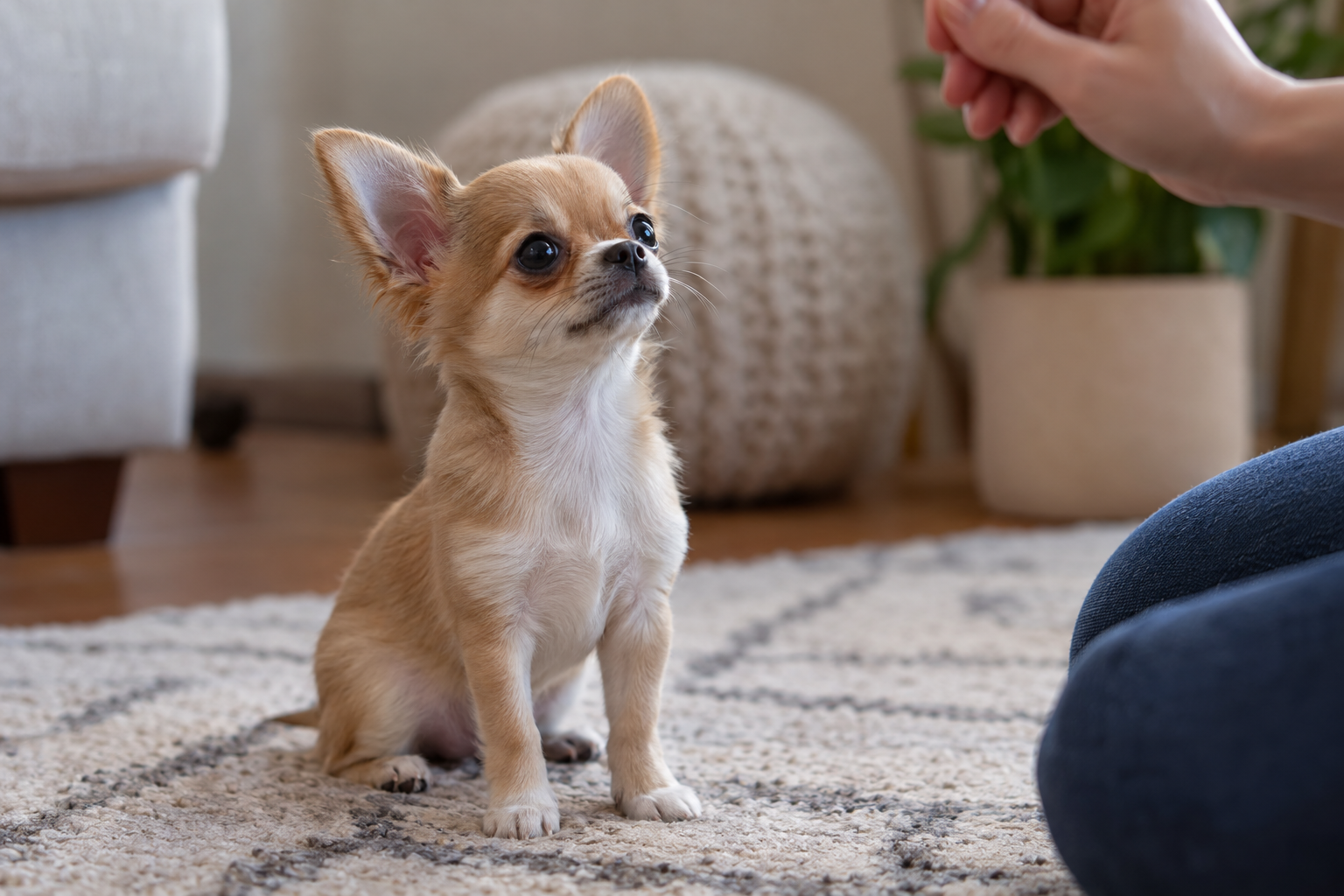
Thursday, October 22, 2026 — Today's Chihuahua training briefing: rehearse easy, rewarded responses before October visitors, doorbells and changing household routines raise the difficulty.
Today's owner briefing
The useful angle this week is preparation, not a new training breakthrough. This briefing draws on standing public guidance from AVSAB, AKC and AVMA; it does not report a newly released study or claim a verified search trend. Together, those resources support reward-based teaching, consistent household routines and social experiences matched to an individual puppy's comfort.
For Chihuahua owners, that translates into a practical October reset: work on the behavior you want before the busiest moment arrives. Potty training, crate comfort, recall and leash skills are connected by the same principle. Make the task manageable, reward success and change the setup when your Chihuahua cannot cope.
AVSAB's humane-training position favors reward-based methods rather than aversive methods. AKC's potty-training guidance emphasizes supervision and routine. AVMA's socialization guidance supports positive experiences without overwhelming the puppy. These are established foundations—not evidence that every Chihuahua needs the same timetable.
How do you potty train a Chihuahua?
Give your Chihuahua predictable opportunities to use an appropriate toilet area, supervise between opportunities and reward successful toileting promptly. Notice transitions such as waking, eating and playing rather than expecting a puppy to fit an arbitrary household deadline. If you find an accident later, clean it without punishment and review where supervision or access broke down.
A simple log can reveal practical obstacles: a closed door, a distracting route or a potty opportunity missed during a visitor's arrival. Record what happened rather than labeling the puppy stubborn. A sudden change in previously reliable habits belongs in a veterinary discussion, not an escalating correction routine.
How do you crate train a Chihuahua?
Introduce the crate as a comfortable place your Chihuahua can explore voluntarily, pairing calm approaches and entry with rewards. Build toward brief, relaxed door closures gradually rather than starting with a long absence. Persistent distress is a reason to reassess the plan, not proof that the puppy needs to be left to struggle.
For this week's household rehearsal, keep the crate away from the busiest doorway and practice while the home is quiet. Crate comfort and being comfortable alone are related but separate skills; success with an open crate does not establish readiness for extended confinement. A safe, appropriately arranged alternative space may be needed while those skills develop.
How do you teach a Chihuahua to come when called?
Begin in a secure, quiet space, say the recall cue once and reward your Chihuahua for coming to you. Increase distractions gradually, using secure boundaries or suitable leash management rather than testing an unfinished recall near an open exit. Avoid following a successful return with punishment.
Doorbell practice should not double as a recall exam. Secure your Chihuahua before opening the exterior door, then rehearse movement toward a mat or quiet area separately. Management prevents a mistake while training develops the response you eventually want.
Leash work follows the same pattern: reward attention and comfortable movement in an easy setting before adding noise or visitors. Check that equipment fits securely without restricting movement. If your Chihuahua freezes, retreats or becomes increasingly agitated, create space and reduce the challenge instead of pulling toward the trigger.
Socialization is not a requirement to greet everyone. A Chihuahua puppy can learn from calmly watching a person at a comfortable distance, then choosing to disengage. For puppies whose health protection is still being established, discuss suitable exposure options with your veterinarian rather than choosing between unrestricted outings and complete isolation.
Key takeaways
- Rehearse quiet versions of doorbell and visitor situations before busy October evenings.
- Reward the specific response you want instead of punishing confusion or fear.
- Track potty opportunities and accidents to identify gaps in the setup.
- Develop crate comfort separately from expectations about time alone.
- Protect unfinished recall with secure doors, boundaries and leash management.
- Treat comfortable observation—not forced greeting—as a useful socialization outcome.
What it means for Chihuahua owners
Choose one household bottleneck this week. If arrivals interrupt potty breaks, arrange the toilet opportunity before visitors enter. If doorway excitement disrupts leash attachment, practice attaching the leash in a quieter place first. Change one feature at a time so you can see which adjustment helps.
For behavior modification, define an observable goal: turning toward you after a sound, settling on a mat or watching a visitor without escalating. Start where your Chihuahua can succeed and stop before the exercise becomes overwhelming. Barking, hiding or refusal to approach can signal that the setup needs adjustment; they are not a diagnosis by themselves.
Keep a brief record of triggers, distance, responses and recovery. This gives your veterinarian useful context if fear, aggression, elimination changes or confinement distress persist. Sudden behavior changes deserve particular attention because training difficulties can overlap with discomfort or illness.
Questions for your veterinarian
- Could discomfort or a health change be contributing to new accidents or handling sensitivity?
- Which socialization settings suit my Chihuahua puppy's current health status?
- What observations would help distinguish crate discomfort from broader separation-related distress?
- When should persistent fear or aggression prompt referral for individualized behavioral support?
Sources & further reading
- AVSAB position statements: humane training and puppy socialization
- AKC guidance: How to Potty Train a Puppy
- AVMA guidance: Socialization of dogs and cats
This article is for educational purposes only and is not a substitute for professional veterinary advice, diagnosis or treatment. Consult your own veterinarian about your Chihuahua's individual needs.
Explore Chihuahua puppies or contact us with questions.