Chihuahua Training Briefing: Practice Before Pressure, Oct. 12
Tuesday, October 13, 2026 · World Class Puppies Newsroom
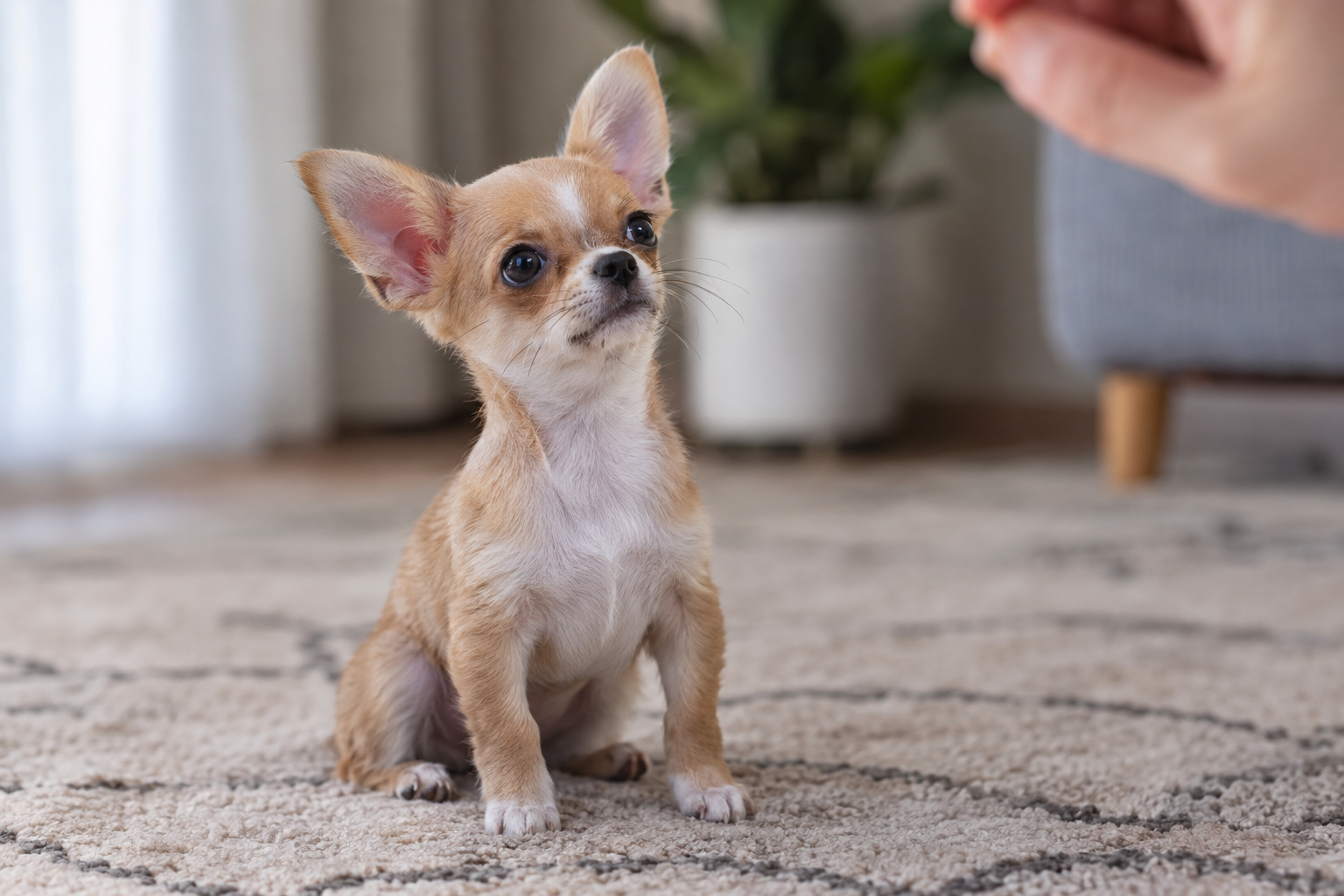
Monday, October 12, 2026, Pacific Time — Today’s Chihuahua training briefing puts easier practice, timely rewards and gradual exposure ahead of punishment or forced participation.
Today's owner briefing
With October bringing doorstep activity and changing household routines, this week is a useful time to simplify Chihuahua training. The practical angle is not a newly announced technique: it is applying established humane-training guidance consistently across potty habits, crate comfort, recall, leash work and socialization. No new research release or measured search trend is being claimed in this briefing.
The American Veterinary Society of Animal Behavior’s humane-training position supports reward-based methods and advises against aversive training. Its socialization guidance emphasizes safe, positive experiences rather than overwhelming exposure. AKC’s puppy potty-training guidance adds a complementary everyday lesson: predictable opportunities, supervision and reinforcement help build reliable habits. These are general principles applied here to Chihuahua owners, not evidence of a new Chihuahua-specific study.
Together, those sources suggest a practical editorial priority for this week: reduce difficulty before demanding more reliability. A Chihuahua who responds in a quiet kitchen has not necessarily learned to respond beside an opening front door. Changing the setting, distraction level or distance changes the task.
How do you potty train a Chihuahua?
Provide predictable opportunities to use a designated toilet area, supervise between opportunities and reward your Chihuahua promptly after finishing in the right place. Watch individual patterns around waking, eating and play rather than expecting every puppy to follow the same timetable. If accidents happen, clean the area and adjust supervision instead of punishing the puppy.
For this week’s reset, keep a simple record of successful trips and accidents. Note what happened immediately beforehand: an interrupted nap, energetic play or a missed opportunity while the household was busy. The purpose is to identify a manageable pattern, not to prove that a Chihuahua is being stubborn. Avoid restricting drinking water as a training shortcut.
How do you crate train a Chihuahua?
Introduce the crate as a comfortable place your Chihuahua can explore voluntarily, rewarding relaxed interest before gradually practicing brief door closures. Keep the challenge small enough that the puppy can remain comfortable, and arrange toilet opportunities around the individual’s needs. A crate should not serve as punishment or a substitute for companionship, movement and supervision.
Progress means comfortable behavior, not simply silence. If a Chihuahua becomes increasingly distressed, reduce the difficulty rather than extending confinement to force acceptance. Persistent distress calls for an individualized assessment; it should not automatically be treated as disobedience.
How do you teach a Chihuahua to come when called?
Begin at a short distance in a quiet, enclosed space, say the recall cue once and reward your Chihuahua generously for approaching. Build difficulty gradually, changing distance or distractions rather than everything at once. Outside secure areas, use an appropriate leash or long line instead of relying on an unfinished recall.
Avoid making every successful recall predict the end of something enjoyable. Sometimes reward the return and then release your Chihuahua back to safe exploration. If the cue is repeatedly ignored, move closer and simplify the setup rather than repeating it more loudly.
Leash work follows the same pattern: reward a comfortable position near you and voluntary check-ins before expecting sustained attention outdoors. Start away from busy entrances, use well-fitting equipment and do not use leash jerks to correct hesitation. Sniffing breaks can make the outing more manageable without turning every step into a formal exercise.
For socialization and behavior modification, distinguish exposure from learning. Watching an unfamiliar object at a comfortable distance can be more useful than approaching it while frightened. Reward calm observation or disengagement, allow retreat and increase distance when your Chihuahua struggles to settle. Do not force greetings, including with costumed visitors later this month.
Key takeaways
- Reward the behavior you want promptly; avoid punishment-based shortcuts.
- Use potty records to improve opportunities and supervision, not assign blame.
- Build crate comfort gradually and respond to escalating distress.
- Practice recall and leash skills in easy settings before adding distractions.
- Let socialization include observation and retreat rather than mandatory contact.
What it means for Chihuahua owners
Choose one difficult daily transition to improve this week. That might be waking up, preparing for a walk or settling while someone answers the door. Arrange the environment first: clear the route to the toilet area, prepare rewards before practice or create a quiet resting space away from visitors. Training becomes easier when the household stops accidentally setting a harder test.
Keep practice brief enough to preserve engagement and finish after a manageable success. Record the setting alongside the result: “returned from across the room” is more informative than “knows recall.” For October doorstep activity, use secure separation when needed rather than testing an unreliable stay beside an open exterior door.
If behavior suddenly changes, avoid assuming that more repetition will solve it. New house-soiling, unusual sensitivity to handling or a marked change in willingness to walk warrants a conversation with your veterinarian. Training plans and assessment of possible discomfort can proceed together without guessing at a diagnosis.
Questions for your veterinarian
- Could a sudden change in toilet habits, handling tolerance or activity reflect discomfort rather than a training setback?
- Which socialization environments are appropriate for this Chihuahua’s individual health circumstances?
- Does distress during separation or confinement need a more detailed behavioral assessment?
- What reward-based behavioral support would be appropriate if fear, lunging or biting is escalating?
Sources & further reading
- AVSAB position statements: humane training and puppy socialization
- AKC guidance: How to Potty Train a Puppy
This article is for educational purposes only and is not veterinary advice. Consult your own veterinarian about your Chihuahua’s individual health and behavioral needs.
Explore Chihuahua puppies or contact World Class Puppies with questions.