Chihuahua Training Briefing, October 20: Lower the Pressure
Tuesday, October 20, 2026 · World Class Puppies Newsroom
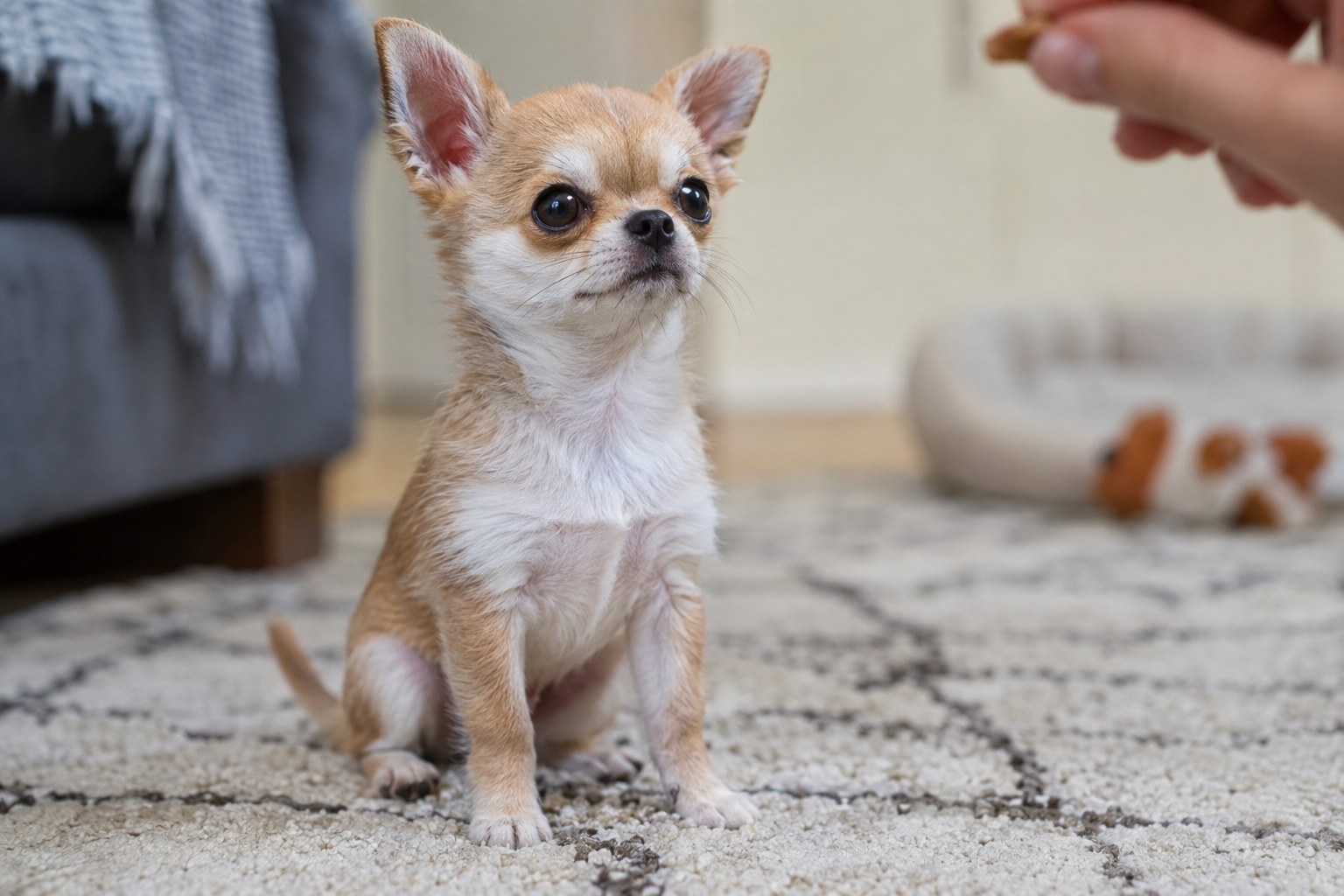
Tuesday, October 20, 2026 — Today's Chihuahua training briefing puts reward-based practice, gradual exposure, and predictable routines ahead of harder distractions.
Today's owner briefing
The useful October training question is not whether a Chihuahua can tolerate a busier outing or a longer crate session. It is whether the current setup makes the desired behavior easy to understand and repeat. With seasonal decorations, unfamiliar sounds, and changing household routines, reducing difficulty can be more productive than repeating a cue louder.
This is a practical reading of established guidance, not a report of a newly released study or an October policy change. AVSAB's humane-training position supports reward-based methods; AVMA socialization guidance emphasizes appropriate experiences; and AKC's crate-training resource describes a gradual introduction. Together, these sources offer a consistent framework for this week's Chihuahua practice: teach in manageable steps rather than forcing compliance.
How do you potty train a Chihuahua?
Give your Chihuahua a consistent toilet location, supervise closely indoors, and offer opportunities after waking, eating, or active play. Reward successful toileting promptly at the location, rather than waiting until you return inside. If an accident happens, clean it without punishment and review whether access or supervision needs adjustment.
Keep a simple record of successful outings and accidents. The purpose is to notice patterns, not impose a rigid timetable on every Chihuahua puppy. A record can reveal that an accident follows an interrupted outing or a period when nobody was watching; it cannot rule out a health problem.
How do you crate train a Chihuahua?
Introduce the crate as a comfortable place your Chihuahua can investigate voluntarily, pairing it with rewards and calm experiences. Build comfort with entering before gradually practicing brief door closures while you remain nearby. Do not use the crate as punishment or assume prolonged distress is something a Chihuahua must simply endure.
AKC's crate guide supports taking the process in steps. For a Chihuahua, distinguish relaxed settling from mere silence: a quiet puppy is not necessarily comfortable. If practice produces escalating distress, stop increasing the challenge and seek individualized guidance rather than extending confinement to prove a point.
How do you teach a Chihuahua to come when called?
Start in a quiet, securely enclosed space, say the recall cue once, and reward your Chihuahua for moving toward you. Keep the distance easy enough that success is likely, then increase difficulty gradually. Outside an enclosure, use secure leash management rather than testing an unfinished recall near hazards.
Avoid making every successful recall predict the end of something enjoyable. When safe, reward the return and allow your Chihuahua to resume exploring. If the cue repeatedly fails, change the distance or distraction level instead of turning it into background noise.
How do you socialize a Chihuahua without overwhelming them?
Let your Chihuahua observe unfamiliar sights, sounds, and people from a distance where they can remain comfortable and disengage. Reward calm engagement, allow retreat, and avoid making greetings compulsory. For Chihuahua puppies, discuss suitable environments and infection-risk precautions with your own veterinarian.
Socialization is not a requirement to meet everyone. AVMA's guidance provides a useful foundation for choosing appropriate experiences, while AVSAB's socialization statement addresses early learning. An October decoration viewed calmly from across a quiet space can be a more useful exercise than a crowded outing.
Key takeaways
- Make Chihuahua potty routines predictable, and reward success where it happens.
- Build crate comfort gradually; confinement should not substitute for teaching or supervision.
- Practice recall with manageable distances and secure boundaries.
- Reward loose-leash attention before moving closer to distractions.
- Treat socialization as comfortable learning, not a greeting quota.
- For behavior modification, change the setup before demanding a different response.
What it means for Chihuahua owners
Choose one achievable target for each practice session. On a leash outing, that might mean rewarding your Chihuahua for checking in while a distraction remains far away. If the leash tightens or barking begins, create space rather than pulling your Chihuahua closer. This applies reward-based principles to leash work without treating every walk as a test.
For recurring reactions, note the trigger, approximate distance, and what happened immediately afterward. That record can help distinguish a manageable training challenge from a situation requiring professional support. Avoid deliberately provoking barking or fear to collect information. Sudden behavior changes, toileting changes, or difficulty settling deserve a veterinary conversation, not an automatic label of stubbornness.
Keep household responses consistent this month. Agree on the recall cue, toilet location, crate routine, and whether greetings are optional. If acquiring a Chihuahua puppy, ask what routines and cues have actually been introduced rather than accepting a broad claim that the puppy is fully trained. Continuity is useful, but a new household still needs to teach its own routines patiently.
Questions for your veterinarian
- Could a new toileting pattern or reluctance to move have a health-related explanation?
- Which socialization environments are appropriate for my Chihuahua puppy's current circumstances?
- What observations would help you assess crate distress or a sudden increase in reactivity?
- When should we seek individualized behavior support, and how can we evaluate reward-based providers?
Sources & further reading
- AVSAB position statements: humane training and puppy socialization
- AKC: How to Crate Train Your Dog in Nine Easy Steps
- AVMA: Socialization of Dogs and Cats
Educational disclaimer: This article is for general educational purposes only and is not veterinary advice, diagnosis, or treatment. Consult your own veterinarian about your Chihuahua's health and individual needs.
Explore Chihuahua puppies or contact us with questions.