October 15 Chihuahua Training Briefing: Calm Before Halloween
Thursday, October 15, 2026 · World Class Puppies Newsroom
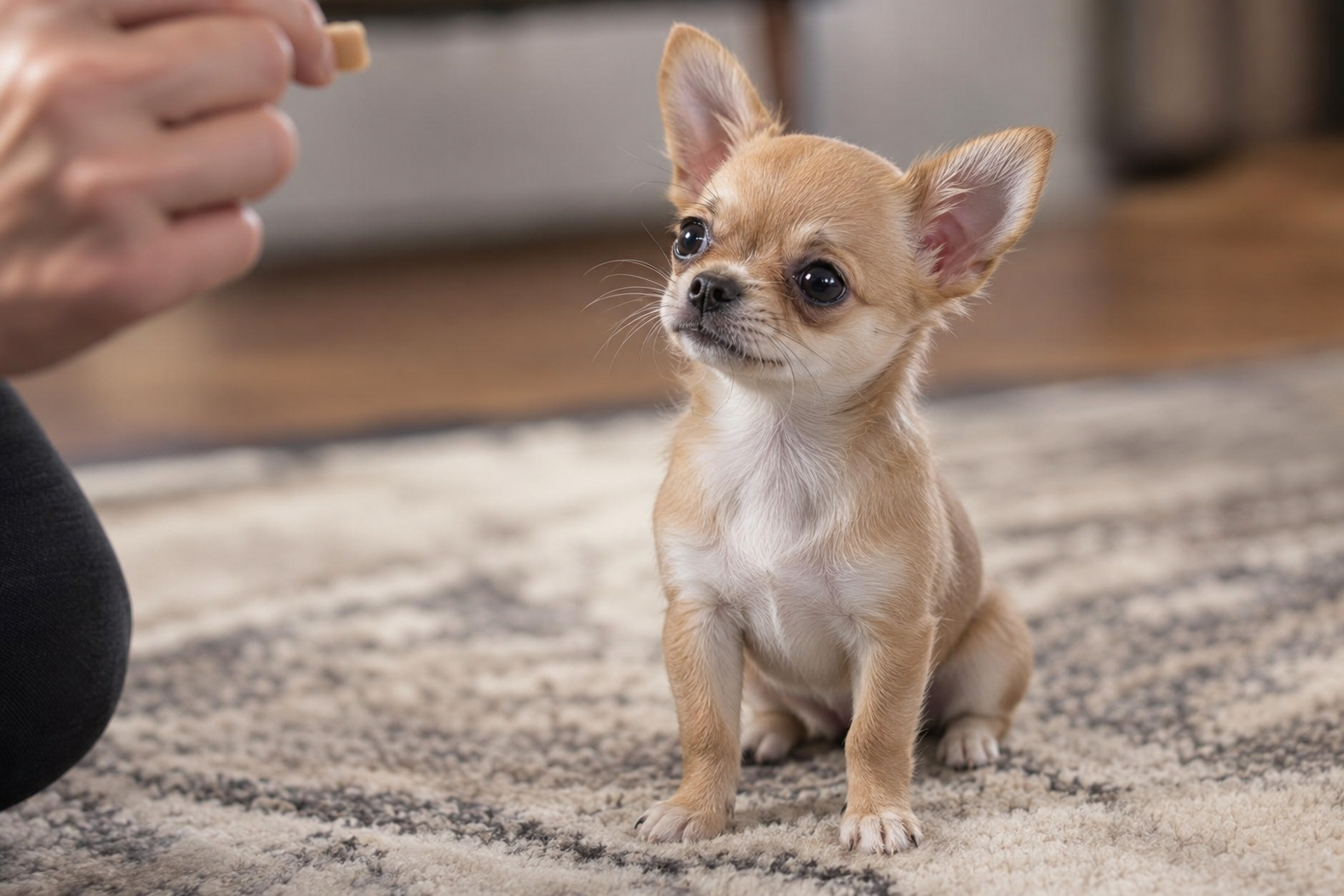
Thursday, October 15, 2026 — Today's Chihuahua training briefing focuses on rehearsing calm, rewarded behavior before October's doorbells, visitors, and changing routines add distractions.
Today's owner briefing
The useful training story this week is preparation, not a newly announced breakthrough. Established AVSAB guidance supports reward-based training, while the AKC training library offers practical instruction on everyday skills. This briefing applies those resources to Chihuahua households approaching Halloween; it does not report a new October advisory or verified search trend.
The common thread is straightforward: make the desired behavior easy to perform, reward it, and increase difficulty gradually. For a Chihuahua, that can mean practicing recall in a quiet room before attempting it near the doorway, or introducing a crate when the household is calm rather than when visitors are already arriving.
AVSAB's humane-training position recommends reward-based methods and advises against aversive methods. The practical implication is to avoid using fear, pain, or intimidation to suppress mistakes. Instead, adjust the setup and teach an achievable alternative. Breeder advice can help describe a puppy's existing routine, but it should not be treated as a substitute for established behavior guidance or individual veterinary assessment.
How do you potty train a Chihuahua?
Give your Chihuahua predictable opportunities to use the chosen toilet area, including after waking and other routine transitions, and reward successful toileting promptly. Supervise between opportunities and clean accidents without punishment. If mistakes continue, review access, timing, and distractions rather than assuming your Chihuahua is being stubborn.
October can disrupt an otherwise workable routine: a busy doorway or unfamiliar decoration may distract a puppy from finishing outside. Keep the route familiar and the outing focused. Note when successes and accidents happen so you can adjust your supervision around your own Chihuahua's pattern, not an arbitrary age-based deadline.
How do you crate train a Chihuahua?
Introduce the crate as a comfortable, voluntary resting place, rewarding investigation and relaxed entry before gradually practicing brief door closures. Keep early sessions manageable and avoid using confinement as punishment. Escalating distress means the exercise needs reassessment, not a longer forced session.
A crate is not a shortcut around toileting needs, companionship, or learning to settle. Before a busy evening, prepare a quiet resting option your Chihuahua already knows. If the crate is not comfortable yet, do not make Halloween night the first extended test; choose a safe, familiar arrangement instead.
How do you teach a Chihuahua to come when called?
Start in a quiet, secure space, say the recall cue once, and reward your Chihuahua generously for reaching you. Increase distance and distractions separately rather than making both harder at once. Outdoors, use secure containment or an appropriate leash arrangement instead of testing an unfinished recall near traffic or an open gate.
Avoid turning every successful recall into the end of something enjoyable. Sometimes reward the return and release your Chihuahua back to an appropriate activity. Practice away from the entryway first: an open front door is a management problem, not a fair training exam.
Leash work and socialization follow the same gradual approach. Reward attention and comfortable movement in a low-distraction setting before adding busier surroundings. Let your Chihuahua observe unfamiliar people or seasonal objects at a comfortable distance; socialization does not require greeting everyone or accepting forced handling.
Key takeaways
- Reward the behavior you want instead of punishing toileting mistakes, barking, or hesitation.
- Practice each skill in a quiet setting before introducing doorstep activity.
- Keep toilet access predictable when October events change the household routine.
- Build crate comfort before relying on confinement during visitor arrivals.
- Use barriers and leash management alongside recall training; a cue is not a safety barrier.
- Reduce difficulty when your Chihuahua becomes overwhelmed rather than demanding compliance.
What it means for Chihuahua owners
Choose one weak link this week instead of attempting a complete training overhaul. If the doorbell triggers rushing, start with a helper making a very soft knock while your Chihuahua is comfortably away from the entrance. Reward a calm alternative, such as turning toward you. Keep the real doorway secured throughout practice, and stop before repeated barking or agitation takes over.
For behavior modification, distinguish teaching from managing the environment. Teaching builds a skill over repeated successful sessions; management prevents situations your Chihuahua cannot yet handle. Closing curtains, increasing distance from visitors, or using a secure barrier can reduce rehearsal of unwanted behavior while learning proceeds. Avoid deliberately provoking a reaction to see whether training has worked.
Keep a short record of the setting, the behavior, and what happened afterward. That is more useful than labels such as "dominant" or "bad." A sudden loss of established toilet habits, new handling sensitivity, or marked distress deserves veterinary discussion rather than an assumption that more obedience practice is the answer.
Questions for your veterinarian
- Could a health or comfort issue contribute to my Chihuahua's sudden toileting or behavior change?
- What socialization settings are appropriate for my Chihuahua puppy's individual health circumstances?
- Which signs suggest crate distress needs individualized behavior support?
- When should persistent fear, guarding, or snapping prompt a referral for qualified behavior care?
Bring your notes and, when safely obtainable without provoking the behavior, a short video. Ask for a plan suited to your Chihuahua rather than a universal training timeline.
Sources & further reading
- AVSAB position statements: Humane Dog Training — the source for the reward-based training framework.
- AKC dog training resource library — practical further reading on everyday training skills.
This article is for educational purposes only and is not a substitute for individualized veterinary advice, diagnosis, or treatment. Consult your own veterinarian about health or behavior concerns.
Explore Chihuahua puppies or contact us to discuss preparing for a Chihuahua.