October 17 Chihuahua Training Briefing: Reward the Return
Sunday, October 18, 2026 · World Class Puppies Newsroom
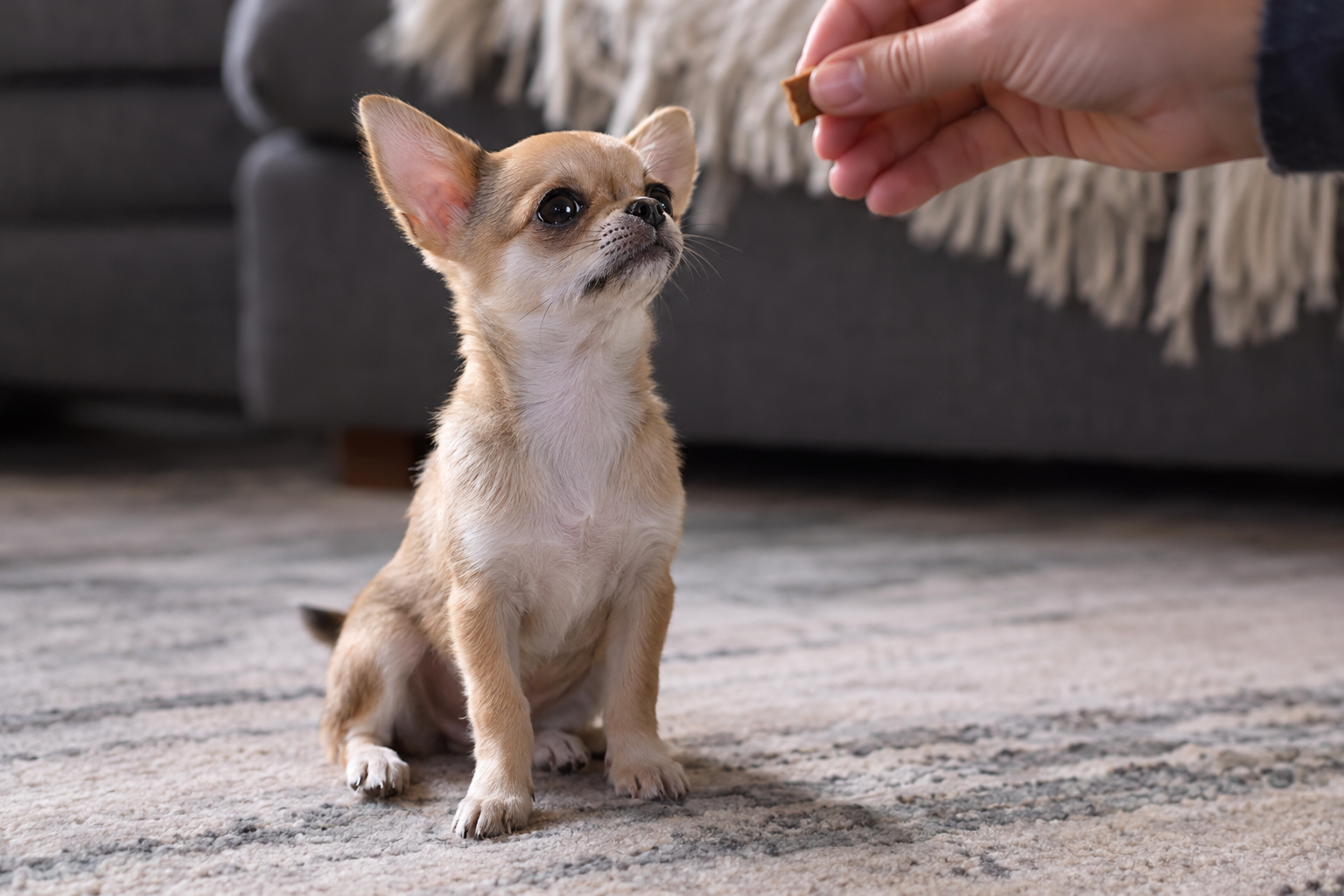
Saturday, October 17, 2026 — Today's Chihuahua training briefing puts rewards, manageable distractions and voluntary engagement ahead of pressure as October routines get busier.
Today's owner briefing
The useful training story this week is a practical reset, not a newly announced breakthrough: make the behavior you want easier to perform, then reward it promptly. For Chihuahua owners, that connects several everyday challenges—potty accidents, crate hesitation, unreliable recall, leash tension and discomfort around unfamiliar activity.
This briefing draws on established AVSAB position statements, AVMA socialization guidance and the AKC training library. These are background resources, not evidence of a new October announcement or a verified rise in search interest. Their practical relevance this month is straightforward: changing household activity can expose gaps that quiet practice does not.
AVSAB's humane-training position supports reward-based methods rather than aversive techniques. AVMA guidance frames socialization around appropriate exposure and positive experiences. The AKC library provides practical training instruction. Taken together, these resources support an owner-friendly approach: adjust the situation before assuming your Chihuahua needs a stronger correction.
For example, responding to a recall in a quiet room and responding near an opening door are different challenges. A missed response is information about the setup, not proof of stubbornness. Reduce the distraction, shorten the distance and make another successful repetition possible.
How do you potty train a Chihuahua?
Use a consistent toilet location, offer opportunities around waking and other routine transitions, and reward your Chihuahua immediately after toileting in the intended place. Supervise between opportunities and keep a simple record of accidents to identify gaps in the routine. Avoid punishment after an accident; it does not explain where your Chihuahua should go next time.
For October households with changing work hours or more visitors, review who is responsible for each outing. A missed handoff can look like a training setback. Clean accidents thoroughly and consider whether access to the home has expanded faster than reliable habits.
How do you crate train a Chihuahua?
Introduce the crate as a comfortable space your Chihuahua can investigate voluntarily, rewarding relaxed approaches and entry. Build toward brief door closures only while your Chihuahua remains comfortable, and avoid using confinement as punishment. Persistent distress calls for reassessment, not a contest over how long your Chihuahua can endure it.
Crate practice should not depend entirely on departures. Quiet practice while someone remains nearby helps separate learning about the space from the challenge of being alone. Comfortable bedding and a suitable setup matter, but equipment cannot substitute for gradual learning.
How do you teach a Chihuahua to come when called?
Start nearby in a secure, low-distraction space, say the recall cue once and reward your Chihuahua for reaching you. Increase difficulty gradually, using secure boundaries or an appropriately managed long line rather than testing recall near traffic or open exits. Avoid calling your Chihuahua over to scold them, which can make returning less appealing.
The fresh angle for this week's practice is to reward the return without always ending the fun. When safe, let your Chihuahua resume an enjoyable activity after checking in. Returning can then predict both a reward and another opportunity to explore.
Leash work follows the same logic. Reward moments when your Chihuahua stays near you with slack in the leash, and practice where attention is achievable. If movement, noise or an unfamiliar person overwhelms the exercise, create more distance instead of repeatedly pulling your Chihuahua back into position.
Socialization likewise means more than collecting greetings. Watching unfamiliar activity from a comfortable distance can be useful practice. With seasonal decorations and unusual clothing appearing this month, allow observation and retreat; do not require a Chihuahua to approach something simply because it seems harmless to a person.
Key takeaways
- Reward the behavior you want promptly, whether that is toileting outside, entering a crate or returning when called.
- Change one training challenge at a time rather than adding distance, duration and distraction together.
- Keep recall practice secure; a successful indoor response does not establish reliability near an open door.
- Treat socialization as comfortable learning, not compulsory greetings or crowded outings.
- Reassess sudden setbacks and persistent distress instead of escalating corrections.
What it means for Chihuahua owners
Choose one weak point in your routine this weekend and make it easier to practice successfully. That might mean moving recall away from the doorway, arranging a quieter leash route or assigning toilet outings clearly between household members. Record the setting, the response and what helped. Useful progress is repeatable behavior under a known level of difficulty, not a single impressive performance.
For behavior modification, identify what happens before barking, freezing or avoidance. Distance from a trigger may matter more than the number of repetitions. Avoid deliberately provoking a reaction to test progress, and prioritize safety when there is a risk of biting or escape. Seek individualized help when fear or distress interferes with ordinary life.
Chihuahua puppies need expectations matched to their development, while adult Chihuahuas may need an established routine rebuilt after changes. Neither situation benefits from a deadline imposed by a label or appearance. Sudden toileting changes, new handling sensitivity or unexpected reluctance to move warrant a veterinary discussion rather than being treated automatically as disobedience.
Questions for your veterinarian
- Could a recent change in toileting, movement or handling tolerance have a health-related cause?
- Which socialization settings are appropriate for my Chihuahua puppy's individual health circumstances?
- What observations or recordings would help distinguish crate discomfort from distress about being alone?
- When should we seek individualized behavior support, and how should we assess a provider's methods?
Sources & further reading
- AVSAB position statements: humane training and puppy socialization
- AVMA guidance on socialization
- AKC training resource library
This article is for educational purposes only and is not a substitute for veterinary advice, diagnosis or treatment. Consult your own veterinarian about your Chihuahua's individual needs.