October 24 Chihuahua Feeding Briefing: Close the Meal Gaps
Sunday, October 25, 2026 · World Class Puppies Newsroom
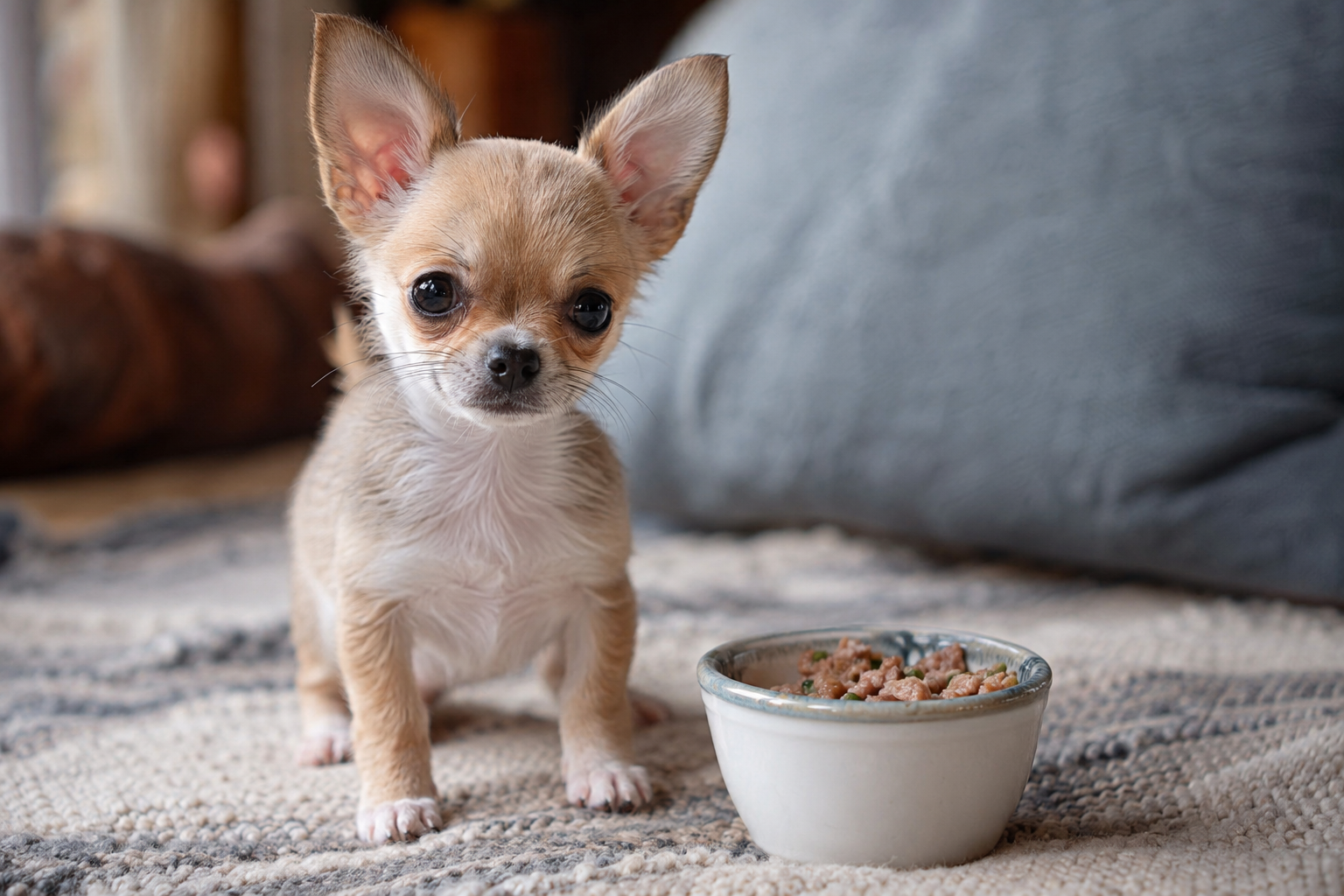
Saturday, October 24, 2026 — Today's Chihuahua feeding check centers on reliable meal handoffs, suitable food, and recognizing when reduced intake needs veterinary attention.
Today's owner briefing
As October routines get busier, the most useful nutrition question may not be which new food to buy. It may be whether everyone caring for a Chihuahua knows what was offered, what was eaten, and who handles the next meal. A filled bowl does not establish that a puppy has eaten, and several well-meaning people can unintentionally duplicate treats.
This is a review of established guidance, not a report of a newly released October study. The World Small Animal Veterinary Association's nutrition resources emphasize nutritional assessment and informed food selection. FDA guidance explains what a complete-and-balanced label means. Together, these sources support checking the whole feeding routine rather than treating packaging claims as proof that a food is the best choice.
For this week's Chihuahua briefing, the fresh angle is the feeding handoff: one shared record connecting meals, extras, water observations, and appetite changes. That approach makes an existing plan easier to follow and gives your veterinarian more useful information if something changes.
How often should a Chihuahua puppy eat?
A Chihuahua puppy's feeding frequency should be individualized with a veterinarian according to age, size, health, food, and actual intake. Young, very tiny puppies may need more frequent feeding opportunities than healthy adults, so an adult routine should not automatically become a puppy's routine. Ask for a written plan that also explains what to do if a meal is missed or refused.
A practical handoff records the meal time, measured amount offered, approximate amount eaten, and caregiver's initials. It should distinguish refusal from an administrative mistake: “not offered yet” means something different from “offered and untouched.” Do not deliberately test how long a tiny Chihuahua puppy can go without food.
What is the best food for a Chihuahua puppy?
There is no single best food for every Chihuahua puppy. Start by checking whether the nutritional adequacy statement identifies the food as complete and balanced for the appropriate life stage, then discuss suitability with your veterinarian. FDA guidance explains that this claim concerns nutritional adequacy; it is not a ranking of competing foods.
The WSAVA resources provide a framework for asking about a manufacturer's nutrition expertise, quality controls, and product information. Marketing language such as “premium” is not a substitute for those answers. Likewise, an Apple Head Chihuahua or a puppy advertised as a Teacup Chihuahua does not have a separate nutritional adequacy standard simply because of that label.
How can owners reduce hypoglycemia risk in Chihuahua puppies?
Follow an individualized feeding plan, confirm that meals are actually eaten, and ask your veterinarian how to respond to interrupted intake or illness. Reliable feeding can help reduce avoidable meal gaps, but it cannot eliminate every cause of low blood sugar. Weakness, trembling, disorientation, collapse, or seizures require urgent veterinary attention rather than an assumption that the puppy is merely hungry.
These signs can have other causes, so a home observation cannot confirm hypoglycemia. Contact a veterinarian promptly when a very young or tiny Chihuahua puppy refuses food, especially if behavior or energy also changes. Do not force food or liquid into the mouth of a puppy that is collapsed, seizing, or unable to swallow normally.
Key takeaways
- Assign meal responsibility explicitly; record consumption rather than simply noting that food was served.
- Check the nutritional adequacy statement and life stage before comparing promotional claims.
- Count training rewards, chews, and food used for enrichment as part of the feeding discussion.
- Keep fresh water accessible and note meaningful changes in drinking or urination.
- Obtain a veterinarian's missed-meal and emergency plan before an appetite problem develops.
What it means for Chihuahua owners
Keep the October review small and useful. Photograph the current food label, including the adequacy statement and calorie information, and list every edible extra. Ask your veterinarian how treats should fit into your Chihuahua's total intake rather than adopting a generic allowance. Small pieces can still add up when several caregivers offer them throughout the day. If your veterinarian agrees, some of the planned daily food can serve as rewards instead of introducing additional foods.
For hydration, check that bowls are clean, stable, and easy for the Chihuahua to reach. Wetter food can affect how much drinking you observe, so a quieter water bowl alone does not establish dehydration. Record changes in food moisture, water consumption, urination, appetite, and energy together. Persistent or pronounced changes deserve veterinary discussion; do not restrict water to simplify house training.
A breeder's written feeding instructions can help document the puppy's previous routine, but they do not replace an individualized veterinary assessment. Before changing food, clarify the current product, actual intake, and any prior appetite concerns. Avoid making simultaneous changes to food, treats, and meal timing without guidance: changing everything at once makes subsequent observations harder to interpret.
Questions for your veterinarian
Bring the food packaging or clear photographs, a short feeding log, and a list of treats. Use the visit to ask:
- What feeding frequency and total intake fit this Chihuahua's current growth and body condition?
- Which missed-meal circumstances warrant an immediate call for this puppy?
- Does the current food provide appropriate nutritional adequacy, and what would justify changing it?
- How should rewards fit into the existing feeding plan?
- Which drinking, urination, or appetite changes should we record, and which need urgent assessment?
These questions turn general nutrition guidance into a plan for the individual Chihuahua. They also help separate ordinary food-selection decisions from situations where waiting for another meal could be unsafe.
Sources & further reading
- WSAVA Global Nutrition Guidelines — nutritional assessment resources and tools for evaluating food-selection information.
- FDA: Complete and Balanced Pet Food — an explanation of nutritional adequacy claims and their basis.
Educational disclaimer: This article provides general educational information, not veterinary diagnosis or treatment. Make feeding and health decisions with your own veterinarian; seek urgent veterinary care for concerning symptoms.
Explore Chihuahua puppies or contact us with questions about finding your next Chihuahua.