Chihuahua Enrichment: An October 14 Briefing on Better Play
Wednesday, October 14, 2026 · World Class Puppies Newsroom
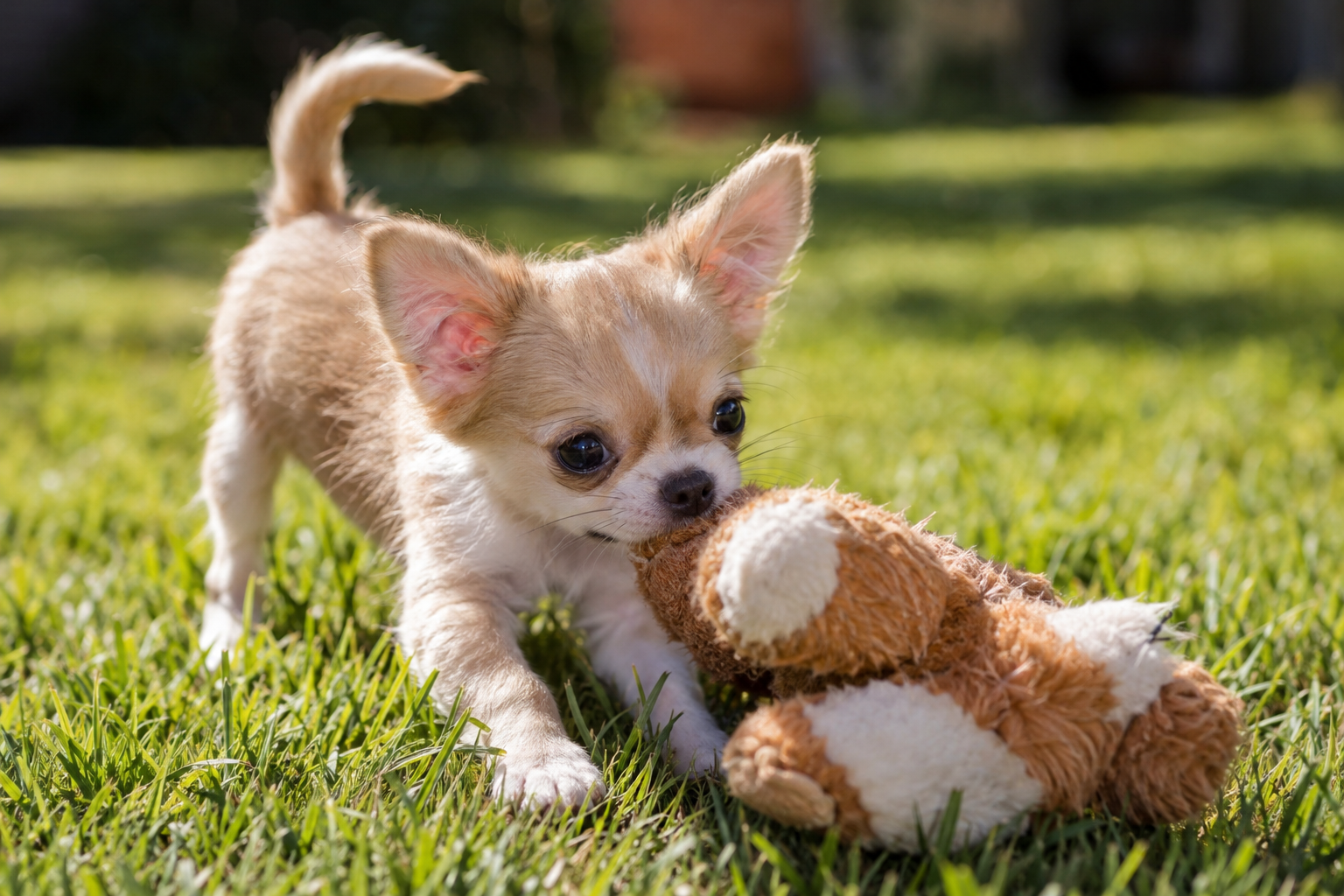
Wednesday, October 14, 2026 — Today’s Chihuahua activity briefing: build autumn enrichment around opportunities to sniff, investigate, and play comfortably, rather than chasing distance or repetitions.
Today's owner briefing
A useful October reset for Chihuahua owners is to rethink what counts as exercise. A walk can include exploration rather than continuous marching. Indoor play can involve finding a familiar toy rather than repeated chasing. An introductory agility-style game can stay entirely on the floor. The common thread is participation without pressure.
This is a practical synthesis of established public guidance, not a report of a newly released study or an October policy change. The AKC Chihuahua profile emphasizes that walks and play can support activity needs while cautioning against overexertion. AVMA cold-weather guidance emphasizes adjusting outdoor activity to the individual animal and conditions. Neither source supplies a universal daily exercise target for every Chihuahua.
The takeaway this week is to organize enrichment around three stages: sniff, solve, and settle. Offer a comfortable opportunity to investigate, introduce one easy game, and then allow a quiet finish. That sequence is an editorial planning tool, not a medical protocol or a requirement to complete every stage.
How much exercise does a Chihuahua need?
A Chihuahua’s exercise needs depend on age, health, fitness, and willingness to participate; one fixed minute count cannot account for those differences. Walks, comfortable indoor movement, and interactive play can all contribute to the day’s activity. Ask your veterinarian about individual limits, particularly for a puppy or a Chihuahua with an existing health concern.
For the sniffing stage, choose a familiar route with space to stop without blocking people or approaching traffic. Let your Chihuahua inspect safe patches of ground while you maintain supervision. A shorter route with unhurried exploration is a different activity from a brisk outing—not a failed version of it.
How do you mentally stimulate a Chihuahua indoors?
Give your Chihuahua an achievable task, such as finding a familiar toy partly hidden beside a towel or choosing between two visible toys. Start with the object easy to locate, supervise throughout, and simplify the task if your Chihuahua disengages. Enrichment should create opportunities to explore rather than require a prolonged struggle to reach a reward.
For the solving stage, place a familiar toy in an open, stable box with an easy entry, provided your Chihuahua does not chew or swallow the material. Alternatively, arrange two toys on a clear floor and reward interest with gentle interaction. Introduce only one new element at a time so you can see whether the activity is genuinely welcome.
Can Chihuahuas do agility?
Chihuahuas can participate in agility, but suitable preparation and physical demands vary by individual. At home, begin with foundation games such as walking around a widely spaced marker or moving onto a nonslip mat, rather than jumps or elevated equipment. Discuss readiness with your veterinarian before introducing demanding obstacles or repetitive athletic exercise.
For a floor-level circuit, clear away cords and unstable objects, check traction, and leave an obvious exit. Invite your Chihuahua to follow a toy around one marker, then pause. Avoid pulling with the leash or repeatedly prompting a Chihuahua who turns away; opting out is useful information about the activity.
Key takeaways
- Count sniffing and investigation as part of Chihuahua enrichment, not interruptions to a walk.
- Keep indoor searches easy enough for your Chihuahua to engage without repeated frustration.
- Start agility-style activities with nonslip, floor-level foundations rather than height.
- Adjust autumn outings to actual weather and your Chihuahua’s comfort, not the calendar alone.
- Finish with access to a quiet resting place instead of adding another game automatically.
What it means for Chihuahua owners
Choose one existing outing to make more exploratory this week. Take a familiar path, allow pauses in safe places, and notice what your Chihuahua chooses to investigate. October decorations, loose wrapping, electrical cords, and dropped food can change an otherwise familiar route. Keep exploration away from objects that might be swallowed, sharp surfaces, or displays that leave your Chihuahua reluctant to approach. There is no need to turn every unfamiliar object into a training challenge.
Prepare one indoor alternative before weather interrupts your plans. A clear patch of nonslip floor, a familiar toy, and a resting mat can provide a simple activity area without elaborate equipment. If you use food rewards, account for them within your Chihuahua’s existing feeding plan rather than automatically adding extra food. Supervise puzzles and remove damaged pieces; an enrichment product is not automatically appropriate because it is marketed for puppies.
AVMA guidance makes changing conditions particularly relevant in autumn: cold tolerance varies, and outdoor plans should reflect the individual animal. Watch your Chihuahua rather than relying only on your own comfort. Shivering, repeated attempts to head home, or reluctance to continue are reasons to stop the outing and reassess. New limping, unusual exhaustion, or a persistent change in willingness to move warrants veterinary discussion rather than a harder exercise session.
Questions for your veterinarian
Use your next discussion to make activity advice specific to your Chihuahua:
- Are there health or developmental considerations that should change our walking or play choices?
- What changes in movement or recovery should prompt an examination?
- Are floor-level obstacle games appropriate, and what should we avoid before considering agility?
- How should we adjust outdoor activity when temperatures drop or conditions become wet?
- If we use food puzzles, how can rewards fit the feeding plan already in place?
Bring a description of the activities you actually offer, including surfaces and how your Chihuahua behaves afterward. That gives the conversation more practical detail than simply asking whether your Chihuahua gets enough exercise.
Sources & further reading
- AKC Chihuahua breed profile: exercise and training guidance — breed-specific background on activity and avoiding overexertion.
- AVMA cold weather animal safety guidance — seasonal considerations for outdoor comfort and safety.
Educational information only; this article is not veterinary advice and does not replace individualized guidance from your veterinarian.
Explore Chihuahua puppies or contact World Class Puppies with questions.