October 27 Chihuahua Training Briefing: Rehearse Calm Doorways
Wednesday, October 28, 2026 · World Class Puppies Newsroom
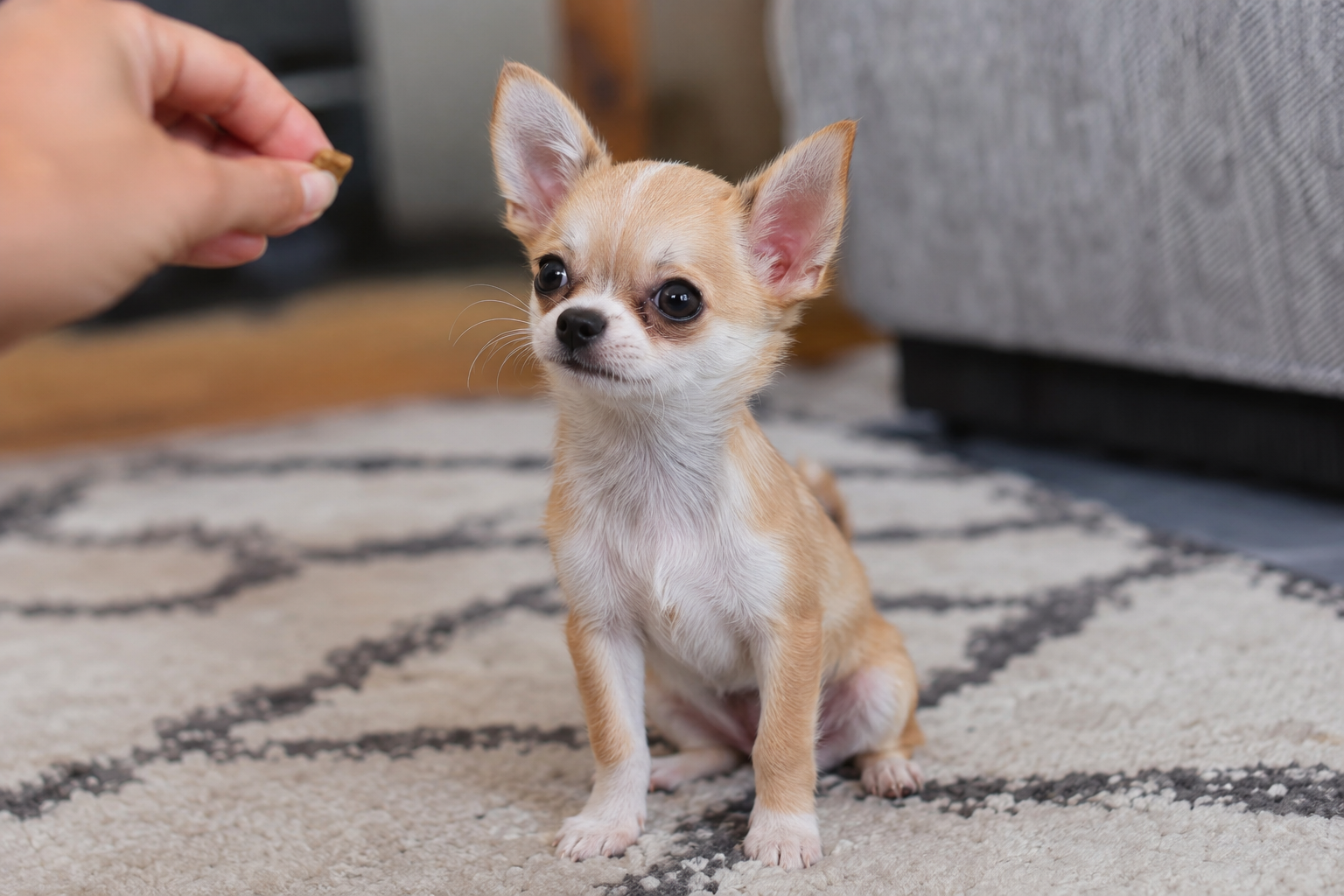
Tuesday, October 27, 2026 — This week’s Chihuahua training briefing focuses on calm doorway rehearsals before Halloween interrupts familiar potty, recall and settling routines.
Today's owner briefing
The useful October training angle is preparation, not a last-minute obedience test. A Chihuahua that responds in a quiet room may struggle when a door opens, visitors arrive or unusual clothing appears. This briefing applies established training and safety guidance to the coming weekend; it does not report a newly released study or verified change in search trends.
AVSAB position statements emphasize reward-based training and thoughtful puppy socialization. AKC training resources provide practical instruction on everyday skills, while AVMA Halloween guidance highlights seasonal safety concerns. Together, these sources support a straightforward distinction: teach skills under manageable conditions, and use household management when conditions become too difficult.
For Chihuahua owners, the doorway connects several training tasks. It is the route to potty breaks and leash outings, a recall distraction, and a place where visitors can overwhelm a puppy. Rather than rehearsing all those challenges simultaneously, separate them. Practice a familiar cue away from the entrance before introducing a quiet, controlled version of one distraction.
How do you potty train a Chihuahua?
Give your Chihuahua predictable opportunities to use a designated toilet area, supervise between opportunities, and reward successful toileting promptly. Watch for individual signals such as sniffing, circling or leaving an activity, rather than relying only on the clock. Clean accidents without punishment and adjust supervision when the routine is not working.
This week, keep the route to that toilet area accessible even if decorations or visitors change the household layout. Have the leash and cleanup supplies ready before opening an exterior door. A busy evening is not a useful occasion to test whether a Chihuahua can wait longer or independently navigate a new arrangement.
How do you crate train a Chihuahua?
Introduce the crate as a comfortable, voluntary resting space, rewarding exploration without pushing your Chihuahua inside. Build toward brief, comfortable periods with the door closed while you remain nearby, adjusting the difficulty to the Chihuahua’s response. Do not use confinement as punishment or assume that prolonged distress is a necessary training stage.
Halloween should not become a Chihuahua puppy’s first extended crate experience. If the crate is not already a comfortable resting place, plan another secure, familiar arrangement with appropriate supervision. Keep the resting area away from the entrance so the Chihuahua is not expected to settle directly beside repeated arrivals.
How do you teach a Chihuahua to come when called?
Start in a secure, low-distraction space, say the recall cue once, and reward your Chihuahua for reaching you. Make the task easy enough to succeed before adding distance or distractions. Practice outside only with suitable physical safeguards; a developing recall is not protection against an open doorway.
Avoid repeatedly calling while your Chihuahua remains absorbed in something else. Instead, reduce the difficulty and reward a successful return. Sometimes release the Chihuahua back to a safe activity afterward, so returning does not always predict the end of something enjoyable.
Leash work follows the same pattern: rehearse where attention is available. Reward movement beside you with a loose leash, check that equipment fits securely, and pause or increase distance when a distraction becomes too much. Pulling a Chihuahua closer to a frightening decoration does not create a useful socialization exercise.
Key takeaways
- Preserve familiar Chihuahua potty opportunities when household activity changes.
- Introduce crate comfort gradually, rather than relying on unfamiliar confinement during a busy evening.
- Practice recall away from exterior doors; barriers and supervision remain essential.
- Reward loose-leash movement before adding visitors, noise or unusual objects.
- Treat socialization as comfortable exposure with choice, not compulsory greetings.
What it means for Chihuahua owners
Choose one achievable doorway rehearsal today. With the exterior door secured, have a household member make a quiet arrival sound while you reward your Chihuahua for remaining in a comfortable area away from the entrance. If the Chihuahua becomes tense, retreats or cannot engage, lower the intensity or stop. The goal is a manageable experience, not a perfect performance.
For Chihuahua puppies, socialization can include observing something unfamiliar from a comfortable distance without approaching it. Apple Head Chihuahuas and Long Hair Chihuahuas likewise need training adjusted to their individual behavior, not assumptions based on appearance. A puppy marketed as a Teacup Chihuahua or Miniature Chihuahua still needs realistic expectations and protection from overwhelming encounters.
Behavior modification requires more caution than polishing a familiar cue. Repeated barking, freezing, escape attempts or defensive behavior are reasons to change the setup, not escalate corrections. Prevent unwanted encounters, preserve an easy retreat and seek individualized help when reactions persist. A sudden loss of previously reliable toileting or handling tolerance also warrants a veterinary conversation rather than an automatic label of stubbornness.
Questions for your veterinarian
Bring a short description of what happens before, during and after a concerning episode. Ask whether discomfort or another health issue could contribute to new accidents, reluctance to move or sensitivity to touch.
For Chihuahua puppies, ask which socialization settings suit their current health circumstances. If crate distress or fear around visitors continues, discuss whether a referral for individualized behavior support would help. These conversations should guide your particular Chihuahua’s plan, rather than produce a universal training deadline.
Sources & further reading
- AVSAB position statements on humane training and puppy socialization
- AKC training resources
- AVMA Halloween pet safety guidance
This article is for educational purposes only and is not a substitute for individualized veterinary advice, diagnosis or treatment. Consult your own veterinarian about your Chihuahua’s health and behavior.
Explore Chihuahua puppies or contact us with questions.