November 4 Chihuahua Training Brief: Reward the Potty Moment
Wednesday, November 4, 2026 · World Class Puppies Newsroom
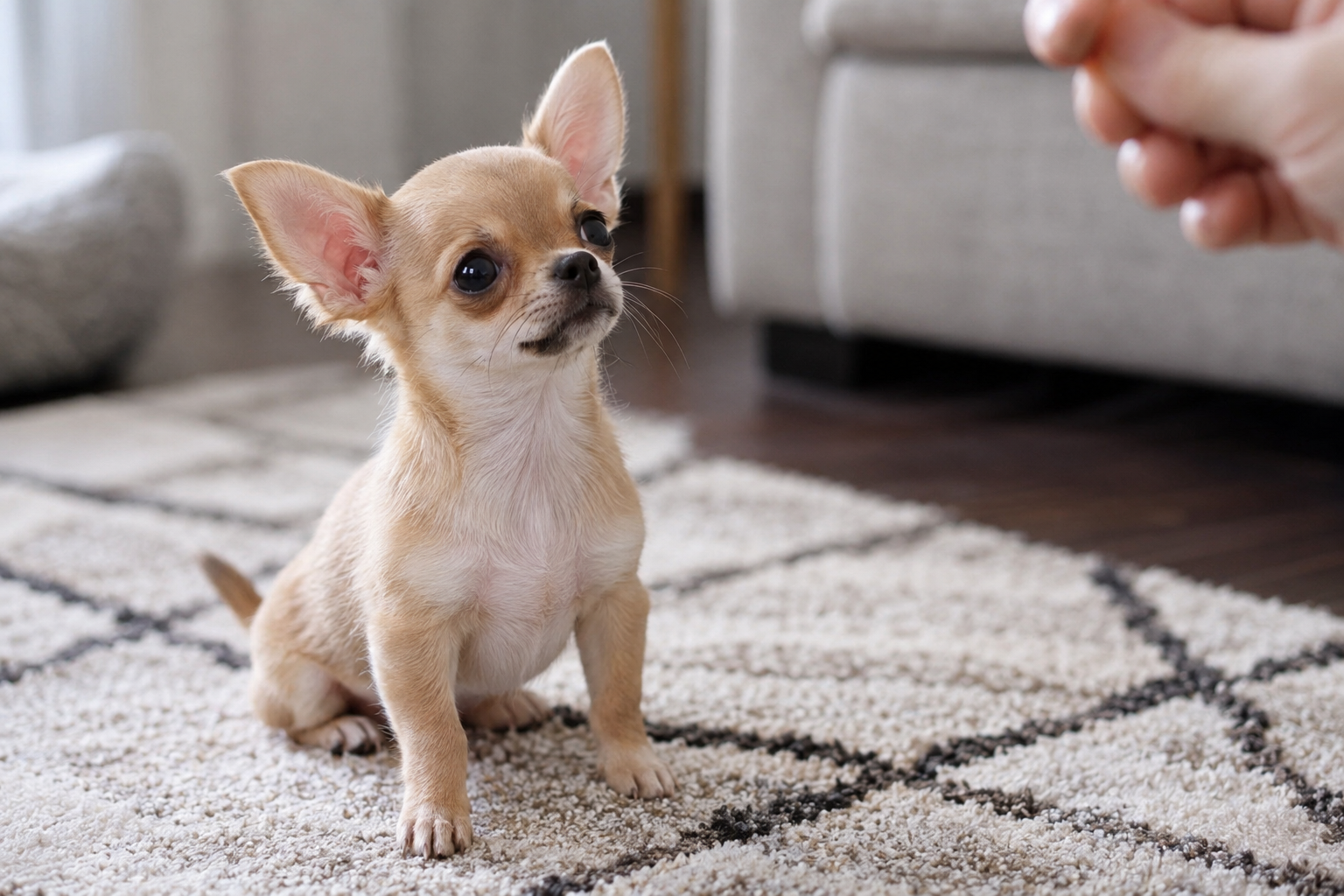
Wednesday, November 4, 2026 — Today's Chihuahua training briefing: make successful potty trips easier to repeat through prompt rewards, attentive supervision, and humane confinement—not punishment after accidents.
Today's owner briefing
November is a useful time to review whether a Chihuahua's potty routine still fits the household. Changes in daylight, weather, and daily commitments can make a familiar outing less convenient. The practical question is not whether a Chihuahua should know better; it is whether the setup still makes the desired behavior clear and achievable.
This briefing draws on established AKC puppy-training guidance and the American Veterinary Society of Animal Behavior's published training position statements. These are ongoing educational resources, not a newly released November study or a verified surge in search interest. Their useful intersection for Chihuahua owners is straightforward: provide opportunities to succeed, reinforce the behavior you want, and avoid aversive responses.
AKC house-training guidance emphasizes supervision, consistent opportunities, reinforcement, and appropriate use of a crate. AVSAB's humane-training guidance supports reward-based methods rather than aversive methods. Applied to potty training, that means treating an accident as information about the routine—not as justification for scolding.
The fresh angle for this week's routine review is reward placement. Taking a Chihuahua outside is only part of the lesson. Being present when the puppy finishes, then promptly delivering a reward in the designated area, makes the connection clearer than waiting until everyone returns indoors.
How do you potty train a Chihuahua puppy?
Choose a consistent, safe toilet area, provide frequent opportunities around ordinary transitions such as waking and activity, and reward your Chihuahua promptly after elimination finishes. Indoors, supervise closely or use an appropriate managed space when direct supervision is unavailable. Adjust opportunities to the individual puppy rather than treating an age-based holding-time formula as a guarantee.
Keep the outing simple enough that its purpose is easy to understand. Use a familiar route, allow time to investigate, and avoid turning every unsuccessful attempt into a long, distracting excursion. If nothing happens, return to supervision and offer another opportunity rather than assuming the puppy can now roam freely.
Should you punish a Chihuahua for potty accidents?
No—punishment after an accident does not clearly teach a Chihuahua where to eliminate. It can make toileting near a person feel unsafe, complicating observation and reinforcement. Clean the area thoroughly, review what happened beforehand, and create an easier opportunity for success next time.
If you notice an accident in progress, keep your response calm and guide the Chihuahua toward the designated area when practical. Avoid startling, chasing, or grabbing the puppy in frustration. The aim is to preserve a teachable situation, not make the interruption memorable through fear.
Can a crate help with Chihuahua potty training?
A comfortable, positively introduced crate can support supervision management, but it cannot replace toilet opportunities or human attention. It should allow the Chihuahua to stand, turn, and lie comfortably, and it should never serve as punishment for an accident. Persistent distress or repeated soiling calls for reassessing the setup and seeking appropriate help, not simply extending confinement.
Introduce the crate separately from the pressure of a rushed departure. Calm exploration and rewarding comfortable behavior help establish a different association from being shut away immediately after a mistake. When the household cannot provide timely toilet access, the management plan needs to change.
Key takeaways
- Reward immediately after your Chihuahua finishes in the intended area, rather than waiting until the return indoors.
- Build potty opportunities around observable transitions and individual patterns, not a rigid holding-time promise.
- Use supervision and appropriate boundaries to prevent repeated, unnoticed accidents.
- Treat a crate as a comfortable management tool—not a correction or a substitute for care.
- Review sudden changes in toileting with your veterinarian rather than assuming every setback is a training problem.
What it means for Chihuahua owners
For this November review, start with one ordinary day. Note when your Chihuahua wakes, eats, plays, goes to the toilet, and has accidents. Record what actually happens without labeling behavior as stubbornness or spite. A simple log may reveal that the difficult moment comes after active play, during a distracting household task, or when an outing ends before the puppy eliminates.
Next, make the successful routine easier for everyone to deliver. Keep appropriate rewards accessible, agree on the toilet location, and ensure each caregiver knows whether the last outing produced a result. Expand indoor freedom gradually as reliability improves. An accident after a larger area becomes available is a reason to reconsider supervision, not evidence that previous learning has disappeared.
Finally, separate outdoor discomfort from failure to understand the task. If your Chihuahua hesitates at the doorway, observe the surface, noise, lighting, and conditions before adding pressure. Choose a safe, accessible setup and reward progress without forcing exposure. The goal is a repeatable toileting routine, not a test of bravery.
Questions for your veterinarian
Bring observations that help distinguish a training difficulty from a change needing assessment:
- Does this change in frequency, urgency, or previously reliable toileting warrant an examination?
- What toilet location and outdoor exposure are appropriate for my Chihuahua puppy's current circumstances?
- Could discomfort or mobility difficulties be making the toilet area harder to reach?
- If confinement causes persistent distress, what behavioral support would be appropriate?
Describe when the change began and what happens before and after it. A short factual record is more useful than a conclusion that your Chihuahua is being difficult.
Sources & further reading
Educational information only; this article is not veterinary advice and does not replace individualized guidance from your veterinarian.
Explore Chihuahua puppies or contact us with questions about finding your Chihuahua companion.