October 30 Chihuahua Training Briefing: Rehearse Calm, Not Crowds
Friday, October 30, 2026 · World Class Puppies Newsroom
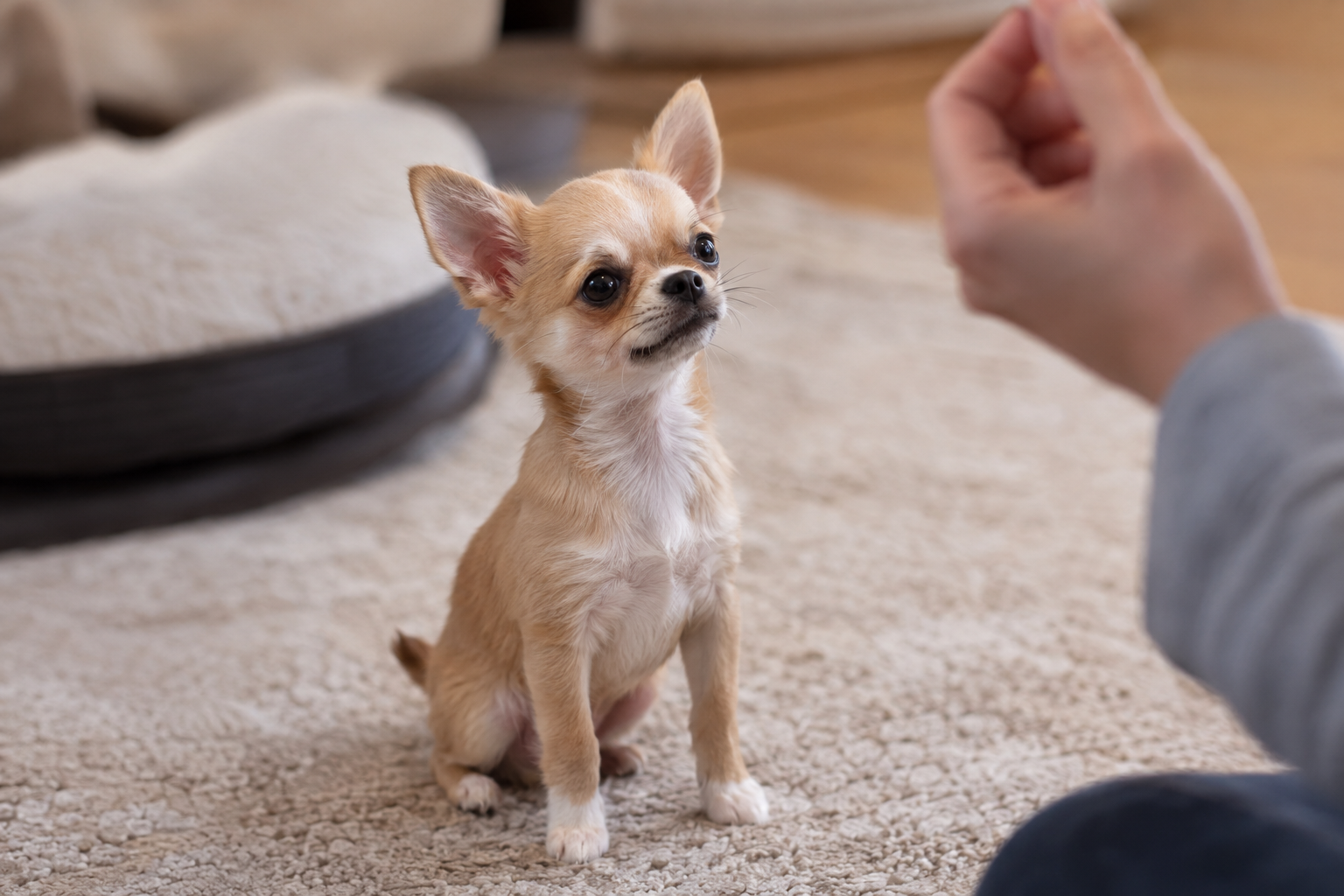
Friday, October 30, 2026 — With Halloween tomorrow, today's Chihuahua training briefing focuses on rewarding calm behavior, protecting familiar routines and keeping doorway distractions manageable.
Today's owner briefing
The useful angle this week is not a new command or a promise of overnight progress. It is how established humane-training guidance applies when doorbells, unfamiliar clothing and changing household activity arrive together. For Chihuahua owners, late October is a good time to make training easier to succeed at—not harder to escape.
This briefing applies existing public guidance; it does not report a newly released study or advisory. AVSAB's humane-training position supports reward-based methods rather than aversive techniques. AKC's crate-training guide emphasizes gradual introduction and positive associations. AVMA's Halloween safety guidance adds the seasonal context: unfamiliar activity and frequently opening doors call for deliberate precautions.
Together, those sources support a straightforward editorial takeaway: separate learning from crowd management. Rehearse skills in quiet conditions, then use barriers, distance and predictable routines when the environment becomes busy. A Chihuahua does not need to greet every visitor to have a successful evening.
How do you potty train a Chihuahua?
Offer predictable opportunities to use an appropriate toilet area, supervise between opportunities and reward successful toileting promptly. Keep a simple record of waking, meals, play and accidents so you can recognize when your Chihuahua usually needs a break. If an accident happens, clean it without punishment and adjust the next opportunity rather than treating it as defiance.
For Halloween, avoid making the busiest entrance the only route to a toilet area. Prepare a quieter route where possible, secure your Chihuahua before opening an exterior door and make sure everyone helping understands the routine. Sudden changes in toileting deserve a veterinary discussion rather than an automatic increase in training pressure.
How do you crate train a Chihuahua?
Introduce the crate as a comfortable resting place, beginning with voluntary approaches and entries while the door remains open. Build duration and door movement gradually, rewarding relaxed behavior rather than shutting a worried Chihuahua inside to force acceptance. A crate should not be punishment or a substitute for toileting, companionship and activity.
Tomorrow's noise is not a deadline for completing crate training. If your Chihuahua is not already comfortable resting there, arrange a familiar, safely separated space instead. Watch actual behavior: repeated escape attempts or escalating distress mean the setup needs reassessment, not a longer endurance test.
How do you teach a Chihuahua to come when called?
Start nearby in a quiet, secure space, say the recall cue once and reward your Chihuahua for coming to you. Increase distance and distractions separately, keeping practice easy enough for repeated success. Do not test an unfinished recall at an open doorway or rely on it instead of physical security.
Leash work follows the same principle. Reward checking in and moving with a comfortable, loose leash in a quiet area before practicing near activity. If your Chihuahua freezes, pulls away or cannot disengage from a distraction, create more distance instead of adding leash corrections.
Socialization also benefits from lower pressure. Observing an unfamiliar outfit from a comfortable distance can be more useful than being carried directly toward it. Let your Chihuahua withdraw; choosing to look away or retreat is information about the difficulty of the situation, not a training failure.
Key takeaways
- Practice potty routes and household handoffs before the busiest part of the evening.
- Use a crate only at a level of difficulty your Chihuahua already handles comfortably.
- Rehearse recall in secure spaces; keep doors and barriers responsible for escape prevention.
- Reward loose-leash movement and check-ins before introducing stronger distractions.
- Treat socialization as manageable learning, not a requirement to meet every visitor.
- For fear-related behavior, reduce pressure rather than punishing the visible response.
What it means for Chihuahua owners
Choose one small training goal for today: a voluntary crate entry, an easy return when called or a calm pause away from the entrance. Keep the setting familiar and end while your Chihuahua is still comfortable participating. Trying to advance every skill immediately before a noisy evening can make it harder to identify what is helping.
Give household members clear jobs. One person can manage visitors while another handles the Chihuahua's toilet breaks and quiet space. Keep rewards accessible to the supervising adult, and prevent visitors from opening a barrier or reaching into the resting area. Consistency means agreeing on the setup—not demanding identical behavior under very different levels of distraction.
For behavior modification, write down what happened before the response, how far away the trigger was and what helped your Chihuahua settle. Those observations are more useful than labels such as stubborn or dramatic. If fear, snapping or difficulty recovering persists, discuss an individualized plan with your veterinarian rather than escalating exposure on your own.
Questions for your veterinarian
- Could a sudden change in toileting or willingness to walk warrant a health assessment?
- Which signs suggest my Chihuahua is distressed rather than briefly distracted?
- How can I balance socialization opportunities with my puppy's individual health circumstances?
- Would persistent crate distress or fear around visitors benefit from a behavioral referral?
Bring concrete observations, including context and recovery time. Record video only when you can do so safely; do not recreate a frightening encounter to document it.
Sources & further reading
- AVSAB position statements: humane training guidance
- AKC guide to crate training
- AVMA Halloween pet safety guidance
Educational disclaimer: This article provides general educational information and is not a substitute for individualized veterinary advice, diagnosis or treatment. Consult your own veterinarian about your Chihuahua's health and behavior.
Explore Chihuahua puppies or contact us with questions.