October 31 Chihuahua Briefing: Familiar Play for Halloween
Sunday, November 1, 2026 · World Class Puppies Newsroom
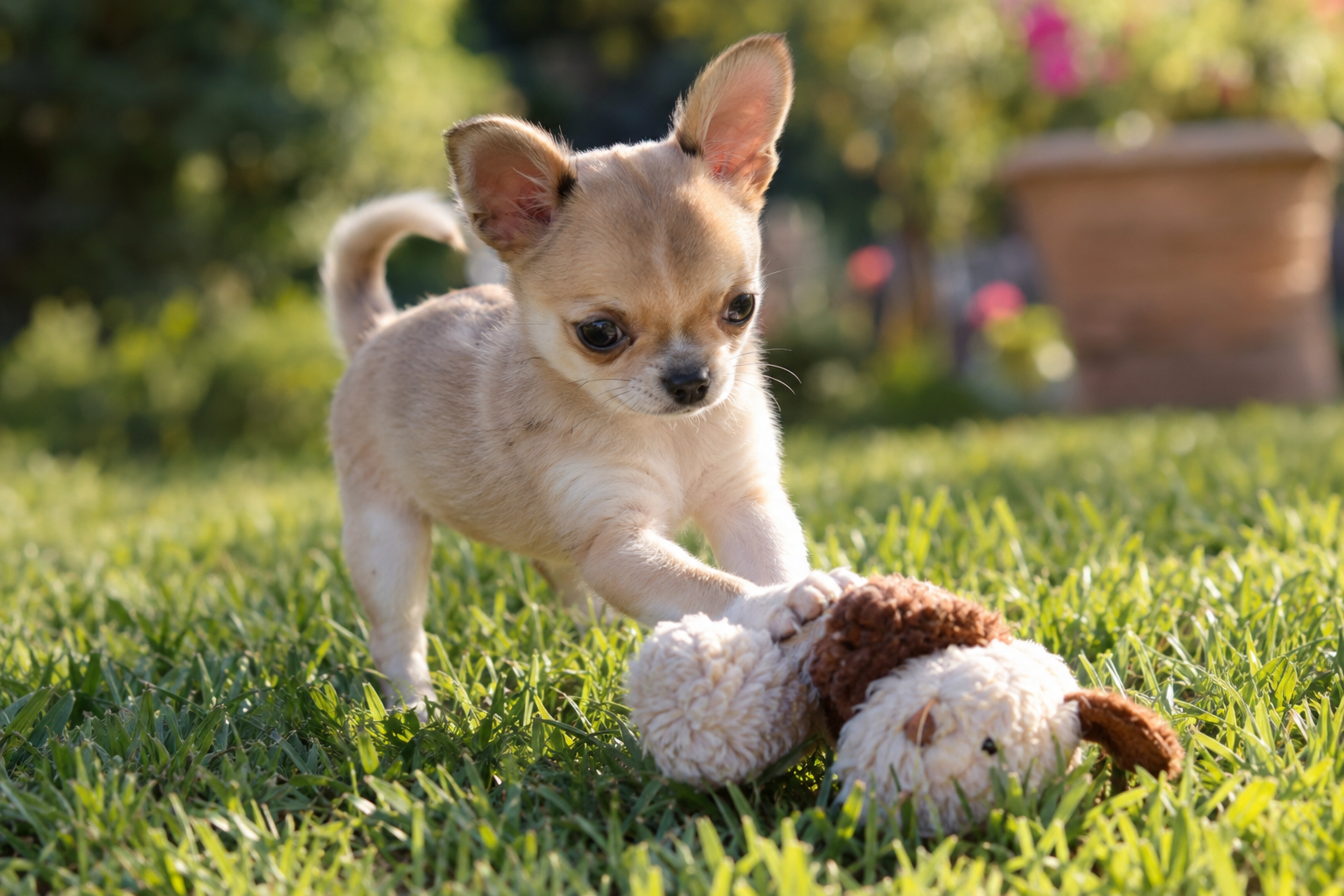
Saturday, October 31, 2026 — Today's Chihuahua activities briefing puts familiar walks, supervised exploration, and optional participation ahead of Halloween excitement.
Today's owner briefing
The useful Halloween question is not how much excitement a Chihuahua can tolerate. It is how to preserve enjoyable activity when the surroundings become less predictable. Costumes, decorations, visitors, and an unusually busy doorway can change an otherwise familiar evening. Owners can keep opportunities to sniff, move, and play without making those distractions part of the exercise plan.
This is a seasonal application of established guidance, not a newly released research finding. AKC Chihuahua breed information describes a playful companion whose exercise needs can be supported through walks and activity in limited space, while cautioning against overexertion. AVMA Halloween guidance emphasizes preventing access to hazardous treats and decorations and protecting animals from holiday-related risks. Together, those sources support a practical editorial takeaway: make tonight's activity easier to manage, rather than more elaborate.
How much exercise does a Chihuahua need?
A Chihuahua needs regular opportunities for movement and play, but a single minute target cannot account for age, health, fitness, or individual response. AKC breed guidance notes that short, slow walks can help maintain condition and cautions owners against overexertion. Let your Chihuahua's comfortable participation guide an ordinary outing, and ask your veterinarian about individual exercise limits.
For tonight, reconsider the setting before increasing the effort. A familiar walking route may feel very different once decorations move, people approach in costumes, or groups gather near entrances. Choose quieter conditions when available, keep the walk supervised and leashed, and return home rather than pushing through an increasingly difficult environment.
What indoor games can I play with my Chihuahua?
Try a simple find-it game with an appropriate reward, a supervised search around an open box, or a few familiar training cues on a nonslip floor. Make the first version easy enough that your Chihuahua can investigate without climbing, squeezing into gaps, or struggling with packaging. Stop if materials are being swallowed or the activity produces frustration rather than engagement.
A useful setup needs little equipment. Place a familiar toy beside an empty, open cardboard box with staples, tape, and loose packing material removed. Let your Chihuahua approach voluntarily, then move the toy a small distance to create another easy search. The box is an optional landmark, not a container the Chihuahua must enter.
If food is part of a game, use rewards appropriate to your Chihuahua's existing feeding plan and account for them within that plan. Keep Halloween candy completely separate from enrichment supplies. Avoid turning wrappers, decorative strings, or discarded party packaging into puzzle materials.
Can Chihuahuas do agility?
Chihuahuas can participate in appropriately adapted agility activities, but readiness depends on the individual rather than size alone. At home, a conservative starting point is familiar movement around widely spaced objects on a stable surface, not improvised jumps or raised obstacles. Discuss physical suitability with your veterinarian before adding demanding turns, jumping, or repetitive exercise.
Tonight is not the occasion to introduce a complicated obstacle course. Walking around a single stable object, coming back when called, or following a familiar hand target can provide a small coordination challenge without adding height. Keep pathways clear and give your Chihuahua room to leave the activity.
Key takeaways
- Preserve familiar activity rather than treating Halloween crowds as an enrichment requirement.
- Use quieter walking conditions when available; shortening an outing is preferable to forcing continued participation.
- Offer easy, supervised searches with safe materials and an obvious way to disengage.
- Keep candy, wrappers, cords, candles, and decorations outside the activity area.
- Match physical challenges to your individual Chihuahua, and seek veterinary input before demanding agility work.
What it means for Chihuahua owners
Separate the evening into two decisions: where your Chihuahua can move comfortably, and where household Halloween activity will happen. Those areas do not need to overlap. An indoor play space away from the entrance can preserve a familiar routine while reducing repeated interruptions. Coordinate with household members so an opening door does not become an opportunity for an unnoticed exit.
Watch the activity itself rather than pursuing a predetermined finish. Voluntary investigation, comfortable movement, and willingness to return to a familiar game are useful observations. Repeated retreat, reluctance to move forward, or difficulty settling afterward are reasons to simplify the setting. Those observations do not establish a medical diagnosis; persistent or unusual changes deserve a conversation with your veterinarian.
For Chihuahua puppies, an ordinary successful experience can be enough: exploring one safe object, playing with a familiar toy, and resting afterward. Adult Chihuahuas also benefit from choices rather than compulsory participation. There is no need to use tonight to prove confidence, complete a longer route, or master a new obstacle.
Questions for your veterinarian
Bring observations about your Chihuahua's current activity rather than requesting a universal exercise quota. Useful discussion points include:
- Whether age, health history, or changes in movement call for adjustments to walks or play.
- Which surfaces and activity types are suitable before beginning agility-style practice.
- How to account for food rewards within the existing feeding plan.
- Which changes during or after activity should prompt an examination.
Sources & further reading
- AKC Chihuahua breed information — background on Chihuahua temperament, exercise, and avoiding overexertion.
- AVMA Halloween pet safety — seasonal precautions involving treats, decorations, and household safety.
This article is for educational purposes only and is not a substitute for veterinary advice, diagnosis, or treatment. Consult your own veterinarian about your Chihuahua's individual health and exercise needs.
Explore Chihuahua puppies or contact us with your questions.