Long Hair Chihuahua
The History of the Chihuahua Breed in California
By Yulia Sky · October 24, 2026
The History of the Chihuahua Breed in California
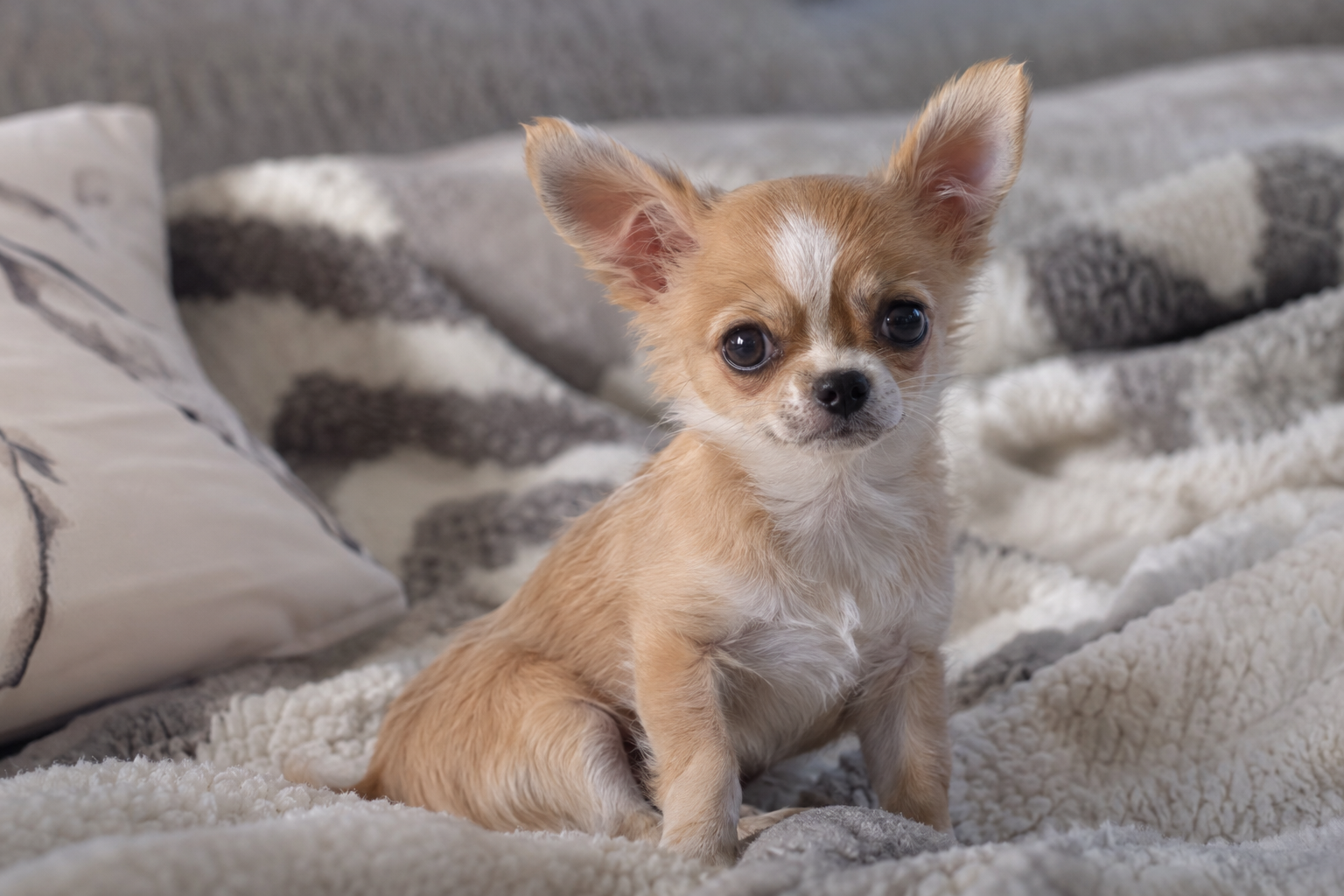
The history of the Chihuahua breed in California is a chapter in the wider story of a Mexican breed becoming an American companion—not the story of a breed created here. The Long Hair Chihuahua belongs within that same history. Its feathered ears and flowing tail distinguish its coat, not a separate birthplace or breed identity.
I’m Yulia Sky, founder of World Class Puppies, an in-home Chihuahua breeding program established in 2019. When I explain Chihuahua history, I separate documented milestones from appealing stories that have become difficult to verify. That distinction matters: a puppy should never be presented as more valuable, healthier, or more authentic because of an unsupported origin claim.
If you are exploring available Chihuahua puppies, understanding the breed’s background can help you interpret descriptions thoughtfully. But history is context—not a substitute for learning about an individual puppy.
Where did the Chihuahua breed originate?
The Chihuahua’s recognized homeland is Mexico, and its name comes from the Mexican state of Chihuahua. Its deeper ancestry is commonly associated with the Techichi, a small companion dog described in accounts of pre-Columbian cultures. That association should not be mistaken for a complete, individually documented family tree connecting ancient dogs to every modern Chihuahua.
The American Kennel Club’s Chihuahua breed overview provides a useful public starting point for the recognized breed’s history and characteristics. It is more dependable than an unattributed social-media caption or a sales description claiming an exceptionally ancient bloodline.
Historical discussions often bring together archaeological objects, written accounts, and later breeding records. These are different kinds of evidence. A small dog depicted in an artifact can be relevant to the broader story without proving that its appearance, coat, or ancestry matched today’s Chihuahua precisely.
I prefer the careful explanation: the Chihuahua has Mexican roots, with older ancestry that deserves thoughtful treatment rather than absolute claims.
How did Chihuahuas become established in California?
California’s Chihuahua history belongs to the broader movement of Mexican dogs into American companion homes and organized breeding. Its proximity to Mexico provides relevant geographic context, but proximity alone does not establish an exact arrival date or identify the first local breeder. Without dated primary records, a precise founding story would be speculation.
This is where popular breed histories can become misleading. It is tempting to describe a single traveler, a first household, or a particular route as the beginning of everything. Such details need evidence; repeating a colorful story does not make it a documented event.
A responsible local history would draw on dated newspaper advertisements, exhibition catalogs, registration records, correspondence, and photographs with reliable provenance. Each source answers a narrower question: an advertisement shows that a dog was offered at a particular time, while a catalog may establish participation in an event. Neither automatically identifies the first Chihuahua in the state.
My own business history begins in 2019. I would not extend that personal experience backward into earlier decades or present my program as evidence for the breed’s regional origins.
What does the 1904 recognition milestone tell us?
The American Kennel Club lists 1904 as the Chihuahua’s year of recognition. This is a milestone in American breed recognition, not the date the Chihuahua first existed or first entered an American home. It also does not establish when the first Chihuahua arrived in California.
Keeping those distinctions clear makes the historical sequence easier to understand:
| Part of the story | What it helps explain | What it does not prove |
|---|---|---|
| Earlier Mexican ancestry | The breed’s historical and cultural background | A complete pedigree for a modern puppy |
| Movement into American homes | How companionship extended beyond the homeland | One universally documented first arrival |
| AKC recognition in 1904 | A formal American recognition milestone | The creation of the breed |
| Later breeding and ownership | The development of modern Chihuahua communities | That every modern description is an official variety |
Formal recognition gives historians a useful reference point. It should not erase the dogs and human relationships that preceded a registry’s records. Equally, an old date should not become a marketing shortcut suggesting that one present-day puppy is inherently superior to another.
Is the Long Hair Chihuahua a separate breed?
No. The Long Hair Chihuahua is a Chihuahua with a long coat, not a separate breed with an independent national origin. The AKC recognizes one Chihuahua breed with smooth and long coats; its standard specifies an adult weight not exceeding 6 pounds. These are breed-standard descriptions, not promises about any puppy’s eventual size.
This distinction is especially helpful when people encounter teacup Chihuahua puppies in advertisements. “Teacup,” “mini,” “micro,” and “tiny” are informal marketing and search terms, not official AKC varieties. They do not identify a separate historical lineage or guarantee adult weight.
Coat, head description, and size language also describe different things. Apple head Chihuahua puppies can have long or smooth coats; “apple head” refers to head shape rather than a separate geographic ancestry. A long coat does not make a Chihuahua a different size category.
For a closer look at feathering, coat development, and everyday upkeep, my guide to Long Hair Chihuahua puppies and their coats explains those practical distinctions. The important historical point is simple: coat length belongs within the breed’s story, not outside it.
What do we know about the origins of the long coat?
A modern breed description can establish that long coats are recognized without establishing every step by which that coat became widespread. The exact ancestry of long-coated lines should not be reconstructed from appearance alone. When a historical explanation lacks traceable records, I treat it as uncertain rather than repeat it as settled fact.
An attractive coat can encourage imaginative storytelling. Feathered ears may look old-fashioned; a full neck ruff may suggest a distinct ancestral type. Neither impression supplies the missing records.
Inherited coat characteristics and documented pedigrees are relevant, but they answer different questions. A pedigree can identify recorded ancestors. It does not necessarily explain the ancient origin of every physical feature those ancestors carried.
For buyers, there is no need to solve every historical uncertainty before choosing a companion. You do need clear language about what is known, what is estimated, and what cannot be promised. That is a more useful foundation than a romantic claim about a uniquely original coat.
How should European bloodlines fit into the story?
European bloodlines describe a geographic chapter in a Chihuahua’s more recent ancestry, not a replacement for the breed’s Mexican origin. The term alone does not establish temperament, health, adult size, or quality. Meaningful claims should connect to actual pedigree information rather than rely on geography as a badge of superiority.
Because European bloodlines are part of my program’s focus, I am especially careful about that distinction. A label can open a conversation about ancestry, but it should not end the conversation about the individual dog.
My discussion of European bloodline Chihuahuas offers additional context. Read any ancestry description alongside the available records and the breeder’s explanation of its limits.
The same caution applies to phrases such as “original type” or “rare historical line.” Ask what the phrase means, which records support it, and whether the description concerns ancestry, appearance, or simply promotional wording. Those are not interchangeable categories.
What history can—and cannot—tell you about temperament
The Chihuahua’s companion identity is relevant to understanding its appeal, but it does not predict every individual personality. Long hair Chihuahua temperament cannot be read from coat length. A quiet photograph also cannot establish how a puppy behaves during play, handling, rest, or unfamiliar experiences.
I encourage prospective owners to replace broad historical stereotypes with present-day observations. Useful Chihuahua breeder questions include:
- What does this puppy do when an unfamiliar person enters the room?
- How does the puppy respond to gentle handling?
- What everyday sounds and household routines are familiar?
- Does the puppy approach new experiences readily or need more space?
- Which observations are consistent, and which came from only one interaction?
When considering a long hair Chihuahua for families, the household’s behavior matters too. Children need calm guidance, gentle handling rules, and adult supervision. Small stature should never be confused with suitability for rough play.
A historical reputation is a starting point for curiosity. An individual assessment is a better starting point for a lifelong match.
Turning breed knowledge into responsible ownership
History becomes useful when it improves the questions you ask today. It should not encourage you to choose the smallest puppy, the fullest coat, or the most elaborate ancestry description without considering daily life.
Long hair Chihuahua care includes attention to feathering and areas where friction can create tangles, such as behind the ears and around a harness. Coat condition, comfort, and tolerance of handling matter more than achieving a dramatic appearance. The long coat is a real ownership consideration, not merely a historical curiosity.
Chihuahua puppy care also involves planning for safe rest, gentle introductions, appropriate nutrition discussions, and professional assessment of individual health needs. A breed-history article cannot establish whether a particular puppy is healthy. Bring available records and questions to your own veterinarian; the first veterinary visit checklist can help organize that conversation.
Long hair Chihuahua puppy cost should likewise remain separate from unsupported historical prestige. Each available puppy is individually priced; consult the Chihuahua puppy price guide for context rather than assuming that a romantic bloodline description justifies a premium.
If a seller uses ancestry claims to discourage questions, review the Chihuahua puppy scam checklist. A compelling story should never replace verifiable information.
For California transactions, as of January 1, 2026, written disclosure requirements cover a dog’s origin, health status, and inoculations, and restrictions apply to reselling dogs the seller did not breed. Review the California puppy buyer law guide for context; this article is not legal advice.
Frequently asked questions about Chihuahua history
Can a pedigree prove that a Chihuahua descends directly from ancient dogs?
A pedigree documents the generations recorded within it; it does not establish an uninterrupted line back to ancient dogs. Claims about ancient ancestry need historical and genetic evidence beyond an individual puppy’s paperwork.
Does a Chihuahua need a Mexican pedigree to belong to the breed?
The breed’s Mexican origin does not mean every individual Chihuahua must have a recent Mexican pedigree. An individual dog’s documented ancestry and the breed’s historical homeland are different subjects.
Is a vintage photograph enough to identify a Long Hair Chihuahua?
A photograph may suggest coat length and general appearance, but it cannot establish ancestry or registration. Captions, dates, provenance, and accompanying records matter, especially when an image is being used as historical evidence.
Can European ancestry tell me whether a Long Hair Chihuahua will be calm?
Geographic ancestry does not guarantee temperament. Ask about the individual puppy’s behavior, handling experience, and responses to everyday situations rather than treating a bloodline label as a personality prediction.
Appreciate the history; choose the individual
The Chihuahua’s history deserves more than a collection of charming legends. Mexican roots, formal recognition, changing ownership patterns, and recognized coat differences each contribute something distinct. None removes the need to know the puppy in front of you.
For a grounded view of our own program rather than claims about historical prestige, you can see our past clients and their puppies. That is the appropriate place to explore our published family references.
When you are ready, explore our available Chihuahua puppies and contact us with questions about coat, temperament, and your household. Availability changes weekly. Readers using our regional hub can also visit Los Angeles Chihuahua puppies.
Educational disclaimer: This article provides general breed and care information, not veterinary advice, diagnosis, or treatment. Consult your own veterinarian about your Chihuahua’s individual health, nutrition, and preventive care.
Frequently asked questions
Can a pedigree prove that a Chihuahua descends directly from ancient dogs?
A pedigree documents the generations recorded within it; it does not establish an uninterrupted line back to ancient dogs. Claims about ancient ancestry need historical and genetic evidence beyond an individual puppy's paperwork.
Does a Chihuahua need a Mexican pedigree to belong to the breed?
The breed's Mexican origin does not mean every individual Chihuahua must have a recent Mexican pedigree. An individual dog's documented ancestry and the breed's historical homeland are different subjects.
Is a vintage photograph enough to identify a Long Hair Chihuahua?
A photograph may suggest coat length and general appearance, but it cannot establish ancestry or registration. Captions, dates, provenance, and accompanying records matter, especially when an image is being used as historical evidence.
Can European ancestry tell me whether a Long Hair Chihuahua will be calm?
Geographic ancestry does not guarantee temperament. Ask about the individual puppy's behavior, handling experience, and responses to everyday situations rather than treating a bloodline label as a personality prediction.
Ready to meet your new puppy?
See currently available teacup puppies or reach out to join our waitlist.