Long Hair Chihuahua
Long Hair Apple Head Chihuahua: How Puppy Looks Change
By Yulia Sky · October 24, 2026
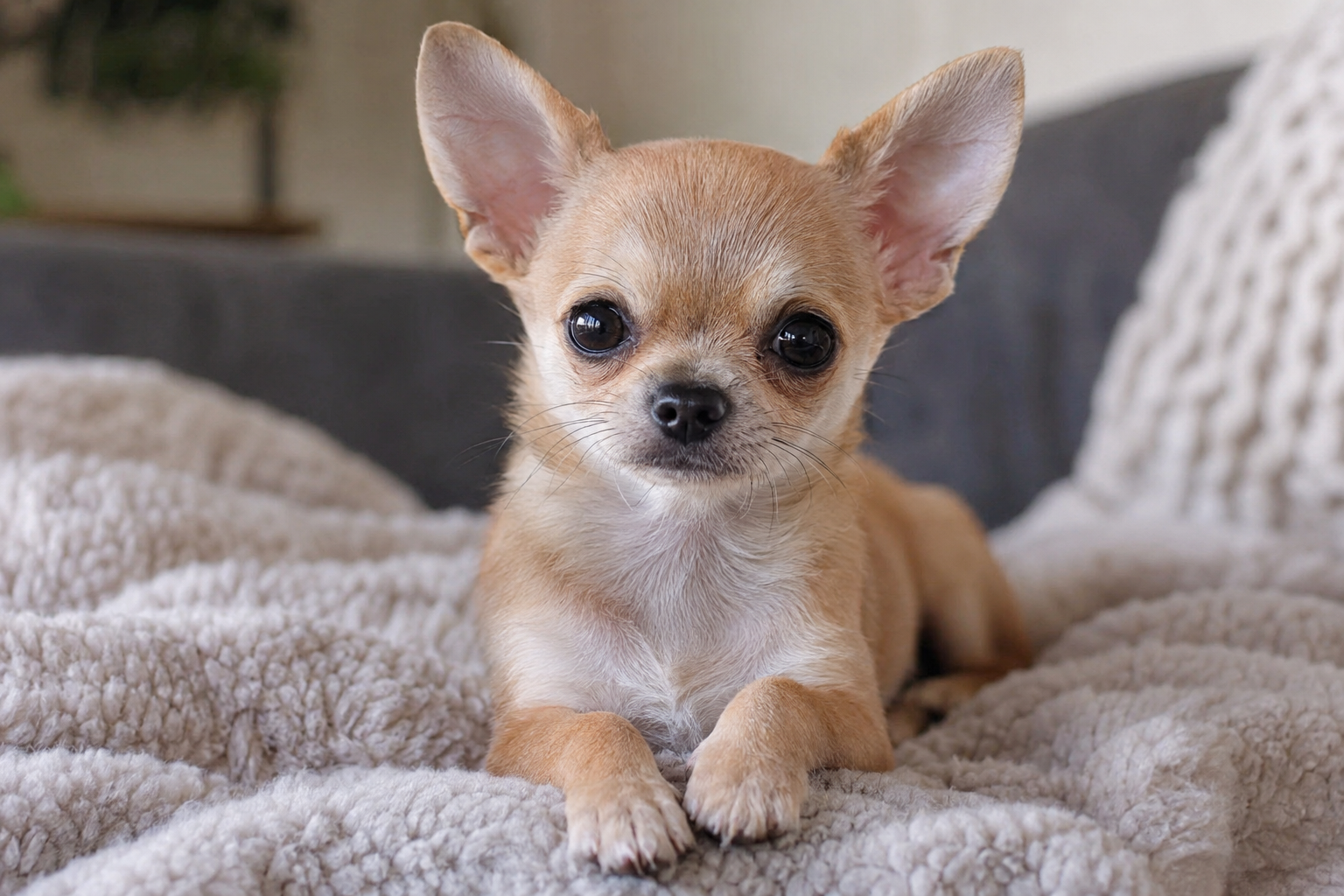
A Long Hair Apple Head Chihuahua can look surprisingly different between an early puppy photograph and adulthood. The developing coat changes the outline of the face, ears, chest, and tail, while normal growth changes proportions. A rounded head and a long coat describe different features; neither tells you everything about health, temperament, or eventual appearance.
I’m Yulia Sky, founder of World Class Puppies, established in 2019. My approach to explaining Chihuahua puppies is to separate what you can observe now from what nobody can responsibly promise. For this particular puppy, that means looking beyond a fluffy portrait and understanding the Chihuahua underneath it.
If you are browsing available Chihuahua puppies, use this guide to interpret photographs and descriptions rather than trying to predict an exact adult face. Availability changes weekly, and a puppy’s current coat is only one part of the decision.
What is a Long Hair Apple Head Chihuahua?
A Long Hair Apple Head Chihuahua is a Chihuahua with a long coat and a rounded, apple-shaped skull. “Apple head” describes head shape, not a separate breed, and “long hair” refers to the coat. These features can occur together without creating a distinct size category or a guarantee of particular behavior.
The American Kennel Club’s Chihuahua standard recognizes one Chihuahua breed, with smooth and long coats and an adult weight not exceeding 6 pounds. It describes a well-rounded apple-dome skull. That standard is a description of breed characteristics, not a veterinary assessment or a promise that every companion Chihuahua will match every detail.
The familiar labels can become confusing when they are stacked together in advertisements. Teacup, mini, micro, and tiny are informal marketing and search terms, not official AKC varieties. Someone searching for teacup Chihuahua puppies still needs to assess the individual Chihuahua, rather than assuming the label guarantees adult size.
European bloodlines also describe ancestry, not a separate coat or head classification. An ancestry description does not establish health, adult coat volume, or suitability for your household.
For the broader coat background, my Long Hair Chihuahua coat and care explainer complements this closer look at changing puppy appearance.
When does a long-haired Chihuahua get its full coat?
A long-haired Chihuahua’s coat develops gradually, and a young puppy may not yet show the fullness associated with an adult. Feathering around the ears, legs, and tail can become more apparent as the puppy matures. There is no single birthday when every Chihuahua finishes developing the same coat.
Instead of expecting a fixed transformation date, think in stages:
- Early puppy appearance: The coat may look soft and fluffy but relatively short, with modest feathering.
- Growing puppy appearance: Changing proportions and coat development may produce a less evenly fluffy outline.
- More mature appearance: Ear fringe, chest hair, leg feathering, and the tail plume may become easier to recognize.
These are descriptive stages, not a timetable or a diagnostic checklist. Some Chihuahuas develop a lighter, less abundant coat than others. An adult can be recognizably long-coated without having an exceptionally thick ruff.
I would not interpret a less fluffy photograph, by itself, as evidence that something is wrong. I would also not dismiss bare patches, irritated skin, persistent scratching, or a sudden change as ordinary development without veterinary guidance. Normal variation and a skin concern are different questions.
Does an apple head Chihuahua’s head shape change as it grows?
A Chihuahua’s facial proportions and overall appearance can change during growth, while developing coat can alter how rounded the head looks. A puppy photograph cannot guarantee an exact adult head profile. Head shape should be considered alongside comfortable movement, ordinary activity, and an individual veterinary assessment.
Long hair can create a particularly strong visual effect. Fuller hair around the cheeks and neck may make the head appear broader, while ear fringe can change the apparent outline of the ears. A close-up taken from above can exaggerate the forehead and make the muzzle look shorter.
When comparing photographs of apple head Chihuahua puppies, look for consistent viewing conditions. A side profile, a front view at the puppy’s eye level, and a short video usually tell you more than several tightly cropped portraits.
Do not try to assess a skull by pressing on the puppy’s head. Questions about a soft spot, head development, bite, or unusual facial proportions belong with your own veterinarian. A breed label does not tell you whether a particular anatomical feature needs attention.
Can puppy photos predict an adult Chihuahua’s coat?
Puppy photos can document current coat texture, visible feathering, and color, but they cannot reliably promise adult coat fullness. Photographs of the parents add context without guaranteeing that a puppy will look like either one. Repeated, dated images are more useful than a single polished portrait.
I suggest looking at three things separately:
| What you see | What it can tell you | What it cannot promise |
|---|---|---|
| Ear and tail feathering | Long-coat features visible now | Exact adult fringe length |
| A parent’s coat | One example from the puppy’s background | An identical adult coat |
| A side-profile video | Current proportions and movement | Future head shape or health |
| Several dated photographs | How appearance has changed so far | A fixed date for coat maturity |
Lighting matters, too. Backlighting can make fine hair look much fuller. A damp coat may look thinner than a dry one, and a curled sleeping position hides proportions that are visible while standing. None of this makes a photograph dishonest; it simply makes photographs incomplete evidence.
For breeder vetting, use the Chihuahua puppy scam checklist rather than treating attractive images as verification. A useful request is a current video showing the puppy standing, moving naturally, and interacting without being repeatedly repositioned for the camera.
Does a long coat change an apple head Chihuahua’s temperament?
A long coat does not establish a predictable personality, and an apple-shaped head does not determine trainability or affection. Long hair Chihuahua temperament should be assessed through the individual puppy’s behavior and background. Look at responses to ordinary handling, gentle interaction, and a calm opportunity to explore.
A puppy may behave differently after waking, during an active period, or in an unfamiliar setting. One quiet clip does not prove a permanently quiet temperament, just as one energetic clip does not define every day at home. Ask what the puppy is like across routine situations.
When considering a long hair Chihuahua for families, focus on the household’s habits. Can everyone avoid chasing or grabbing the puppy? Can children practice calm, supervised interaction at floor level? Is there a protected resting space where the puppy will be left alone?
These practical questions matter more than whether the coat looks especially plush. Long hair does not provide meaningful protection from a fall or rough handling. A Chihuahua still needs thoughtful supervision and gentle support when lifted.
Long hair Chihuahua care during the changing-coat stage
Good long hair Chihuahua care begins with brief, comfortable handling rather than an ambitious grooming session. Let the puppy become familiar with a soft brush, gentle touch around the shoulders, and having the feet briefly handled. Stop before the experience becomes a struggle.
Pay attention to places where fine hair can tangle: behind the ears, beneath the front legs, and around areas contacted by a harness. Check the fit of wearable equipment as the puppy grows; hair can hide where a strap is rubbing.
For everyday Chihuahua puppy care, I prioritize these habits:
- Observe before brushing. Look for debris, tender skin, or a tangle that should not be pulled.
- Use a stable, nonslip surface. Floor-level grooming reduces the risk associated with an elevated surface.
- Keep handling gentle. Support the puppy rather than holding it in place by the coat.
- Separate comfort from cosmetic goals. A tidy, comfortable coat matters more than achieving a particular silhouette.
- Ask for help when needed. Tight mats, soreness, or distress are reasons to stop, not brush harder.
Do not use coat-growth products or supplements simply because a puppy looks less fluffy than expected. Your veterinarian can assess nutrition, skin changes, and whether a concern needs investigation. A photograph cannot distinguish every normal coat variation from a medical issue.
The first veterinary visit checklist can help you organize questions about skin, teeth, head development, and general growth without turning a breed description into a diagnosis.
Chihuahua breeder questions about changing appearance
The most useful Chihuahua breeder questions ask for observations, not promises. You want a clear description of the puppy today and an honest explanation of uncertainty.
Consider asking:
- When were these photographs and videos taken?
- Can I see the puppy’s coat without accessories covering the neck or body?
- What changes have you noticed in its coat so far?
- How does the puppy respond to gentle brushing and handling?
- Which adult appearance predictions are estimates rather than assurances?
- What written information is available about the puppy’s health?
Review the actual health guarantee rather than assuming that a guarantee covers cosmetic preferences or every possible concern. Appearance expectations and written health terms are separate matters. Neither replaces an examination by your own veterinarian.
For references, you can see our past clients and their puppies. Those experiences provide context, but another Chihuahua’s development is not proof of how your puppy’s coat or personality will mature.
If long hair Chihuahua puppy cost enters the conversation, keep it separate from certainty about future looks. Each available puppy is individually priced; consult the Chihuahua puppy price guide and current listings rather than assuming that a more expensive puppy comes with a guaranteed adult coat.
A better way to judge the puppy in front of you
My preference is to evaluate a Long Hair Apple Head Chihuahua in layers: first the individual puppy’s needs, then temperament and household fit, then the appearance you enjoy. That order helps keep a beautiful coat from becoming the entire decision.
Look for clear information, opportunities to ask follow-up questions, and realistic language about development. Be comfortable with an honest “we cannot know exactly yet.” A puppy is growing, not arriving as a finished portrait.
You can enjoy the rounded head, expressive face, and developing feathering while accepting natural variation. The right expectation is a Chihuahua whose appearance will evolve—not a promise that every future photograph will match the one that first caught your attention.
Frequently asked questions
Can two long-coated Chihuahua puppies develop different amounts of feathering?
Yes. Coat density and feathering can differ between individual Chihuahuas, including those with similar backgrounds. A shared coat description does not promise an identical adult appearance.
Does a middle part along a Chihuahua’s back indicate a different variety?
No. The way hair separates on the back does not establish a separate variety. Texture, length, movement, and grooming can all affect how the coat lies.
Should I trim my puppy’s coat to make it grow thicker?
Trimming is not a reliable way to increase coat density. Focus on comfort and preventing tangles, and seek professional grooming help for areas you cannot safely manage.
Can an adult Chihuahua’s coat look different after a bath?
Yes. A clean, fully dry coat may lie differently from one that is damp, flattened, or tangled. Compare photographs under similar conditions instead of expecting a freshly groomed appearance all the time.
Choose with room for your puppy to grow
Explore our available Chihuahua puppies with realistic expectations about coat and head development. If the regional hub is useful to your search, visit Los Angeles Chihuahua puppies; for questions about an individual puppy, please contact us. I welcome thoughtful questions about the Chihuahua behind the photograph.
Educational disclaimer: This article provides general educational information and is not veterinary advice, diagnosis, or treatment. Consult your own veterinarian about your Chihuahua’s health, development, nutrition, and individual care needs.
Frequently asked questions
Can two long-coated Chihuahua puppies develop different amounts of feathering?
Yes. Coat density and the amount of feathering can differ between individual Chihuahuas, including puppies with similar backgrounds. A shared coat description does not promise an identical adult appearance.
Does a middle part along a Chihuahua’s back indicate a different variety?
No. How hair separates or lies on the back does not establish a separate Chihuahua variety. Coat texture, length, movement, and grooming can all affect its appearance.
Should I trim my puppy’s coat to make it grow thicker?
Trimming is not a reliable way to increase coat density. Keep grooming focused on comfort and preventing tangles, and ask a qualified grooming professional for help with areas you cannot safely manage.
Can an adult Chihuahua’s coat look different after a bath?
Yes. A clean, fully dry coat may lie differently from a coat that is damp, flattened, or tangled. Compare ordinary photographs under similar conditions rather than treating one freshly groomed image as a permanent look.
Ready to meet your new puppy?
See currently available teacup puppies or reach out to join our waitlist.