Apple Head Teacup Chihuahua
Chihuahuas as Companion Dogs for Single Adults
By Yulia Sky · October 21, 2026
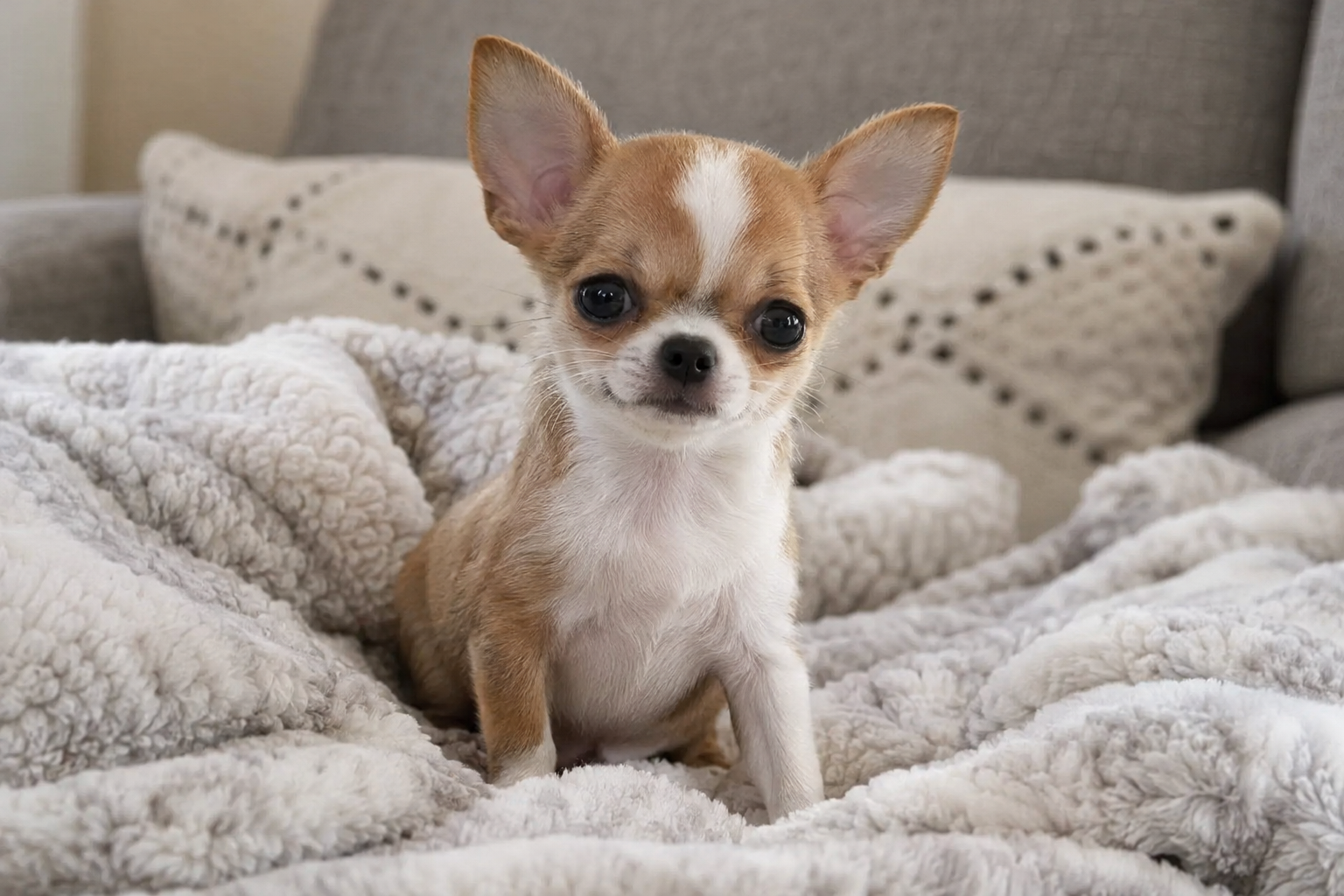
Chihuahuas as Companion Dogs for Single Adults
Chihuahuas can be wonderful companion dogs for single adults who want close company and can provide dependable daily care. The best fit is not simply someone with a small home or a quiet lifestyle. It is someone whose schedule allows for feeding, toilet breaks, gentle activity, rest, and a realistic plan for time apart.
I'm Yulia Sky of World Class Puppies, established in 2019. My perspective as an in-home Chihuahua breeder is simple: choose the relationship you can support on an ordinary workday, not only the companionship you imagine on a relaxing weekend. You can explore our available Chihuahua puppies, but start by considering how a puppy would actually move through your day.
For readers drawn to an Apple Head Teacup Chihuahua, terminology matters. Teacup, mini, micro, and tiny are informal marketing and search terms, not official AKC varieties. The AKC Chihuahua breed standard recognizes one Chihuahua breed, with adult weight not exceeding 6 pounds, in smooth and long coats. Apple head describes head shape; it does not promise a particular personality or adult size.
Are Chihuahuas good companion dogs for single adults?
Yes, Chihuahuas can suit single adults who enjoy an involved daily relationship with their companion. Their compact size makes some household arrangements easier, but it does not remove the need for attention, training, exercise, and backup care. Individual temperament matters more than a size label.
Living alone can make routines wonderfully clear: one person chooses the cues, arranges resting spaces, and keeps track of meals. The challenge is that all those responsibilities also fall to one person. A late meeting or unexpected illness still requires a solution.
I would look for a match between your preferred pace and the Chihuahua's observed behavior. Do you enjoy short outings and relaxed evenings? Are you comfortable helping a cautious puppy become familiar with everyday sounds? Would an energetic, curious puppy feel engaging—or exhausting—after work?
Companionship should not mean constant entertainment. A satisfying day can include a sniffing walk when appropriate, a brief training game, a chew nearby while you read, and uninterrupted sleep. The goal is shared life with room for the Chihuahua to rest independently.
What is an Apple Head Teacup Chihuahua's temperament like?
Apple head teacup Chihuahua temperament is individual, not guaranteed by head shape or an informal size description. A puppy may be outgoing, watchful, cuddly, cautious, playful, or a mixture of these traits. Ask about behavior across different situations rather than relying on a label such as “perfect lap companion.”
When considering Apple Head Chihuahua puppies, I recommend looking beyond the first greeting. A puppy who approaches quickly may still need help settling. A puppy who watches from a little distance may become comfortable with patient, pressure-free interaction.
Useful observations include:
- Whether the puppy can explore without being constantly prompted.
- How the puppy responds to gentle handling.
- Whether the puppy chooses to approach after a pause.
- How the puppy settles after ordinary activity.
- What happens when an unfamiliar sound interrupts play.
None of these observations is a pass-or-fail personality test. They are starting points for a conversation about support and expectations. For a clearer explanation of the labels, read Teacup Chihuahua vs Apple Head Chihuahua: What's the Difference?.
Can a Chihuahua stay home while a single adult works?
Some adult Chihuahuas can become comfortable with predictable periods alone, but a young puppy should not be expected to manage an entire workday without care. Appropriate arrangements depend on age, feeding needs, toileting, health, and the individual Chihuahua's comfort. Plan support before homecoming rather than assuming independence will appear immediately.
Working from home helps only if you can actually step away from work. Back-to-back calls can leave a puppy waiting just as surely as an outside office does. Write down when you can provide attention, not merely when you are physically present.
Start with a practical schedule audit:
- Record your real absences. Include commuting, errands, appointments, and social plans.
- Identify uncovered care needs. Look at meals, toileting, and opportunities for gentle interaction.
- Choose a dependable helper. Confirm that the person is comfortable handling a delicate Chihuahua.
- Prepare an alternative. One caregiver being unavailable should not collapse the whole plan.
Practice comfortable separation gradually, beginning with ordinary moments when you are nearby but not interacting. A safe resting area, familiar bedding, and an appropriate activity can support this process. Avoid turning departure practice into a test of how long a distressed puppy can endure.
Persistent vocalizing, frantic attempts to escape, or an inability to settle warrant a conversation with your own veterinarian. Do not assume every difficulty is stubbornness or that another accessory will solve it.
What daily care does a very small Chihuahua need?
Apple head teacup Chihuahua care centers on a dependable food routine, safe handling, appropriate activity, grooming, and observation. Very small size should lead to thoughtful planning, not reduced expectations for care. Ask your veterinarian to individualize health and feeding decisions for your puppy.
Build the day around needs, not a rigid internet timetable
Before homecoming, request the puppy's current food details and written routine. Discuss changes with your veterinarian rather than switching food or stretching meal gaps for convenience. Our guide to a feeding schedule for a new Chihuahua puppy provides additional planning context without replacing individual advice.
A useful daily rhythm includes:
- A calm morning check-in and the puppy's planned meal.
- Toileting opportunities appropriate to the puppy's stage.
- Short periods of play, exploration, or reward-based learning.
- Protected rest away from interruptions.
- Evening interaction followed by a predictable settling routine.
Chihuahua puppy care is often less about one demanding task than many small tasks that cannot all be postponed. If your day routinely leaves no room for those interruptions, an older Chihuahua may be worth considering instead of a young puppy.
Keep everyday handling safe
Support the chest and hindquarters when lifting. Sit low for cuddles, watch before moving a recliner, and check blankets before sitting down. Prevent unsupervised access to furniture edges or gaps where a small puppy could become trapped.
These habits matter especially when you live alone: you are also the person carrying groceries, answering the door, and moving a chair. Set up the space so safety does not depend on noticing everything at once.
Include grooming in companionship
Gentle, brief grooming sessions can become part of your routine. Introduce touch without forcing a frightened puppy to remain still for a lengthy session. If you prefer a longer coat, grooming a Long Hair Chihuahua at home explains the additional coat-care considerations.
Are Chihuahuas suitable for apartment living?
Chihuahuas can adapt well to apartment life when their activity, toileting, and settling needs are met. Limited floor space is not automatically a problem, but hallway sounds, shared entrances, and unsuitable balcony access can be. A compact home still needs deliberate safety planning and daily enrichment.
Create a resting place away from the busiest doorway. Use barriers where needed, secure balcony access, and keep cords and dropped objects out of reach. A floor-level bed is often a more useful first purchase than a tall piece of pet furniture.
If corridor noise triggers barking, avoid repeatedly scolding from across the room. Reduce exposure where practical, reward calm attention, and practice manageable situations. Persistent difficulty deserves individualized help rather than a promise that Chihuahuas are always quiet companions.
Activity need not be elaborate. Food-search games using part of the planned daily ration, brief cue practice, and safe exploration can make a small home more interesting. Ask your veterinarian about suitable outings and exposure for your puppy's current health status.
Plan a social life that includes—but does not overwhelm—your Chihuahua
A single adult's companion does not need to accompany every dinner, gathering, or errand. Some Chihuahuas enjoy outings; others need more gradual introductions. Watch the individual rather than measuring success by how many places you can take a puppy.
Invite visitors to sit down and allow the Chihuahua to approach. Avoid passing the puppy from person to person. A resting area should remain available even when guests want more interaction.
You may also be thinking about an apple head teacup Chihuahua for families in your future, even if you live alone now. Consider visits from relatives, a future partner, and changing household routines. Small size does not make a puppy suitable for unrestricted handling by children; calm supervision and protected rest remain essential.
It is healthy to build a life in which your Chihuahua knows more than one safe, familiar caregiver. That flexibility can make ordinary appointments and unexpected disruptions easier to manage.
Ask about fit before making a commitment
My most useful Chihuahua breeder questions would focus on the puppy's actual routine: What helps this puppy settle? How does the puppy respond to handling? What food and toileting arrangements are familiar? What support would this puppy need in a one-adult household?
For breeder vetting, use the Chihuahua puppy scam checklist rather than treating attractive photographs as verification. When looking for background and references, you can see our past clients and their puppies; let documented information support your decision instead of imagined outcomes.
Apple head teacup Chihuahua puppy cost is only one part of readiness. Each available puppy is individually priced; check the available listings and Chihuahua puppy price guide rather than relying on a fixed range. Leave room in your ongoing budget for routine supplies, veterinary care, and dependable help during absences.
Review the written health guarantee directly. No head shape, coat, or informal size description guarantees health, adult weight, or compatibility with your lifestyle.
Frequently asked questions
Could an adult Chihuahua be a better match than a puppy?
Yes, particularly if your schedule cannot accommodate the frequent interruptions of puppy care. An adult's established behavior and routine may offer more information for assessing fit. An adult Chihuahua still needs an adjustment period, companionship, and appropriate care.
Is carrying my Chihuahua everywhere a good substitute for walks?
No. Carrying can be useful for safety, but it does not replace opportunities for suitable movement, sniffing, and exploration. Let your veterinarian help determine what activity is appropriate for your Chihuahua.
How can I tell whether I am ready to care for a Chihuahua alone?
Try writing out a normal week, including your least convenient workday and an unexpected evening away. If meals, toileting, rest, interaction, and backup care all have realistic coverage, you have a stronger foundation. If the plan depends on nothing ever going wrong, revise it before committing.
Choose the companion whose needs fit your real life
The right Chihuahua is not necessarily the smallest puppy or the one who looks most appealing in a photograph. It is the individual whose needs you can meet consistently, with enough flexibility for both of you to feel comfortable.
When you are ready, explore our available Chihuahua puppies and contact us about your routine and companionship goals. Availability changes weekly. If relevant to your search, our Los Angeles Chihuahua puppies page provides a separate local starting point.
Educational disclaimer: This article provides general educational information and is not veterinary advice, diagnosis, or treatment. Consult your own veterinarian about your Chihuahua's individual health, nutrition, activity, and care needs. Seek prompt veterinary attention for concerning symptoms.
Frequently asked questions
Can I keep a Chihuahua's routine consistent if I live alone and work changing shifts?
Possibly, but consistency needs to come from a care plan rather than your availability alone. Arrange a reliable caregiver who can follow the puppy's written routine when your shifts change. If coverage is uncertain, postponing a puppy may be the kinder choice.
Should my Chihuahua meet every visitor who comes to my home?
No. Give your Chihuahua a comfortable retreat and let introductions happen without pressure. Visitors should respect distance and avoid reaching into the resting area or lifting the puppy without permission.
Does choosing a Long Hair Chihuahua change the companionship fit?
Coat length changes grooming needs more than it predicts an individual Chihuahua's personality. A Long Hair Chihuahua needs regular attention to tangles and coat maintenance. Choose based on observed behavior and your willingness to maintain the coat, not assumptions about temperament.
What should a backup caregiver know before caring for my Chihuahua?
Share the current food routine, toileting setup, safe handling instructions, and your veterinarian's contact details. Explain the puppy's usual behavior and whom to contact if something changes. Arrange a calm introduction before an urgent situation makes backup care necessary.
Ready to meet your new puppy?
See currently available teacup puppies or reach out to join our waitlist.