Apple Head Chihuahua
Apple Head Chihuahua Potty Training: Elevator Delays
By Yulia Sky · October 25, 2026
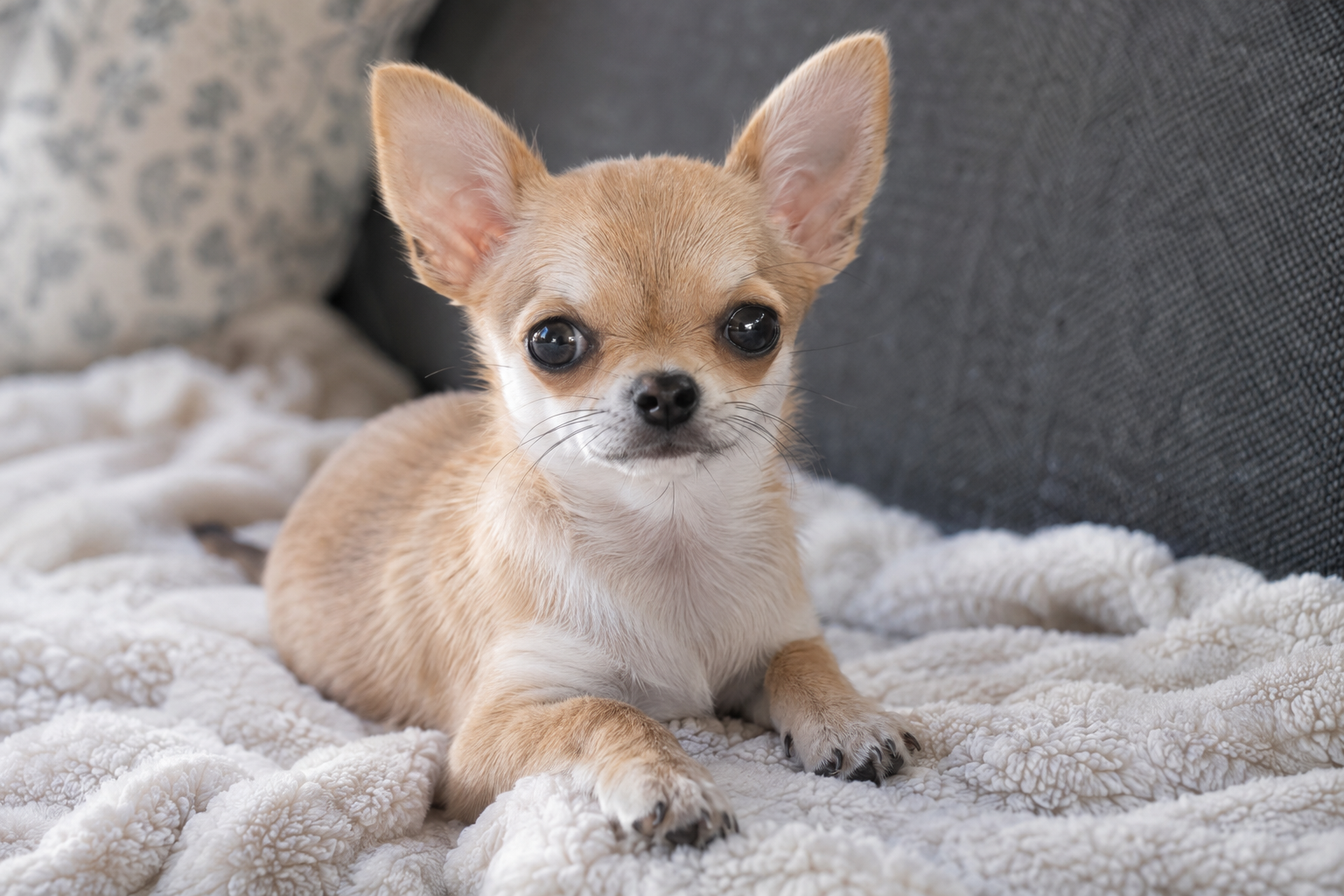
An Apple Head Chihuahua puppy should not have to wait through an unpredictable elevator queue to reach a toilet. My recommendation is to establish one dependable indoor potty station, offer outdoor opportunities before urgency builds, and reward success at the place where it happens. The goal is a clear routine—not a contest over how long a puppy can hold on.
I'm Yulia Sky, founder of World Class Puppies, established in 2019. My approach to Chihuahua puppy care puts manageable routines ahead of appearance-based expectations. Apple Head Chihuahua puppies need patient teaching and close observation; their rounded head shape does not tell you how quickly they will become reliable indoors.
If you are exploring our available Chihuahua puppies, consider your building's route to the toilet area alongside your daily schedule. An elevator, lobby, and shared entrance create a different learning environment from a door opening directly onto a private space.
Why does my Chihuahua puppy have accidents before the elevator arrives?
Your Chihuahua puppy may already need to eliminate by the time you notice the signal and leave your apartment. Waiting for a lift, putting on equipment, and crossing a lobby add steps the puppy cannot predict. Start the routine earlier and provide a nearby alternative instead of expecting the puppy to accommodate building delays.
Think of the journey as a chain: waking up, finding the harness, closing the apartment, waiting, riding, walking, and finally reaching an appropriate surface. Each link uses time. A puppy who succeeds at home may still struggle with this longer sequence.
For several days, note when accidents happen relative to waking, meals, drinking, and active play. Record whether the accident occurred before you left, while waiting, or after you reached the destination. This turns a vague problem into a specific adjustment.
Do not convert that log into a strict holding-time formula. Individual development, excitement, sleep, and health all affect what a puppy can manage.
Can an Apple Head Chihuahua use an indoor potty and still learn to go outside?
Yes, a Chihuahua puppy can learn that both a designated indoor station and a designated outdoor spot are acceptable. Make the locations deliberate and reward successful use of either one. An indoor backup is a management tool, not a failure to teach outdoor habits.
Choose your long-term goal before changing the setup repeatedly. Some households want outdoor toileting with an emergency indoor option; others need a permanent indoor station because access outside is unpredictable. Either arrangement requires cleanliness and consistency.
A stable, low-entry tray with an appropriate toilet surface gives the puppy a recognizable destination. Secure absorbent material so it does not slide or bunch. If your puppy tears or swallows it, stop using that material and discuss safer options with your veterinarian.
Keep the station separate from the bed, food, and water. Avoid placing it directly beside a loose bathmat or rug that feels similar underfoot. I favor a quiet, easy-to-clean location that remains accessible without requiring the puppy to cross a large apartment.
This is not a recommendation to turn a balcony into an unsupervised toilet area. Gaps, climbing opportunities, weather exposure, and falls make balcony arrangements a separate safety concern. An indoor station avoids those hazards.
Build two routes: ordinary and urgent
A useful high-rise plan has two versions, both ending somewhere the puppy is allowed to eliminate. Decide which route you are taking before opening the apartment door.
| Situation | Practical response | Teaching goal |
|---|---|---|
| Puppy wakes and the indoor station is close | Guide directly to the station | Make waking predict an opportunity |
| Puppy is comfortable and outdoor access is appropriate | Prepare equipment and leave before urgency | Practice the outdoor route calmly |
| Elevator is delayed and puppy becomes restless | Return to the indoor station if safely possible | Prevent a predictable corridor accident |
| Puppy toilets successfully | Reward immediately at that location | Identify the behavior that earned the reward |
| Puppy does not toilet | Return to close supervision and offer another opportunity | Avoid an unsupervised accident afterward |
Keep a small cleanup kit near the door, but do not let preparation become another delay. Harness fit should be checked before an urgent trip. If you carry your Chihuahua puppy, support the body securely; carrying is not a guarantee that the puppy will wait.
For shared spaces, ask your veterinarian which routes and toilet areas are appropriate for your puppy's current health and vaccination status. Avoid assuming that a quiet-looking communal patch is safe simply because it is convenient.
How do I reward Chihuahua potty training without confusing my puppy?
Reward your Chihuahua puppy just after toileting finishes, while you are still at the chosen spot. Calm praise and an appropriate small food reward can make the connection clear. Waiting until you return upstairs risks rewarding the homecoming rather than the toileting.
Carry rewards where you can reach them without rummaging. Use a quiet marker such as “yes,” then offer the reward after the puppy has finished. Excited celebration during elimination can interrupt the very behavior you want.
You can introduce a brief toilet cue when the puppy is already beginning to go. Over time, that word may help communicate the purpose of the trip. Repeating it insistently while the puppy sniffs does not make the physical need appear.
An outdoor success need not immediately end every pleasant outing. When the environment is appropriate, allow a little calm exploration afterward. Keep the experience predictable rather than rushing home the instant the puppy finishes.
Fit opportunities around the puppy, not the elevator schedule
Offer the toilet after waking, around transitions in activity, and whenever you notice your puppy's individual signals. Sniffing, circling, leaving play, or suddenly wandering away can mean it is time to offer the station. None is a guaranteed signal, so context matters.
Use a simple log with four entries:
- What happened immediately beforehand.
- Which toilet location you offered.
- Whether the puppy eliminated.
- Whether an accident followed.
Regular meals can make observation easier, but potty training is not a reason to skip food or restrict drinking water. Our feeding schedule guide for a new Chihuahua puppy explains how to organize meal information and discuss individual needs with your veterinarian.
During busy periods, use a puppy-safe pen or another appropriately arranged supervised area with distinct resting and toileting zones. A crate is not a substitute for timely toilet access. If your absence exceeds what your puppy can comfortably manage, arrange help or provide a suitable indoor setup.
Does being an Apple Head or Teacup Chihuahua change potty training?
Head shape does not determine a Chihuahua puppy's toilet-training timetable. “Teacup,” “mini,” “micro,” and “tiny” are informal marketing and search terms, not official AKC varieties; the AKC recognizes one Chihuahua breed, with an adult standard weight not exceeding 6 pounds, in smooth and long coats. Teach the individual puppy rather than assigning abilities from a label.
The AKC Chihuahua breed page describes that standard. It is not a promise of any puppy's eventual weight or a measure of how long that puppy should wait between toilet opportunities.
People researching teacup Chihuahua puppies sometimes expect a special training method. The helpful differences are practical: easy entry into the toilet tray, secure handling, accessible supplies, and realistic opportunities. Our explanation of Teacup Chihuahua versus Apple Head Chihuahua terminology separates size language from head shape.
Apple Head Chihuahua temperament also varies individually. A puppy distracted by elevator sounds may need quieter practice, while an enthusiastic puppy may need a pause from play before recognizing the toilet station. Neither response is evidence of stubbornness.
What should I do after a Chihuahua puppy has an apartment accident?
Clean the area thoroughly and adjust the next opportunity rather than punishing your puppy. If you notice elimination beginning, gently guide the puppy to the nearby station when doing so will not frighten or disrupt safe handling. An accident discovered later calls for cleanup, not correction.
Use a cleaner intended for pet urine and suitable for the flooring, following its label and keeping the puppy away until the area is ready for use. Clean beneath a movable tray as well as around it. Lingering contamination can keep an unintended location attractive.
Look for a repeatable cause: too much unsupervised space, a blocked station, a missed wake-up, or an outdoor trip begun too late. Change one part of the routine and watch what happens.
Do not punish with confinement, rub the puppy's nose in waste, or use startling noises. Those responses can teach avoidance of the caregiver instead of understanding of the toilet location.
Share the routine across the household
When considering an Apple Head Chihuahua for families, I encourage adults to agree on responsibility before giving children a role. Children can help notice signals, but an adult should manage handling, elevator trips, cleanup products, and timely access.
Keep a short household note: station location, cue, reward, and who is watching the puppy. Consistency matters more than creating an elaborate chart nobody follows. Core Apple Head Chihuahua care should remain workable on a busy morning as well as a quiet weekend.
Useful Chihuahua breeder questions include which toilet surface the puppy currently recognizes, how opportunities are offered, and what equipment will feel familiar. These are questions to ask, not claims about a particular puppy's training. For help assessing the reliability of answers, use our Chihuahua puppy scam checklist.
If you are budgeting for a tray, washable flooring protection, and cleanup supplies, keep those ongoing needs separate from the puppy's purchase price. Our Chihuahua puppy price guide provides purchasing context; each available puppy is individually priced.
Know when training advice is not enough
Sudden changes in toileting deserve attention, especially after a period of consistency. Contact your own veterinarian about discomfort, blood, unusual thirst, repeated diarrhea, or a marked change in frequency. Repeated straining with little or no urine warrants urgent veterinary attention.
Do not assume every accident is behavioral, and do not attempt to diagnose a urinary or digestive problem from a training log. Bring your observations to the appointment so your veterinarian can assess the change.
For a long-coated puppy, check for soiling around the rear without pulling tangled hair or attempting risky close trimming. Our guide to grooming a Long Hair Chihuahua at home offers complementary coat-care guidance.
Make progress measurable, not rushed
Look for earlier recognition of signals, more successful station visits, and fewer preventable accidents. Do not remove the backup simply because one day went well. Expand freedom gradually as your Chihuahua puppy demonstrates reliability in each area.
If you want context about our puppy families rather than promises about training results, see our past clients and their puppies. Every home has a different routine, and no testimonial can establish your puppy's timetable.
When you are ready to discuss a puppy and your apartment setup, explore our available Chihuahua puppies and contact us. Availability changes weekly. Readers who need the regional hub can also visit Los Angeles Chihuahua puppies. The right starting point is an honest plan for everyday care—not a promise that the elevator will always arrive on time.
Educational disclaimer: This article provides general educational information and is not veterinary advice, diagnosis, or treatment. Consult your own veterinarian about your Chihuahua puppy's individual health, nutrition, vaccination status, and care needs.
Frequently asked questions
Can two caregivers use different potty cue words?
They can, but one shared cue makes the routine easier to follow while a Chihuahua puppy is learning. Agree on the toilet location, reward timing, and response to accidents rather than focusing only on the word.
Should I move the toilet tray closer to the apartment door each day?
Not automatically. Frequent moves can make the target harder to find, particularly when your Chihuahua puppy has only just learned its location. Keep it stable until successful use is dependable, then make any necessary changes gradually.
Does every elevator ride need to become a potty trip?
No. Once your veterinarian considers the route appropriate, calm elevator practice can happen separately from urgent toilet needs. Separating those lessons lets your puppy explore the experience without also needing to eliminate immediately.
What should a visitor do if my Chihuahua puppy starts sniffing and circling?
Ask the visitor to stop play and let the designated caregiver guide the puppy to its toilet spot. A simple household rule prevents excitement from delaying an opportunity. Visitors should never scold a puppy for an accident.
Ready to meet your new puppy?
See currently available teacup puppies or reach out to join our waitlist.