Chihuahua Training Shifts to Communication Over Command This July
Friday, July 10, 2026 · World Class Puppies Newsroom
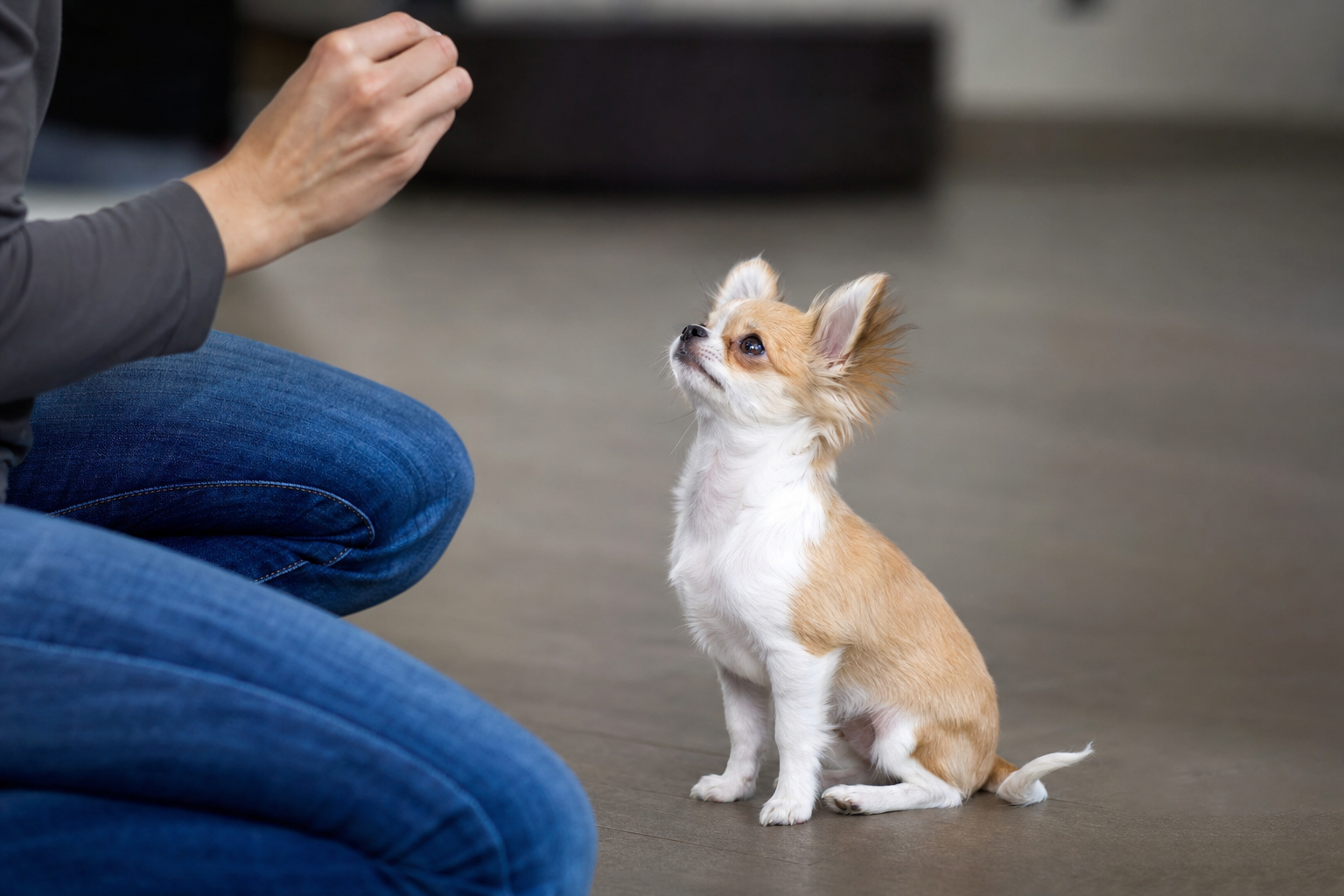
NEW YORK, NY – As summer training routines solidify, veterinary behaviorists and leading kennel clubs are championing a significant evolution in canine training, with a particular focus on sensitive breeds like the Chihuahua: a shift from rote command-and-control to nuanced, communication-based partnership.
What's new today
The latest guidance circulating through professional veterinary and training circles this July moves beyond simple positive reinforcement. While rewarding good behavior remains the gold standard, the emphasis now is on understanding why a Chihuahua behaves a certain way and using that insight to build trust. This approach, heavily promoted by publications like the Journal of Veterinary Behavior, treats training as a two-way conversation.
Experts are urging owners to become fluent in canine body language—the subtle ear flicks, lip licks, and tail positions that signal a Chihuahua's emotional state. Instead of just commanding a 'sit,' the new paradigm asks owners to create an environment where the dog chooses to cooperate because it feels safe and understood. This is particularly critical for foundational skills like crate training, which should be framed as creating a safe den, not a place of confinement, and socialization, where quality interactions are now prioritized over the quantity of exposures.
This updated philosophy draws on recent findings in animal cognition, suggesting that dogs, especially intelligent and bonded breeds like Chihuahuas, thrive when given a sense of agency. The American Kennel Club's (AKC) recent training bulletins reflect this, offering more content on 'consent-based' handling for grooming and vet visits, and framing leash walking as a cooperative exploration rather than a battle of wills. It’s a holistic view that integrates a dog's emotional well-being directly into its behavioral training regimen.
Key takeaways
- Communication Over Command: The focus is shifting from simply giving orders to reading your Chihuahua’s body language and building a cooperative partnership.
- Positive Reinforcement is Still King: The foundation of all modern, effective training is rewarding desired behaviors. This has not changed.
- Quality Socialization: A few positive, controlled introductions to calm dogs and new environments are far more beneficial than overwhelming trips to a crowded dog park.
- Crate as a Sanctuary: Crate training is being re-emphasized as a tool for safety and comfort, not punishment. The goal is to make the crate a dog's personal, safe space.
- Consent in Handling: Progressive training encourages teaching Chihuahuas to opt-in for activities like nail trims and brushing, reducing fear and anxiety.
- Behavioral Wellness is the Goal: Successful training isn't just about obedience; it's about raising a well-adjusted, confident, and happy companion.
What it means for Chihuahua owners
For the Chihuahua owner, this means becoming a student of your own dog. Instead of getting frustrated with potty training accidents, consider the 'why': Is the puppy scared? Is the schedule inconsistent? Is there a potential urinary tract issue that warrants a vet visit? Answering these questions leads to more effective, compassionate solutions.
When it comes to leash work, this approach encourages the use of harnesses to protect the Chihuahua's delicate trachea and focuses on loose-leash techniques that reward the dog for walking beside you, rather than punishing them for pulling. It requires more patience upfront by turning walks into training sessions, but it builds a stronger, more enjoyable partnership in the long run.
Ultimately, this shift empowers you to build a resilient, trusting bond with your Chihuahua. By treating them as an intelligent partner in the training process, you address the root causes of problem behaviors like excessive barking or fearfulness, leading to more profound and lasting results than could ever be achieved through dominance-based methods.
Expert tips from our breeder
- Potty Training Frequency: For young puppies, take them out every 45-60 minutes, as well as immediately after waking up, after playing, and after eating. Use a consistent spot and a verbal cue like "go potty."
- High-Value Crate Rewards: Make the crate irresistible. Feed meals in the crate and provide special, crate-only toys like a small puzzle feeder filled with a high-value treat.
- Unfailing Recall Cue: Use a unique, high-pitched word or whistle for "come" that you only use for recall. When your dog comes, give them an extremely high-value treat (like a small piece of boiled chicken) that they don't get at any other time.
- Structured Socialization: Skip the dog park. Instead, schedule a one-on-one playdate with a friend's calm, vaccinated, and well-behaved adult dog in a neutral space.
- Leash & Harness Choice: Always use a well-fitted harness, not a collar, for walks. We recommend brands that offer XXS and XS sizes with soft, adjustable straps to prevent chafing and protect the throat.
Sources & further reading
- American Kennel Club (AKC) - Training Resources
- American Veterinary Medical Association (AVMA) - Pet Owner Resources
- Journal of Veterinary Behavior: Clinical Applications and Research
- American College of Veterinary Behaviorists - Finding a Behaviorist
Explore our available puppies at /puppies or /contact us to learn more about our training philosophy.
Educational information only. This briefing is general Chihuahua owner education from the World Class Puppies newsroom. It is not veterinary advice and has not been reviewed by a veterinarian. Care, diet and treatment decisions depend on the individual dog — please follow the guidance of your own licensed veterinarian.